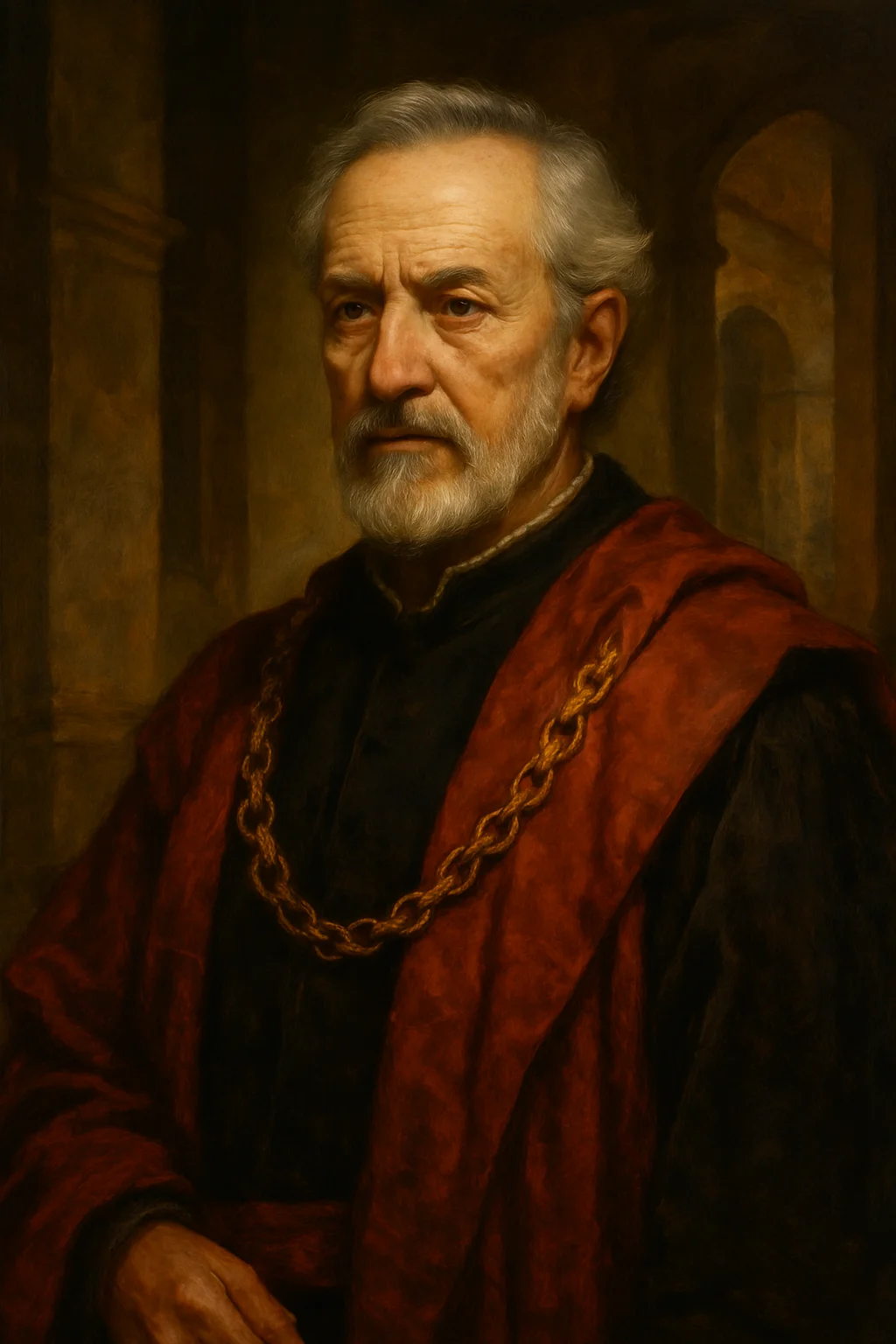
Leonato
Leonato is Messina's governor and Hero's father, whose arc from comfortable, meddling patriarch to a man who nearly condemns and then fiercely defends his own daughter dramatizes the play's more serious interrogation of honour, reputation, and paternal love under pressure.
Appears In
Who is Leonato?
Leonato governs Messina and his own household with an easy, hospitable authority in the play's opening scenes, welcoming Don Pedro's returning soldiers with the generosity of a man whose position and family are both entirely secure. His affectionate teasing of Beatrice about her prospects for marriage, and his eager participation in the plot to bring Benedick and Beatrice together, show a man who enjoys orchestrating happiness for those around him - a comfortable patriarch with nothing yet at stake.
The church scene destroys that comfort with terrible speed. Leonato's first instinct on hearing Claudio's accusation is not to defend Hero but to believe the worst and wish her dead - 'Death is the fairest cover for her shame / That may be wished for' - a reaction that reveals how completely the culture of honour Leonato inhabits values public reputation over paternal loyalty, and how quickly that culture can turn a loving father into his daughter's harshest accuser. It is one of the play's most uncomfortable moments precisely because it is not villainy but ordinary social conditioning taken to its logical, devastating conclusion.
Friar Francis's plan gives Leonato room to recover, and once persuaded of Hero's innocence he becomes her fiercest advocate, challenging both Claudio and Don Pedro to answer for what they have done to his daughter despite his age and their rank - a genuinely dangerous thing for an old man to do to a prince and his favorite. His demand that Claudio marry Hero's 'cousin' as penance, followed by his stage-management of Hero's dramatic unveiling at the second wedding, shows a father reclaiming control of the narrative that had, for one terrible scene, slipped entirely out of his hands.
Motivation
Leonato is motivated first by the comfortable maintenance of his household's honour and happiness, and after Hero's shaming, by a newly urgent need to restore both his daughter's reputation and his own standing as a father who failed her in the moment she most needed him.
Personality
Leonato's warmth and generosity as a host in the play's early scenes give way, under the pressure of public shame, to a rigid adherence to convention that nearly costs him his daughter's life along with her reputation. His recovery - becoming, once persuaded of the truth, a father willing to challenge a prince - shows that his earlier failure was a failure of the culture he inhabits as much as of his own character.