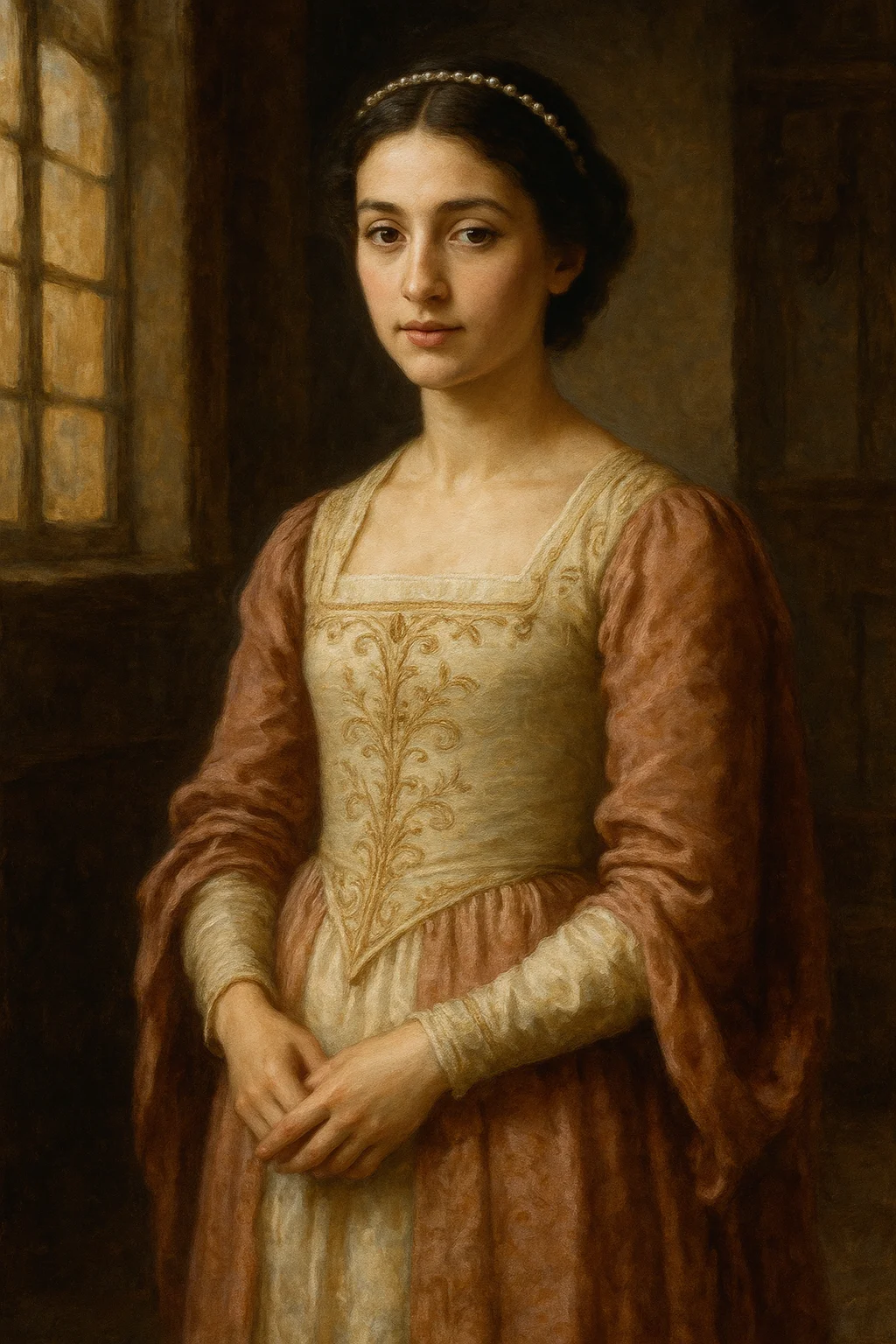
Hero
Hero is the play's wronged bride, whose public shaming and staged death form the serious counterweight to the Beatrice-and-Benedick comedy - her innocence, obscured and then vindicated by others' actions rather than her own defense, gives the play its narrowest escape from tragedy.
Appears In
Who is Hero?
Hero says relatively little in her own play, a quietness that is itself part of Shakespeare's design - she is discussed, wooed by proxy, slandered, and eventually restored almost entirely through the actions and words of others, a structural silence that makes her public shaming in Act IV land as violation rather than confrontation. When she does speak, in the garden scene where she and Ursula deliberately let Beatrice overhear a fabricated account of Benedick's love, she proves herself a witty and willing conspirator in her own right, matching the men's gulling of Benedick with an equally well-constructed trick of her own.
The church scene is Hero's defining moment precisely because she is denied the chance to properly defend herself - Claudio's accusation arrives as public spectacle, and Hero's collapse, whether from shock, grief, or the sheer impossibility of disproving a lie she cannot even fully understand, is read by Friar Francis as evidence of innocence rather than guilt. It is worth noting that Hero herself does not orchestrate her own vindication; it is the Friar's plan, Beatrice's fury, and eventually Dogberry's incompetent watch that clear her name, while Hero is, in the most literal theatrical sense, given up for dead and hidden away.
Her return at the play's final wedding, unveiling herself to Claudio with the words 'One Hero died defiled, but I do live,' is one of the more quietly strange moments in Shakespearean comedy - a woman restored to the very man who condemned her, offered up again as if the interim's cruelty required no further accounting from him. The play treats this as comic resolution rather than lingering grievance, which is part of what makes Hero's story, for all its gentleness, the darkest thread the comedy has to reconcile.
Motivation
Hero is motivated by love for Claudio and by dutiful loyalty to her father's household, and once wronged, by the desire - enacted largely through the Friar's plan rather than her own initiative - to see her name cleared and her innocence recognized.
Personality
Hero's public modesty conceals a sharper wit than her few lines might suggest - her orchestration of the garden trick on Beatrice shows real cleverness and initiative when circumstances allow it. Her endurance of public disgrace and false death without any accompanying bitterness toward Claudio reveals a dignity that the play asks the audience to accept largely on faith.