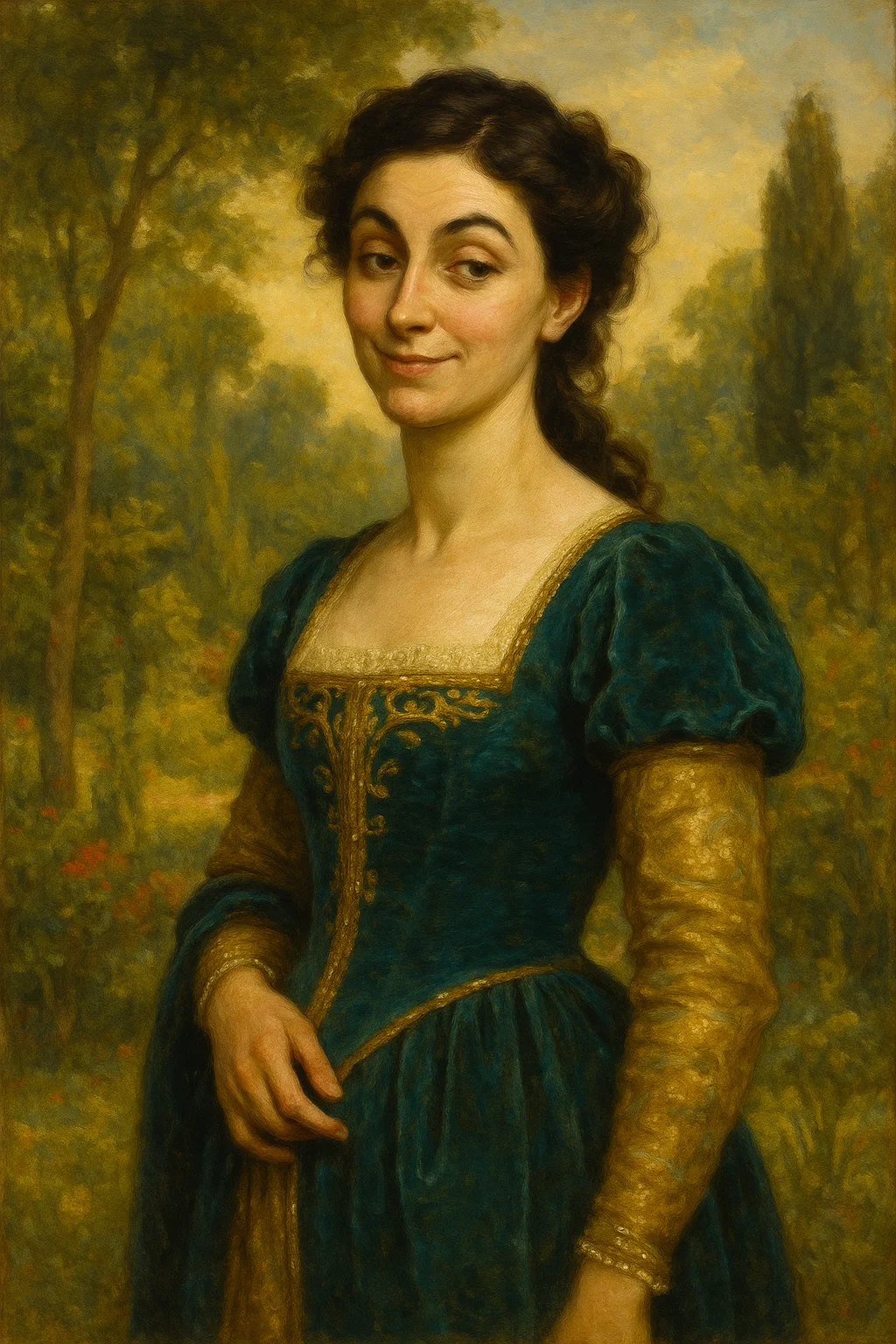
Beatrice
Beatrice is Benedick's equal in wit and the play's fiercest advocate for both female independence and, when it matters, for justice - her arc runs from performed disdain for marriage to genuine love without ever sacrificing the sharpness that defines her.
Appears In
Who is Beatrice?
Beatrice's first line in the play is a barbed question about Benedick - asking after 'Signior Mountanto' before he has even arrived - and the specificity of her contempt, aimed at a man supposedly beneath her notice, does the same work Benedick's boasts do: it announces an old preoccupation dressed as indifference. Her wit is sharper and quicker than anyone else's in Messina, and Leonato's affectionate complaint that 'there is a kind of merry war betwixt Signior Benedick and her' confirms what her opening lines already suggest.
Beatrice's independence is not merely a comic pose. She tells Leonato plainly that she will have no husband until God makes men of some other metal than earth, and her scorn for marriage carries a harder edge than Benedick's - a suspicion of what marriage costs a woman specifically, sharpened by living as a dependent in her uncle's house. When she is gulled in the garden into believing Benedick loves her, her private response is startlingly unguarded for a character defined by verbal armor: 'contempt, farewell, and maiden pride, adieu' - she surrenders completely, without the extended rhetorical hedging Benedick allows himself.
Her demand that Benedick 'kill Claudio' after Hero's public shaming is the play's most serious line, delivered by its funniest character, and it reframes everything that has come before: Beatrice's wit has always been in service of a fierce loyalty and a fierce sense of justice, both now turned fully toward her cousin's defense. She gets the play's near-final word as well as one of its best-remembered lines, marrying Benedick 'for pity' before finally admitting, kissed into silence, what everyone has known since Act I.
Motivation
Beatrice is motivated by a determination never to be made a fool of by love or by marriage, and by a fierce protective loyalty toward Hero that, once provoked, overrides every other consideration, including her own newly declared feelings for Benedick.
Personality
Beatrice's wit is a weapon she has spent years sharpening, deployed most often against Benedick and against the institution of marriage generally, and it conceals - thinly, to everyone but herself - a capacity for deep loyalty and deep feeling. When Hero is wronged, the wit briefly disappears entirely, replaced by a plain, furious grief that reveals how much of the comedy was armor rather than her whole character.