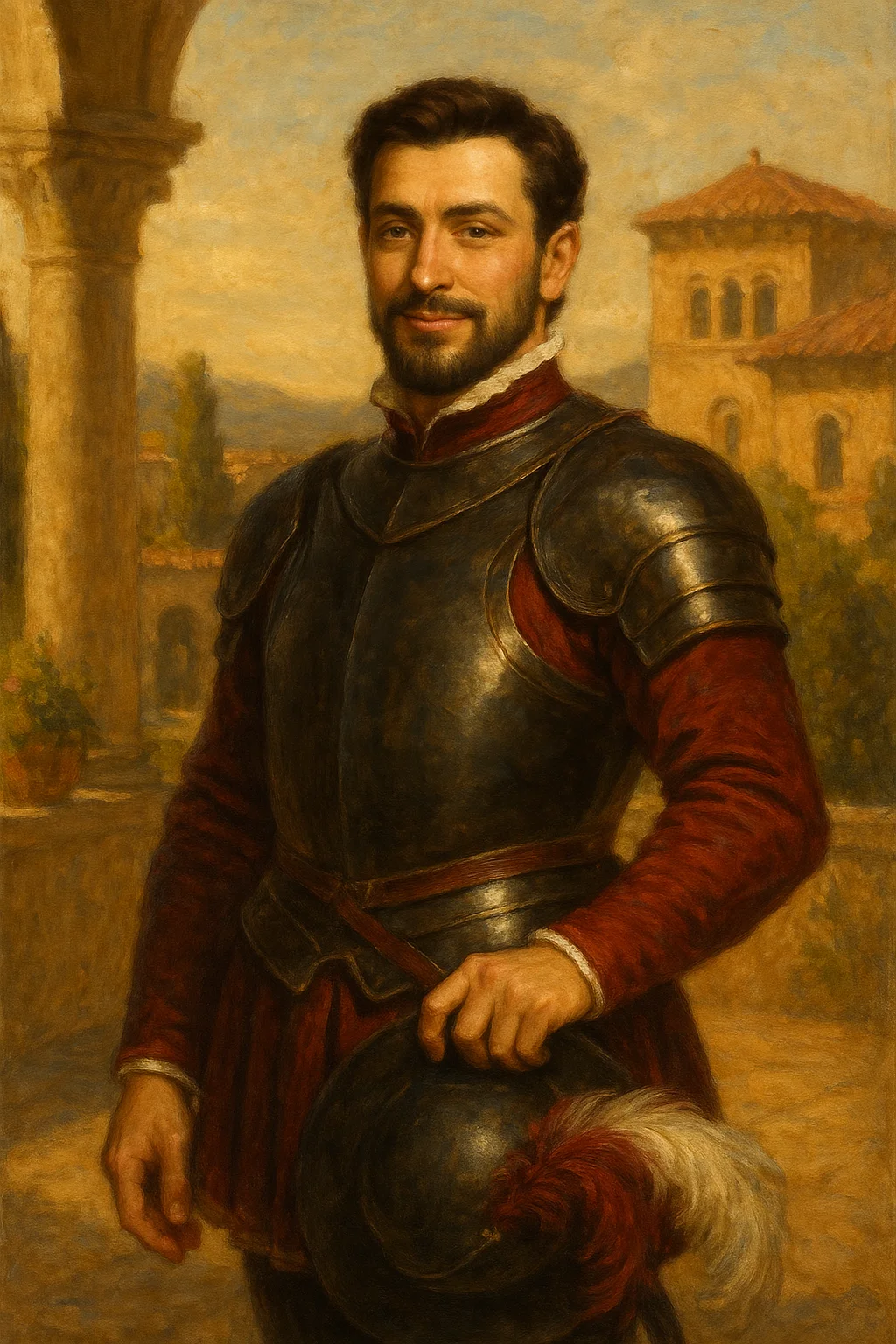
Don Pedro
Don Pedro is Messina's princely guest and the play's chief architect of romantic plotting - both the benevolent scheme that unites Benedick and Beatrice and, more troublingly, his unquestioning endorsement of Claudio's accusation against Hero flow from the same readiness to act decisively on incomplete information.
Appears In
Who is Don Pedro?
Don Pedro, Prince of Aragon, arrives in Messina victorious from war and immediately turns his considerable authority toward matchmaking rather than further conquest - he woos Hero for Claudio at the masked ball in his friend's stead, and his success in that small deception plants the idea for the larger, kinder one he engineers next: tricking Benedick and Beatrice into love. 'I will teach you how to humour your cousin, that she shall fall in love with Benedick,' he tells Claudio and Leonato, and his evident delight in stage-managing other people's happiness marks him as the play's benevolent architect, at least at first.
That same appetite for orchestration curdles disastrously in the church scene, where Don Pedro backs Claudio's accusation against Hero without hesitation or apparent doubt, declaring himself 'dishonoured' by having brought Claudio to a woman capable, he now believes, of such unfaithfulness. Having engineered the play's happiest match through benign trickery, Don Pedro proves equally quick to believe and endorse its cruellest deception, and the play does not let him off lightly for the parallel: his authority, so useful when bent toward comedy, is just as effective and just as unexamined when bent toward condemnation.
By the play's end, restored to good humour once Hero's innocence and Don John's guilt are established, Don Pedro is left conspicuously unpaired at the final double wedding, and Benedick's parting jest that he should 'get thee a wife' lands with a touch of genuine melancholy beneath the comedy - the prince who arranged everyone else's happiness ending the play alone.
Motivation
Don Pedro is motivated by a genuine wish to see his friends happily married and by his own pleasure in exercising princely ingenuity on their behalf - a motivation generous in the Benedick-and-Beatrice plot and disastrously uncritical when it extends to believing Don John's account of Hero.
Personality
Don Pedro moves through Messina with a prince's easy confidence that his interventions in other people's lives will turn out well, a confidence vindicated in the Benedick-and-Beatrice plot and badly misplaced in his instant belief in Hero's guilt. His generosity toward his friends is genuine, but it is paired with an unexamined certainty in his own judgment that the play quietly punishes by leaving him alone at the closing wedding.