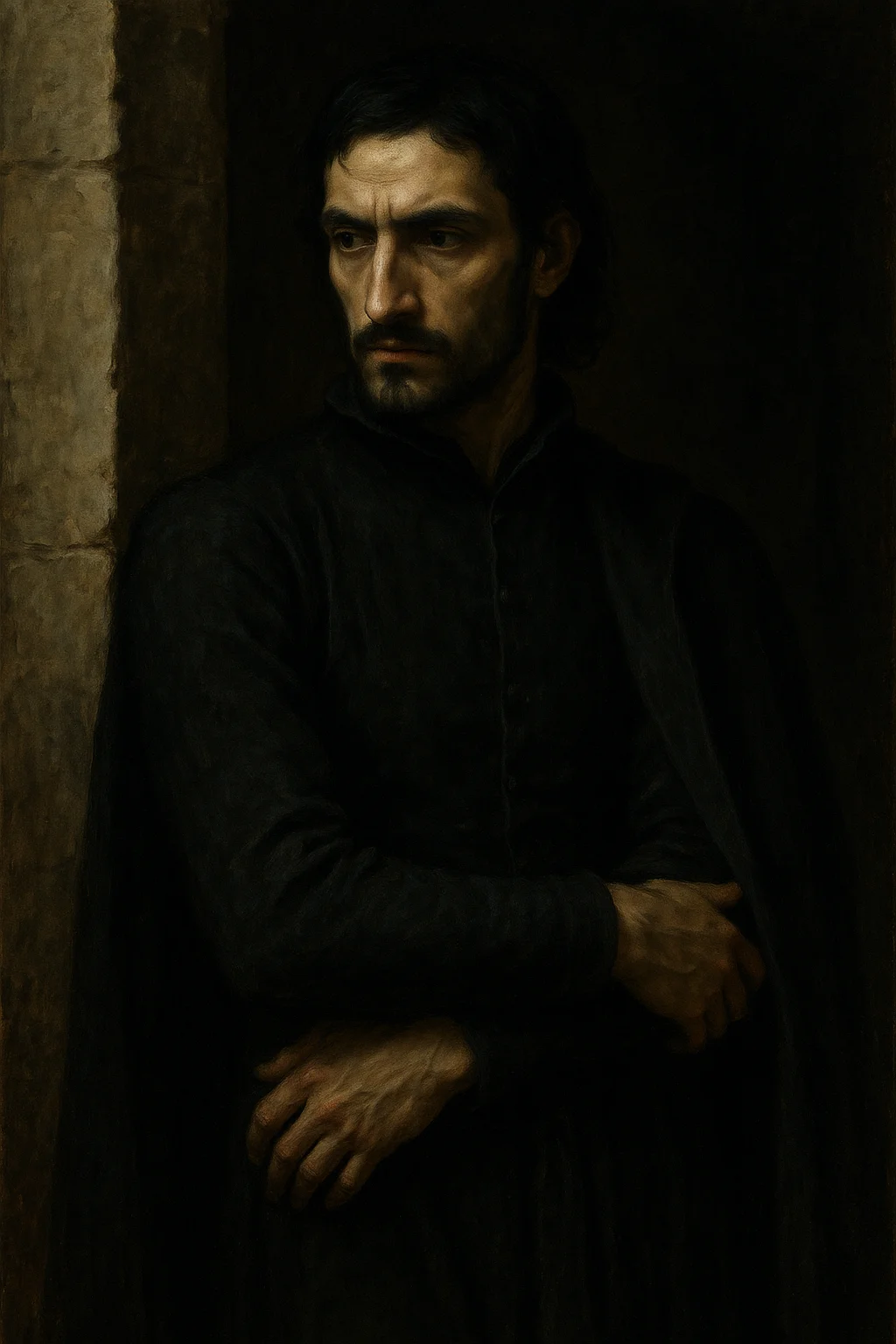
Don John
Don John is the play's antagonist and its sole source of genuine malice - his scheme to slander Hero, motivated by little more than resentment of his brother and his own bastardy, provides the dark counter-plot against which the comedy's romances must be tested and rescued.
Appears In
Who is Don John?
Don John announces his own character before he does anything else: 'I cannot hide what I am,' he tells Conrade, presenting his malice as an honest refusal to perform the good humour everyone else at Leonato's house is enjoying. He has recently been reconciled to his brother Don Pedro after a failed rebellion, and that reconciliation sits uneasily on him - he resents being 'a plain-dealing villain' kept on a short leash rather than trusted, and his bastardy, mentioned more than once, marks him as permanently outside the legitimate structures of family and inheritance that everyone else in the play takes for granted.
His scheme against Claudio and Hero is strikingly disproportionate to any stated grievance - Claudio has done nothing to Don John directly beyond being Don Pedro's favourite, and Don John's own explanation amounts to little more than 'that young start-up hath all the glory of my overthrow.' The play offers no deeper motive than this, and the thinness is deliberate: Don John is Shakespeare's clearest picture in this play of malice that requires no proportionate cause, content to do harm simply because harm is available to him and because his brother's happiness is a standing offense.
He delegates the actual mechanics of the deception entirely to Borachio, and once the plot succeeds at the church, Don John simply leaves Messina rather than staying to enjoy or defend what he has done - he is reported captured and brought back only in the play's final lines, a fittingly anticlimactic end for a character whose villainy, unlike Iago's or Richard III's, is never given the stage time to become charismatic. He remains, to the end, exactly what he announced himself to be in Act I: sullen, plain, and entirely without the wit that makes the play's other characters worth listening to.
Motivation
Don John is motivated by an unfocused resentment of Don Pedro's authority and favour, sharpened by his own status as an illegitimate brother permanently excluded from the legitimacy and ease everyone around him enjoys - he seeks not personal gain but simply the satisfaction of seeing others' happiness destroyed.
Personality
Don John takes a kind of grim pride in his own bad temper, refusing to disguise his discontent even when doing so would clearly serve him better, and this same bluntness extends to his villainy, which is executed without wit, charm, or any apparent enjoyment beyond the fact of the damage done. He is the play's least sociable character by design, present at feasts and weddings only to undermine them.