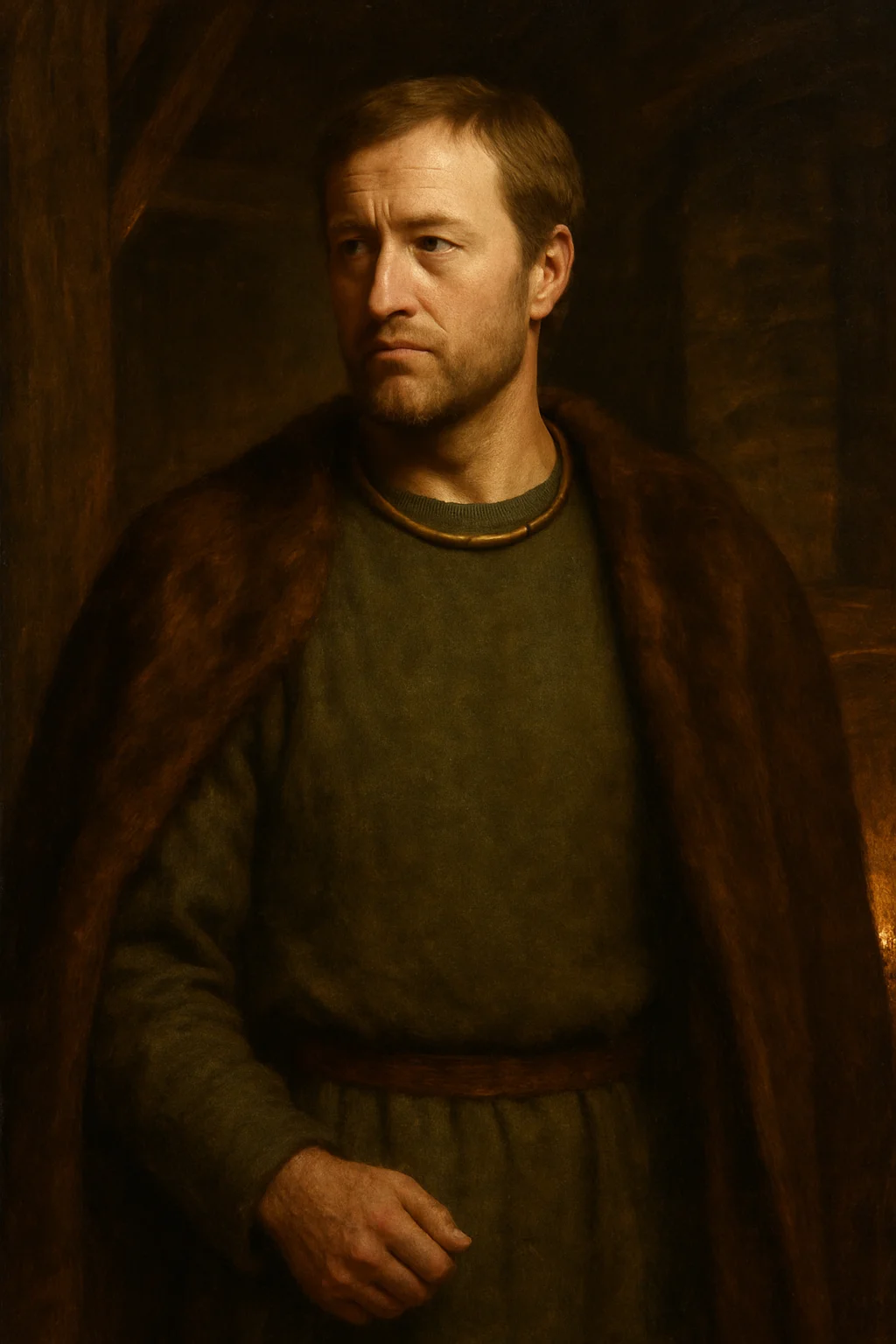
Albany
Albany's arc from complacent bystander to the play's last standing figure of conscience tracks the audience's own growing horror at what Goneril and Regan have done - his late but genuine moral awakening offers one of the only trajectories in the play that moves toward clarity rather than ruin.
Appears In
Who is Albany?
Albany appears at first as the mild, almost passive husband of Goneril, seemingly content to let his wife manage both the household and its cruelties without much comment or resistance. His early scenes give little indication of the moral awakening to come - he is the sort of man other characters, and perhaps the audience, initially dismiss as too gentle for the world Goneril and Regan are building around him.
That impression reverses sharply once the scale of what his wife and her sister have done becomes plain to him. Learning of Gloucester's blinding, Albany's horror is immediate and unfeigned - he calls it a judgment the heavens themselves must avenge - and his contempt for Goneril curdles from private discomfort into open accusation, calling her, to her face, a creature not worth the dust the wind blows in her face, monstrous in a way no ordinary cruelty could account for.
By the play's final act, Albany has transformed from a passive husband into the closest thing the surviving order has to a moral authority: he exposes Goneril's plot against him, presides over Edmund's defeat in trial by combat, and, in the play's last movement, attempts to offer what restoration is still possible - restoring Kent and Edgar to standing, acknowledging the ruin that has occurred, and inheriting, whether he wants it or not, the grim duty of holding together whatever is left of the kingdom.
Motivation
Albany is motivated, once his eyes are opened, by a horror at cruelty he can no longer excuse or ignore in his own household, and by an inherited, reluctant sense of duty to restore whatever order can still be salvaged from the wreckage his wife and her allies have made.
Personality
Albany's early passivity is not weakness so much as a failure of imagination - he simply has not yet grasped what his wife is capable of. Once Gloucester's blinding forces the truth on him, his transformation is total and permanent: the same mildness that once read as complacency becomes, in the play's final act, a steady, unshowy resolve to do what is right regardless of what it costs him personally, including his own marriage.