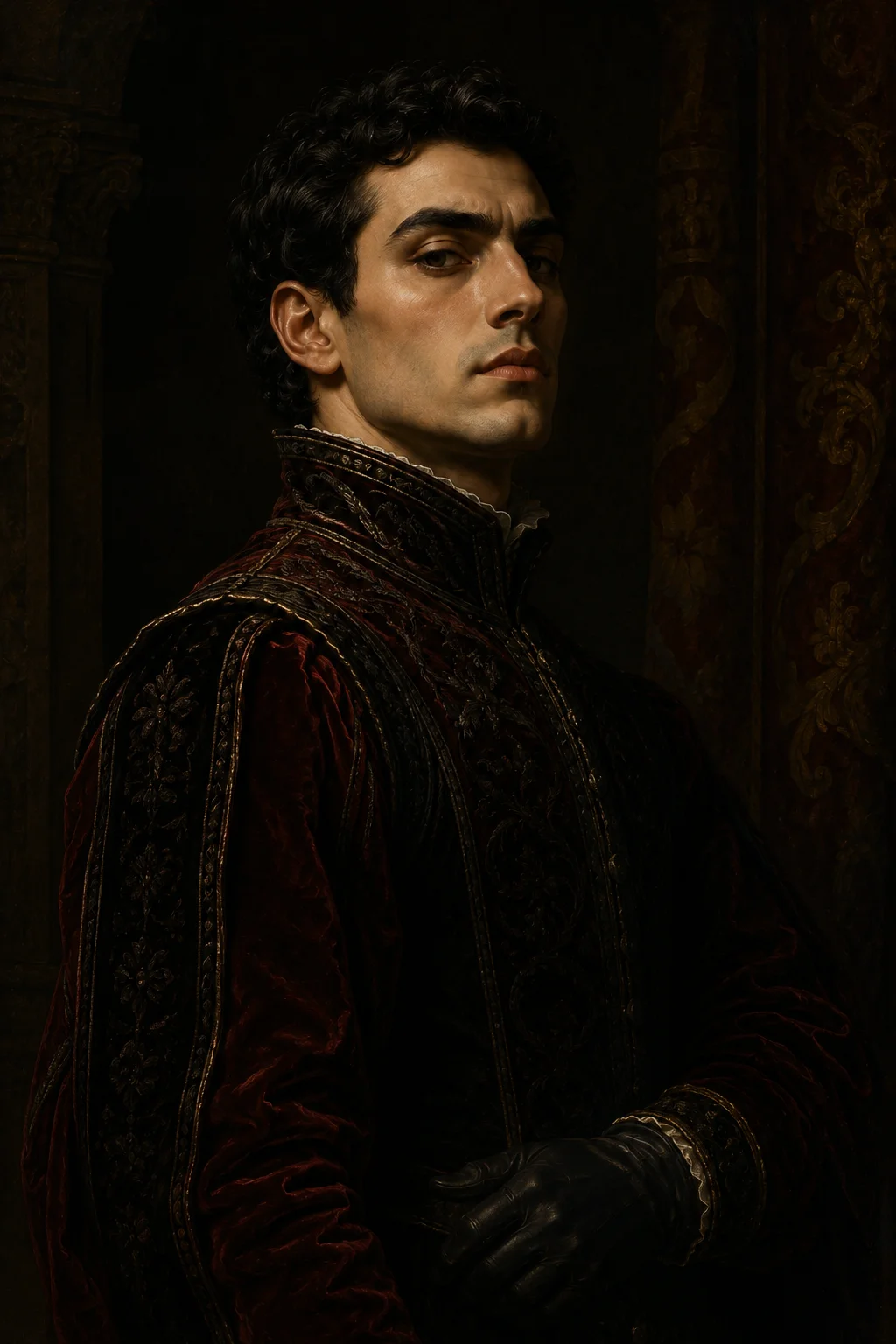
Tybalt
Tybalt is the play's chief embodiment of the feud's violence and the character whose death makes reconciliation between the lovers' families temporarily impossible. He functions as a foil to the peace-seeking Benvolio and to Romeo's newfound desire, after his marriage, to set the old hatred aside.
Appears In
Who is Tybalt?
Tybalt is Lady Capulet's nephew and Juliet's cousin, a young man whose entire dramatic identity is organised around the defence of Capulet honour. He is introduced in the play's opening brawl relishing the fight Benvolio is trying to stop - 'What, drawn, and talk of peace? I hate the word, as I hate hell, all Montagues, and thee' - a line that announces his character with total economy.
At the Capulet feast, Tybalt recognises Romeo's voice beneath his mask and is enraged that a Montague has dared enter the house, restrained from violence on the spot only by Capulet's direct order to let the uninvited guest be, for the sake of the party's reputation. That public humiliation festers, and Tybalt sends Romeo a formal challenge the following day.
His death in Act III, at Romeo's hand and in direct retaliation for Mercutio's, is the play's point of no return: it converts a secret marriage that might have healed the feud into a fresh, unforgivable wound, and sends Romeo into the banishment that makes the play's final tragedy structurally inevitable.
Motivation
Tybalt is driven entirely by a code of family honour that treats any perceived slight to the Capulet name as intolerable. He does not distinguish between minor provocation and mortal insult - for Tybalt, a Montague's mere presence at a Capulet gathering is grounds enough for violence.
Personality
Tybalt is defined by a touchy, absolute sense of pride that admits no room for de-escalation. Mercutio mocks him as a man obsessed with the latest fencing fashions and Italian dueling etiquette, a courtier of violence rather than a soldier - but the mockery does nothing to blunt how genuinely dangerous his temper is. He is one of the play's purest embodiments of the feud's logic: honour that can only be satisfied by combat.