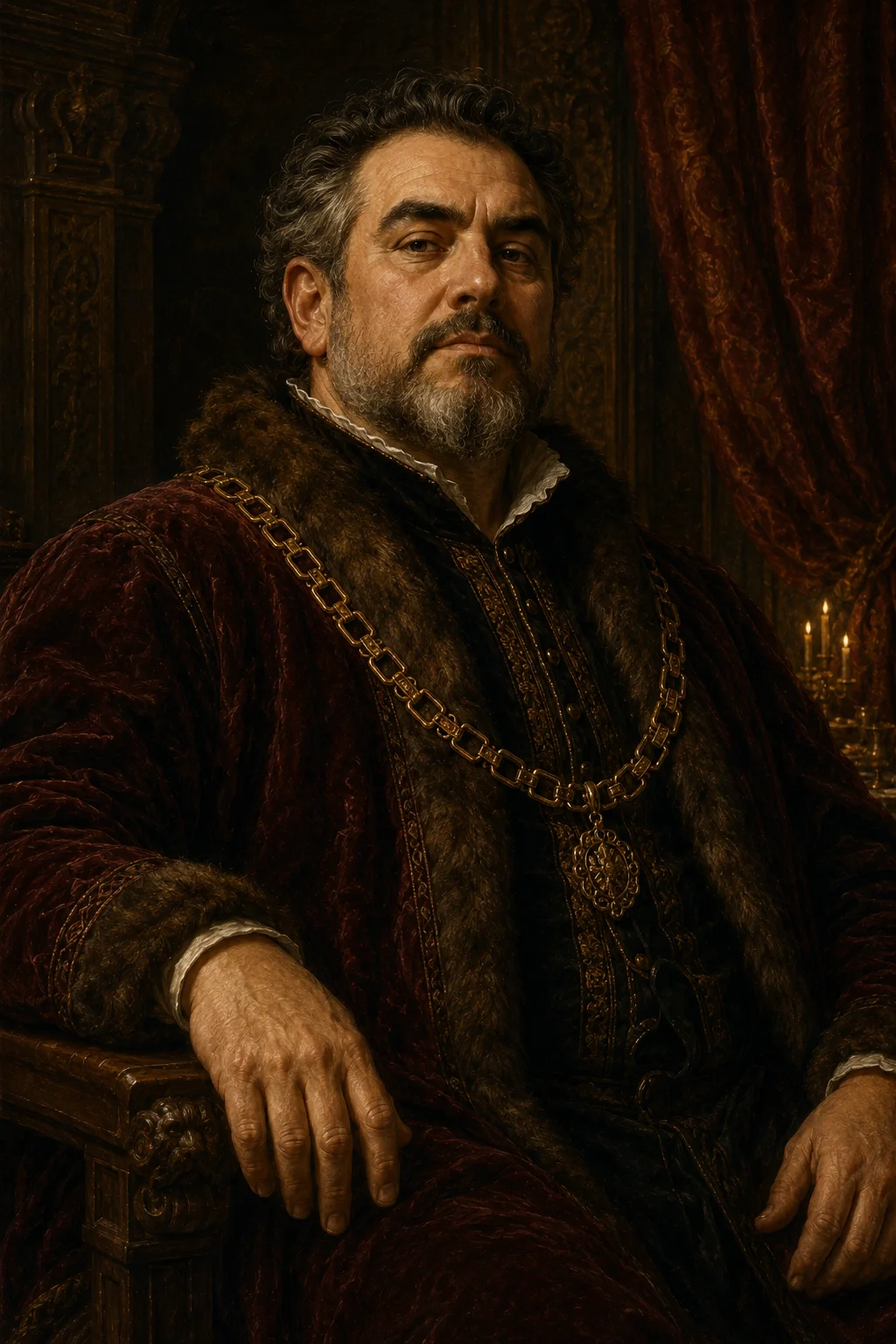
Capulet
Capulet embodies patriarchal authority and the destructive momentum of the feud as it operates within the family rather than the street. His shift from indulgent father to enraged patriarch demonstrates how completely the logic of honour and control can override even genuine parental affection.
Appears In
Who is Capulet?
Capulet is the head of the Capulet household, an aging nobleman whose feud with Montague is old enough that even he seems, at moments, unable to recall its original cause. At the play's opening he appears genuinely fond of Juliet and cautious about her marrying too young, telling Paris to wait and to win her affection properly rather than simply claiming her.
That patience evaporates after Tybalt's death. Grief and the need to reassert order in his household push Capulet toward an abrupt about-face: he moves Juliet's wedding to Paris forward by days and, when she refuses, erupts into a fury that reveals the limits of his earlier indulgence - his love for Juliet, it turns out, was always conditional on her obedience.
His rage at his daughter, delivered in some of the play's harshest language, is followed by the devastation of finding her apparently dead on what should have been her wedding morning, and finally by the full horror of the tomb. His reconciliation with Montague over their children's bodies is genuine, but it arrives at a cost the play never lets us forget he helped create.
Motivation
Capulet is motivated by the desire to secure his family's honour and stability, particularly after Tybalt's death threatens to destabilise his household's standing. His insistence on Juliet's marriage to Paris is, in his own mind, an act of care for her future - even as it becomes an act of tyranny in practice.
Personality
Capulet is a man of genuine, if conditional, warmth whose temper, when crossed, becomes total. His early scenes show real tenderness toward Juliet and real caution about rushing her into marriage; his later scenes show how quickly that tenderness curdles into rage when his authority is questioned. He is not a simple tyrant - he is a father whose love has never been separated from his expectation of obedience, and the play makes him pay dearly for failing to notice the difference.