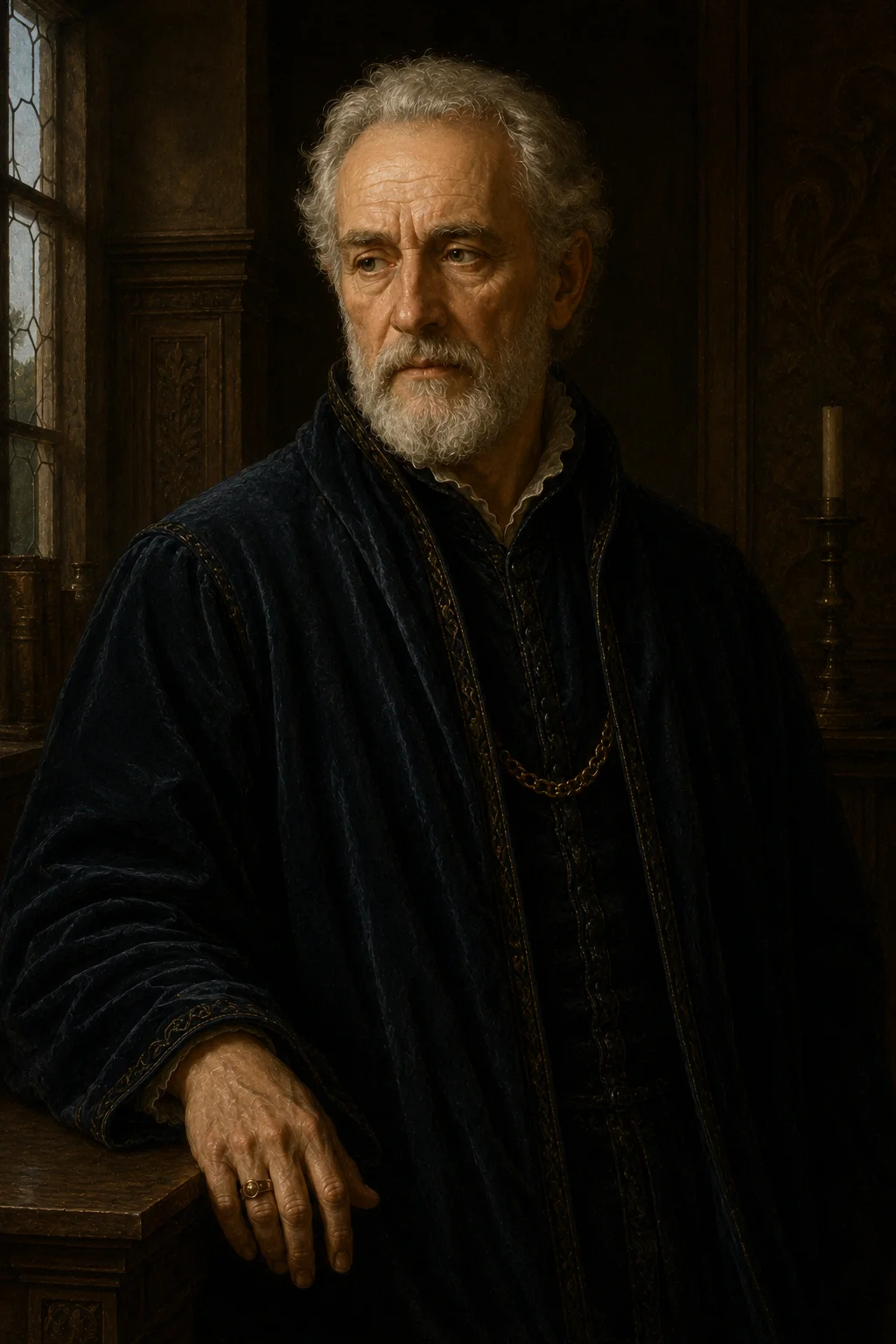
Montague
Montague represents the Montague side of the ancient feud, his household's losses in the final scene giving the reconciliation between the two families its full and irreversible cost. His distance from Romeo through most of the play underscores how little the parents' generation ultimately understood the children whose deaths finally end their quarrel.
Appears In
Who is Montague?
Montague is the head of the Montague household and Romeo's father, first seen trying to press into the opening brawl before his wife physically restrains him - an old man still willing, at least in gesture, to answer the feud's call. He is a more distant presence in the play than Capulet, appearing in relatively few scenes and rarely interacting directly with Romeo on stage.
His concern for his son is genuine, expressed early through his worried description to Benvolio of Romeo's mysterious, self-isolating melancholy over Rosaline. He wants to understand his son's unhappiness but seems unable to reach him directly, a distance that persists, in dramatic terms, for most of the play.
He arrives at the final scene to learn that his wife, Lady Montague, has died of grief in the night over Romeo's banishment, and moments later that Romeo himself is dead in the tomb before him. His last act is to offer, alongside Capulet, to raise a golden statue to Juliet - a gesture of reconciliation and memorial that arrives only once nothing else remains to be lost.
Motivation
Montague is motivated by loyalty to his family and, beneath the feud's old habits, by real concern for his son's wellbeing. By the play's end, grief for his wife and his son replaces whatever investment he once had in the quarrel itself.
Personality
Montague is a more lightly sketched figure than his rival Capulet, defined mostly by a reserved concern for his son that he seems unable to express directly to Romeo himself. His willingness to join the opening brawl shows the feud's habits are still alive in him, but his grief at the play's close - losing both wife and son within moments of each other - is presented without any trace of the old household rivalry, only loss.