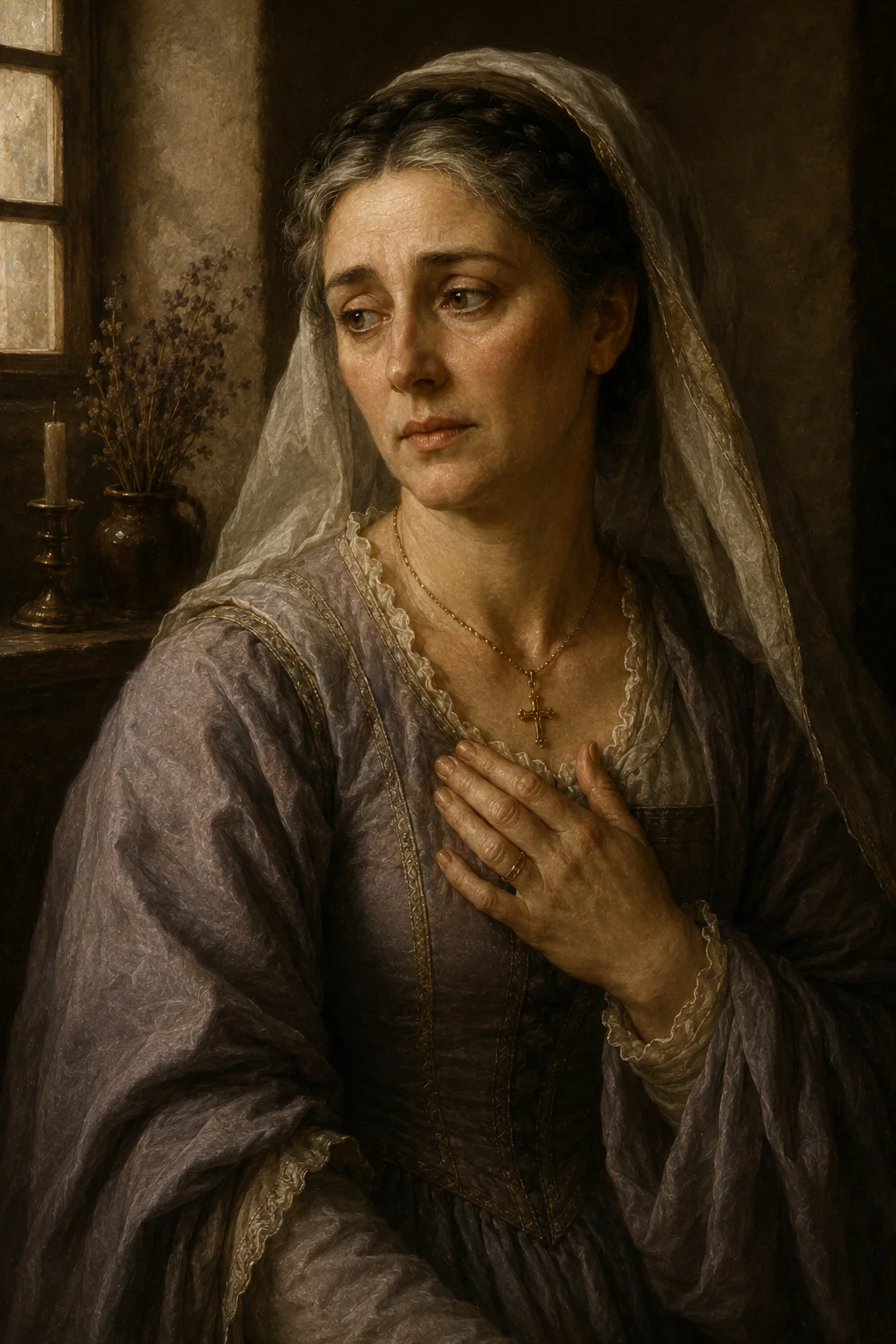
Lady Montague
Lady Montague's brief appearance and offstage death mark her as one of the feud's quieter casualties - a mother whose grief for her banished son proves fatal before she can even learn of his death, adding one more loss to the reckoning that finally ends the quarrel between the two houses.
Appears In
Who is Lady Montague?
Lady Montague is Romeo's mother, glimpsed only briefly in the play's opening scene as she physically restrains her husband from joining the street brawl between the two households. Her single line there - urging Montague not to stir a foot toward the fight - establishes her, in the small space she is given, as a voice of restraint rather than escalation.
She does not appear again on stage. Her absence from the rest of the play is itself part of her characterisation: she exists at the margins of a story dominated by her son's passions and her husband's feud, present only long enough to worry over Romeo before vanishing from the action entirely.
Her death is reported, not shown - Montague tells the assembled families in the final scene that grief over Romeo's banishment has killed her in the night, a quiet offstage casualty that lands amid the more visually devastating deaths of Romeo, Juliet, and Paris, but that carries its own weight as one more life the feud has taken.
Motivation
Lady Montague is motivated by concern for her family's safety and, implicitly, by deep love for her son Romeo, whose banishment grieves her fatally even though the play never lets us see that grief directly.
Personality
Lady Montague is sketched with the barest strokes, but what little she says argues for a temperament opposed to the feud's violence - she is the one physically holding her husband back from the opening brawl, not egging him forward. Her death of grief, reported rather than staged, suggests a depth of feeling for Romeo that the play never has the chance to dramatise directly.