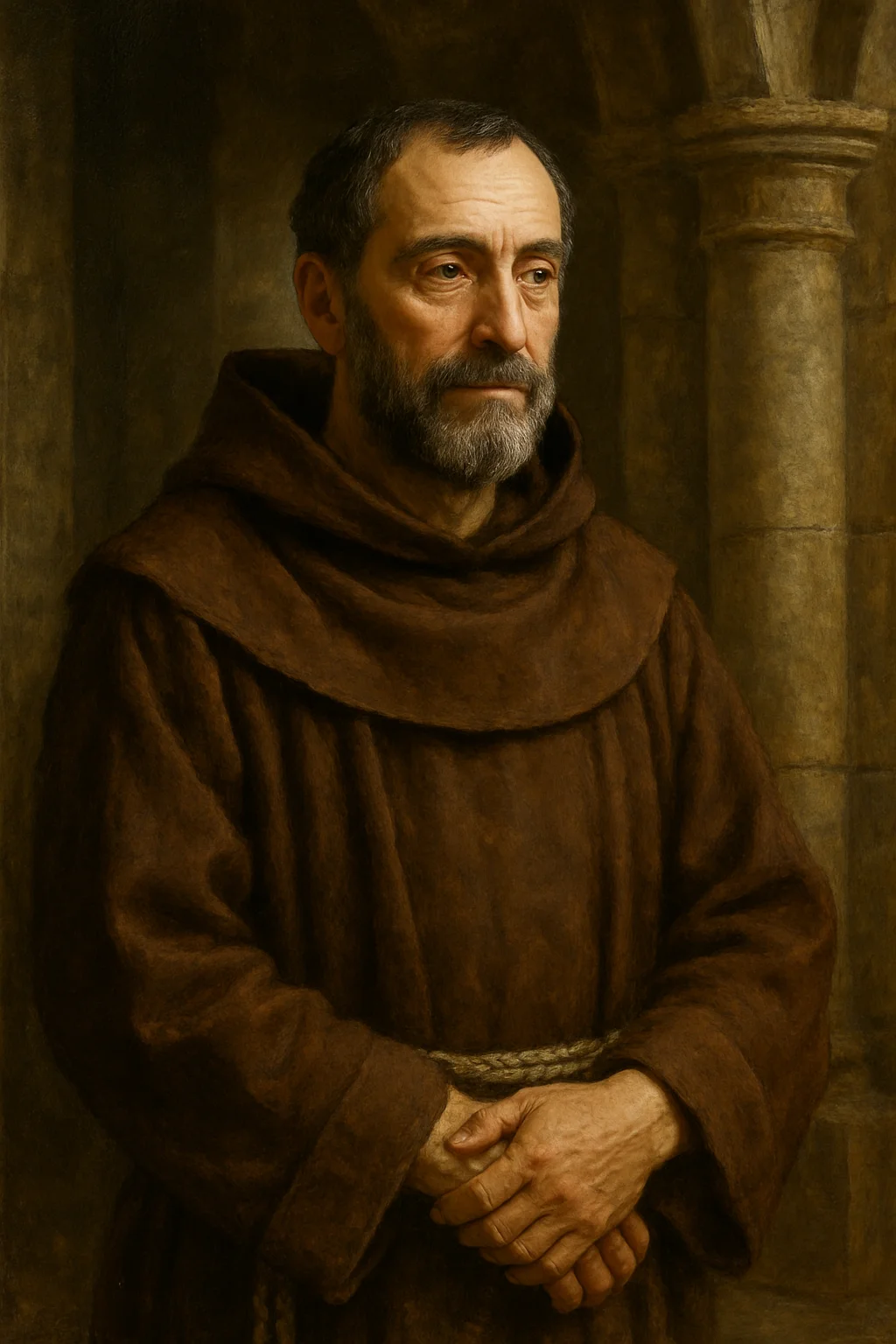
Friar Francis
Friar Francis is the voice of calm reason in the play's most dangerous scene - his decision to believe Hero's innocence on instinct and his plan to fake her death are the pivot on which the play turns from near-tragedy back toward comedy.
Appears In
Who is Friar Francis?
Friar Francis appears in the play at its most precarious moment - the wedding ceremony that collapses into public accusation - and his response to the crisis is the only thing that stands between the comedy's resolution and genuine tragedy. He has said almost nothing before Claudio's denunciation of Hero, his role until that point being the entirely conventional one of conducting a marriage; but as the accusations pile up and Leonato himself begins to believe the worst of his daughter, the Friar is the first and for a long moment the only person in the church who looks at Hero's face and draws a different conclusion from what he sees there.
His plan - to conceal Hero, announce that she has died of grief, and wait for time and the shock of apparent loss to work on Claudio's conscience - is a piece of practical psychology as much as theology. 'What we have we prize not to the worth / Whiles we enjoy it,' he reasons, 'but being lacked and lost, / Why, then we rack the value.' He does not promise that Claudio will be reformed, only that concealment buys time for truth to surface by whatever means it can, and the plan's success ultimately depends not on the Friar's wisdom but on Dogberry's accidental discovery of Borachio's confession - a convergence the Friar could not have predicted but which his strategy had left room for.
He officiates again at the play's final wedding, where his earlier plan bears its full fruit: Hero unveiled and restored, Claudio given a second chance he barely deserves, and the comedy's resolution accomplished. The Friar takes no credit and seeks none, stepping back into the background as smoothly as he stepped forward in the church - a figure defined entirely by the single moment when his steadiness of judgment was the difference between catastrophe and comedy.
Motivation
Friar Francis is motivated by a genuine conviction in Hero's innocence drawn from long experience of human nature, and by a pastoral instinct to protect rather than condemn - he acts not from calculation but from a studied faith that truth, given time and the right conditions, will eventually assert itself.
Personality
Friar Francis combines the moral authority of his office with an unusually clear-eyed understanding of how grief and guilt operate in practice - his plan to fake Hero's death is less mystical than psychological, grounded in a working knowledge of how loss reshapes people's feelings. He speaks with measured confidence in the church scene without ever overreaching, and withdraws entirely once the crisis is past.