Elbow
Who is Elbow?
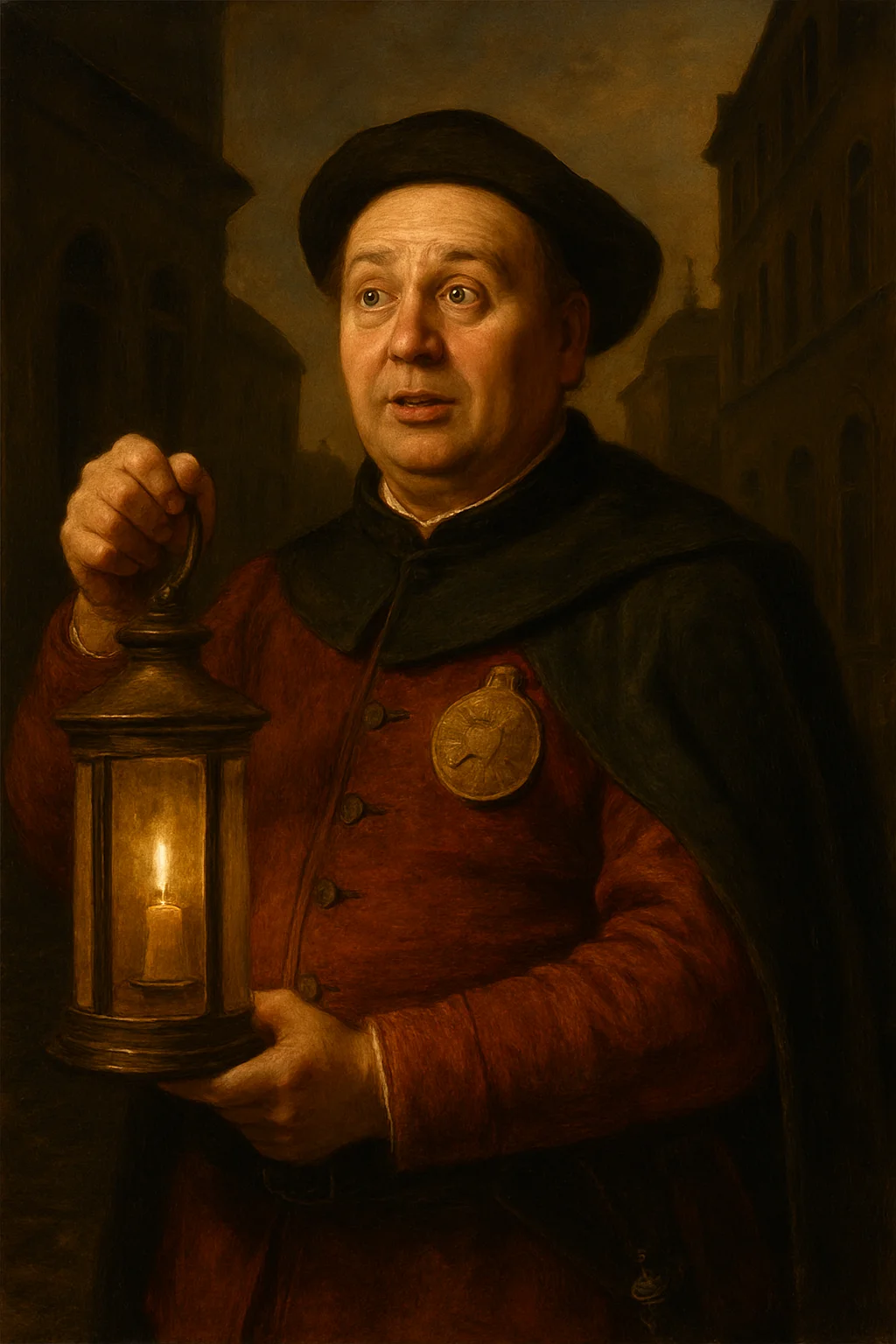
Elbow is a constable whose command of language is reliably, comically wrong - he calls Mistress Overdone's establishment a 'house of profession' rather than a 'house of resort,' describes his own wife as having been 'respected' rather than 'suspected' there, and generally inverts his meaning at every turn, to the visible exasperation of everyone he addresses.
A muddled constable whose chronic malapropisms complicate his well-meaning efforts to prosecute Pompey and Froth for vice in Vienna's streets.
Appears In
Biography
His scene before Angelo and Escalus, attempting to prosecute Pompey and Froth for offenses he cannot clearly articulate, produces the play's broadest comedy and gives Escalus occasion to display a patience Angelo conspicuously lacks - Angelo abandons the proceedings early, leaving Escalus to untangle Elbow's charges as best he can.
Elbow's malapropisms serve a purpose beyond comedy: his confused, well-meaning pursuit of vice in Vienna's streets stands in unflattering contrast to Angelo's cold, precise pursuit of Claudio, suggesting that the city's actual moral disorder is being handled with more warmth, if less competence, at the constable's level than at the deputy's.
Motivation
Elbow is motivated by a genuine, if confused, sense of civic duty, pursuing what he believes to be vice and disorder despite lacking the vocabulary or clarity to prosecute it effectively.
Personality
Elbow's constant verbal inversions make him one of the play's purest comic figures, but his earnestness is never in doubt - he pursues his muddled prosecutions with complete sincerity, providing a warmer, more bumbling version of law enforcement than Angelo's precise severity.