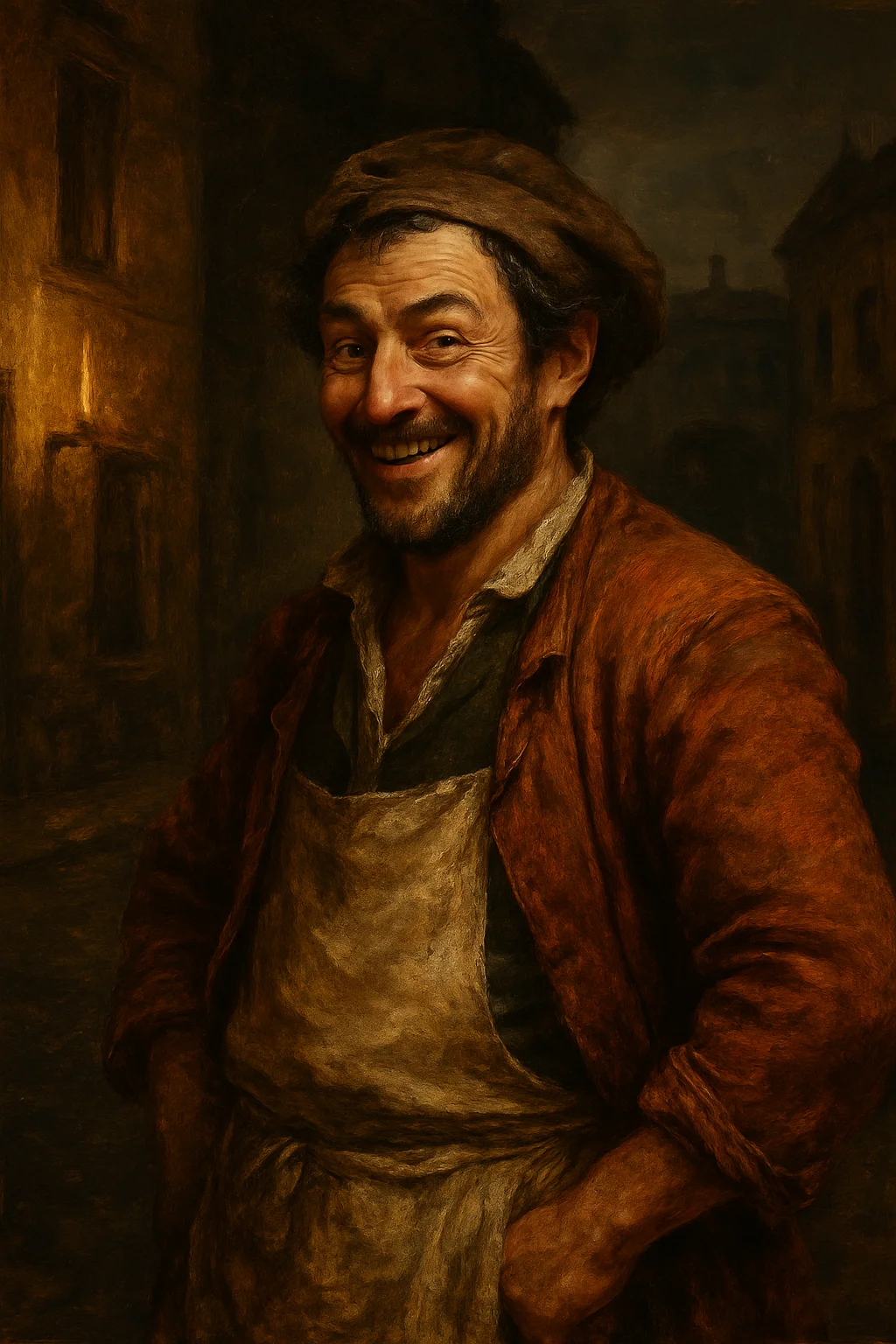
Pompey
Who is Pompey?
Pompey works as a servant and tapster for Mistress Overdone, and his practical, unsentimental view of Vienna's sexual economy runs directly counter to the moral seriousness Angelo's new law assumes - he predicts to Mistress Overdone that half the city's houses will need to close if the law is enforced, since desire will always outrun prohibition. Brought before Angelo and Escalus for his part in the brothel trade, he defends himself with the same unbothered logic, testing Escalus's patience without quite crossing into outright defiance.
Mistress Overdone's quick-witted servant and bawd, whose unrepentant practicality about Vienna's vice trade later finds a second calling as an executioner's assistant.
Appears In
Biography
Arrested again in Act III alongside Mistress Overdone, Pompey is offered an unusual reprieve: he can avoid punishment by assisting the executioner Abhorson, a job he takes up with the same wry, adaptable practicality he brought to bawdry, quipping that a hangman's trade and a bawd's are not so different in the company they keep.
Pompey's presence in the prison scenes of Act IV gives the play's grim final movement - Barnardine's refusal to be executed, the arrival of Ragozine's head - a persistent, dark comic undertone, his commentary keeping the scenes from tipping fully into solemnity even as the stakes around him remain genuinely mortal.
Motivation
Pompey is motivated by simple practical self-interest, adapting cheerfully to whatever trade - bawdry or executions - keeps him employed and out of serious punishment.
Personality
Pompey's total lack of moral pretension makes him one of the play's clearest voices of common sense about human appetite - he neither excuses vice with fine language nor condemns it with Angelo's severity, simply describing it as a persistent fact of city life that laws will struggle to eliminate.