Angelo Go to: what quality are they of? Elbow is your name? why dost thou not speak, Elbow?
Pompey
Pompey. He cannot, sir; he's out at elbow.
Elbow Ay, sir, by Mistress Overdone's means: but as she spit in his face, so she defied him.
Pompey
Pompey. Sir, if it please your honour, this is not so.
Escalus Do you hear how he misplaces?
Pompey
Pompey. Sir, she came in great with child; and longing, saving your honour's reverence, for stewed prunes; sir, we had but two in the house, which at that very distant time stood, as it were, in a fruit-dish, a dish of some three-pence; your honours have seen such dishes; they are not China dishes, but very good dishes,--
Escalus Go to, go to: no matter for the dish, sir.
Pompey
Pompey. No, indeed, sir, not of a pin; you are therein in the right: but to the point.
As I say, this Mistress Elbow, being, as I say, with child, and being great-bellied, and longing, as I said, for prunes; and having but two in the dish, as I said, Master Froth here, this very man, having eaten the rest, as I said, and, as I say, paying for them very honestly; for, as you know, Master Froth, I could not give you three-pence again.
Froth No, indeed.
Pompey
Pompey. Very well: you being then, if you be remembered, cracking the stones of the foresaid prunes,--
Froth Ay, so I did indeed.
Pompey
Pompey. Why, very well; I telling you then, if you be remembered, that such a one and such a one were past cure of the thing you wot of, unless they kept very good diet, as I told you,--
Froth All this is true.
Pompey
Pompey. Why, very well, then,--
Escalus Come, you are a tedious fool: to the purpose. What was done to Elbow's wife, that he hath cause to complain of? Come me to what was done to her.
Pompey
Pompey. Sir, your honour cannot come to that yet.
Escalus No, sir, nor I mean it not.
Pompey
Pompey. Sir, but you shall come to it, by your honour's leave. And, I beseech you, look into Master Froth here, sir; a man of four-score pound a year; whose father died at Hallowmas: was't not at Hallowmas, Master Froth?
Froth All-hallond eve.
Pompey
Pompey. Why, very well; I hope here be truths. He, sir, sitting, as I say, in a lower chair, sir; 'twas in the Bunch of Grapes, where indeed you have a delight to sit, have you not?
Froth I have so; because it is an open room and good for winter.
Pompey
Pompey. Why, very well, then; I hope here be truths.
Escalus Now, sir, come on: what was done to Elbow's wife, once more?
Pompey
Pompey. Once, sir? there was nothing done to her once.
Elbow I beseech you, sir, ask him what this man did to my wife.
Pompey
Pompey. I beseech your honour, ask me.
Escalus Well, sir; what did this gentleman to her?
Pompey
Pompey. I beseech you, sir, look in this gentleman's face. Good Master Froth, look upon his honour; 'tis for a good purpose. Doth your honour mark his face?
Escalus Ay, sir, very well.
Pompey
Pompey. Nay; I beseech you, mark it well.
Escalus Well, I do so.
Pompey
Pompey. Doth your honour see any harm in his face?
Escalus Why, no.
Pompey
Pompey. I'll be supposed upon a book, his face is the worst thing about him. Good, then; if his face be the worst thing about him, how could Master Froth do the constable's wife any harm? I would know that of your honour.
Elbow First, an it like you, the house is a respected house; next, this is a respected fellow; and his mistress is a respected woman.
Pompey
Pompey. By this hand, sir, his wife is a more respected person than any of us all.
Elbow Varlet, thou liest; thou liest, wicked varlet! the time has yet to come that she was ever respected with man, woman, or child.
Pompey
Pompey. Sir, she was respected with him before he married with her.
Escalus So. What trade are you of, sir?
Pompey
Pompey. Tapster; a poor widow's tapster.
Escalus Your mistress' name?
Pompey
Pompey. Mistress Overdone.
Escalus Hath she had any more than one husband?
Pompey
Pompey. Nine, sir; Overdone by the last.
Escalus Come you hither to me, Master tapster. What's your name, Master tapster?
Pompey
Escalus What else?
Pompey
Escalus Troth, and your bum is the greatest thing about you; so that in the beastliest sense you are Pompey the Great. Pompey, you are partly a bawd, Pompey, howsoever you colour it in being a tapster, are you not? come, tell me true: it shall be the better for you.
Pompey
Pompey. Truly, sir, I am a poor fellow that would live.
Escalus How would you live, Pompey? by being a bawd? What do you think of the trade, Pompey? is it a lawful trade?
Pompey
Pompey. If the law would allow it, sir.
Escalus But the law will not allow it, Pompey; nor it shall not be allowed in Vienna.
Pompey
Pompey. Does your worship mean to geld and splay all the youth of the city?
Escalus No, Pompey.
Pompey
Pompey. Truly, sir, in my poor opinion, they will to't then. If your worship will take order for the drabs and the knaves, you need not to fear the bawds.
Escalus There are pretty orders beginning, I can tell you: it is but heading and hanging.
Pompey
Pompey. If you head and hang all that offend that way but for ten year together, you'll be glad to give out a commission for more heads: if this law hold in Vienna ten year, I'll rent the fairest house in it after three-pence a bay: if you live to see this come to pass, say Pompey told you so.
Escalus Thank you, good Pompey; and, in requital of your prophecy, hark you: I advise you, let me not find you before me again upon any complaint whatsoever; no, not for dwelling where you do: if I do, Pompey, I shall beat you to your tent, and prove a shrewd Caesar to you; in plain dealing, Pompey, I shall have you whipt: so, for this time, Pompey, fare you well.
Pompey
Pompey. I thank your worship for your good counsel:
but I shall follow it as the flesh and fortune shall better determine. Whip me? No, no; let carman whip his jade: The valiant heart is not whipt out of his trade.
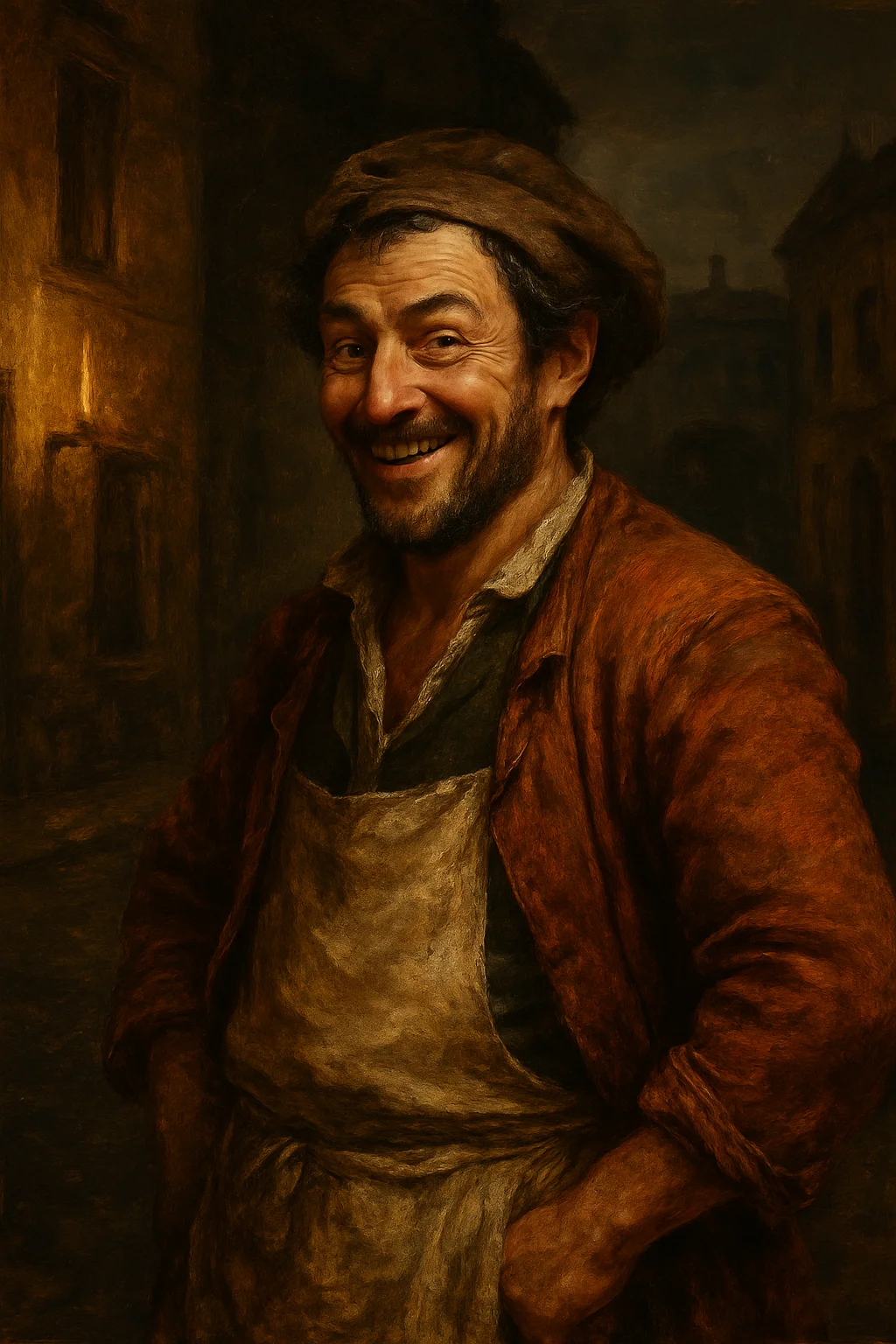 Pompey Mistress Overdone's quick-witted servant and bawd, unrepentant about the trade he plies.