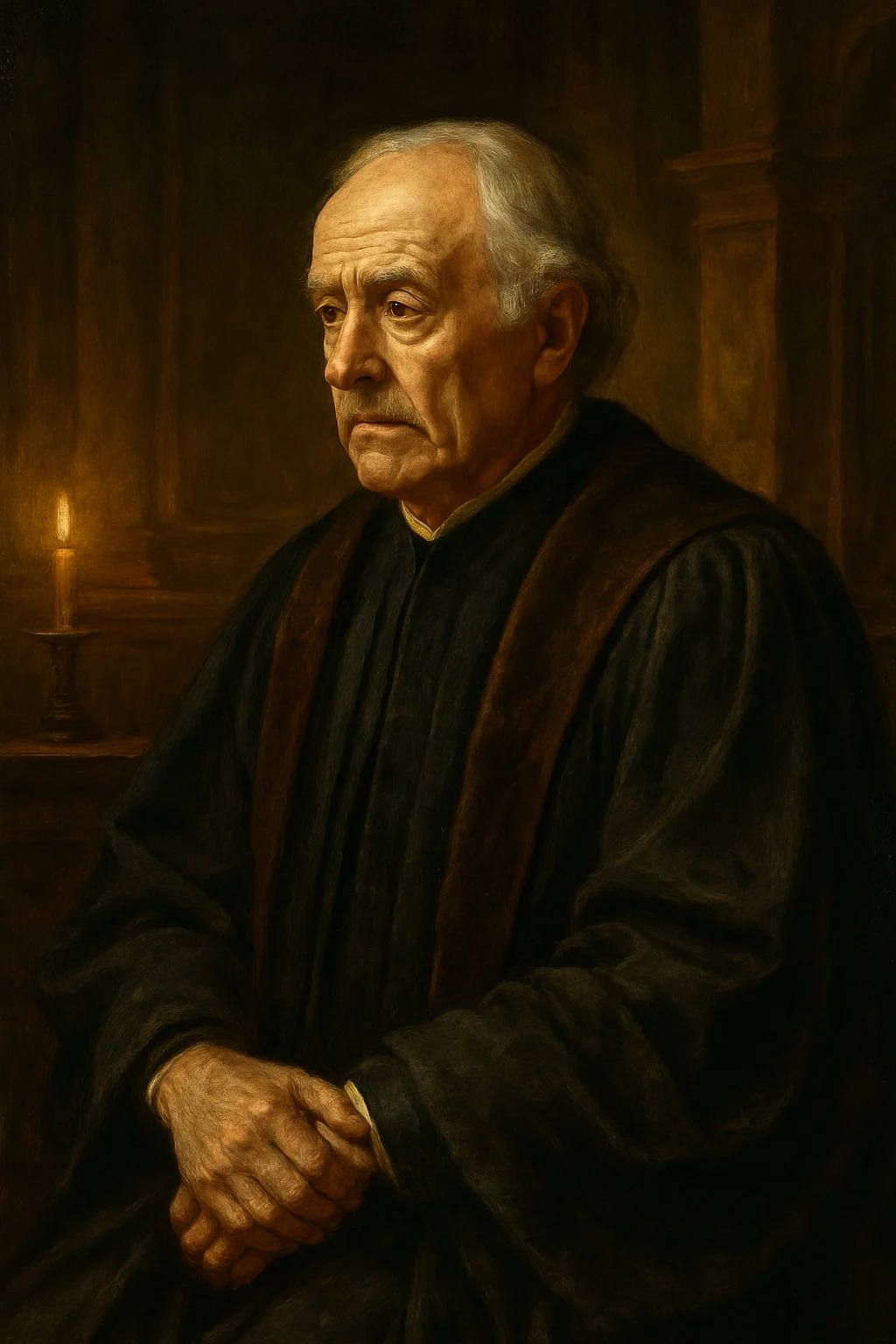
Escalus
Who is Escalus?
Escalus is named alongside Angelo as one of the Duke's chosen administrators, though the Duke privately confides that Angelo, not Escalus, will hold the full extent of ducal authority - a slight the play never dwells on, and one Escalus accepts without visible resentment. His counsel leans consistently toward leniency, urging Angelo to consider that he too might have committed Claudio's offense under different circumstances, though Angelo is unmoved.
An elderly, moderate lord who shares power with Angelo and consistently counsels leniency and proportion where the deputy insists on rigid severity.
Appears In
Biography
His most sustained scene finds him presiding, with weary patience, over Elbow's tangled accusations against Pompey and Froth, extracting little sense from the constable's malapropisms but extending a rough fairness to everyone involved that Angelo's court conspicuously lacks. He also receives Isabella's report of Angelo's proposition, which he dismisses as impossible given Angelo's reputation - an error of judgment that shows even a fundamentally decent administrator can be fooled by appearances.
In the final scene, Escalus questions the disguised Duke-as-friar about the 'slanders' against Vienna's true ruler, at one point ordering him held for examination, unaware of who stands before him. His role throughout is to embody a moderate, humane version of legal authority against which both Angelo's severity and the play's eventual mercies can be measured.
Motivation
Escalus is motivated by a practical, experienced sense of justice tempered with mercy, preferring measured judgment to the absolute application of law that Angelo favors.
Personality
Escalus represents the play's model of humane, functional governance - patient with fools like Elbow, willing to extend the benefit of the doubt, and quietly skeptical of Angelo's severity without ever directly challenging his authority. His faith in Angelo's reputation, however, shows that even his moderation has limits of perception.