Duke
Who is Duke?
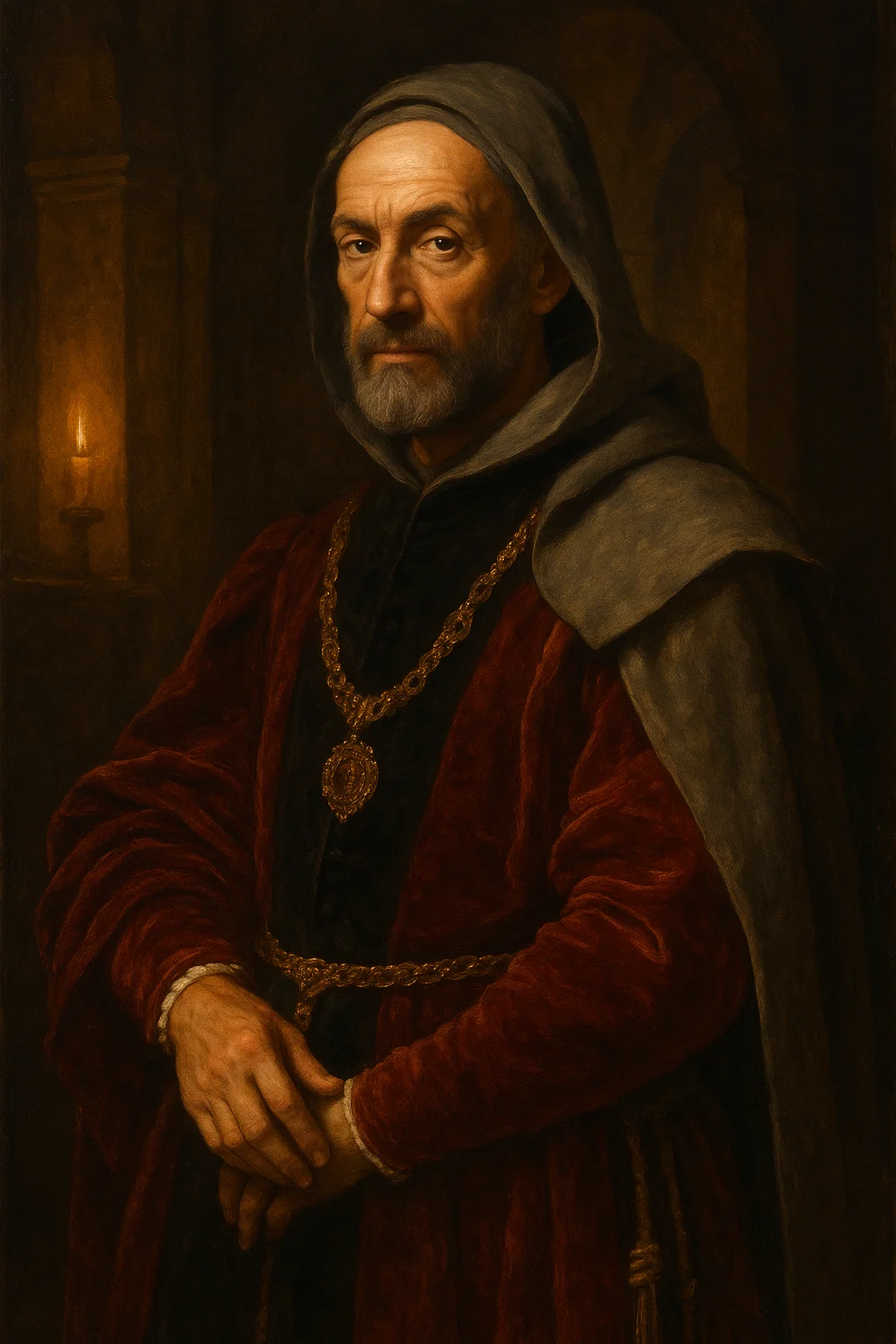
Duke Vincentio opens the play by abruptly handing power to Angelo and announcing his own departure, though he never actually leaves Vienna - disguised as a friar, he remains in the city to watch how his deputy governs. His stated reasons waver between two explanations: that the city's laws have gone unenforced too long and need restoring by someone other than himself, and, more privately, a wish to test Angelo's character directly. The deputation is itself an act of calculated indirection, the first of many the play traces to its ambiguous conclusion.
The Duke of Vienna, who disguises himself as a friar to secretly observe and ultimately correct his deputy's abuse of power.
Appears In
Biography
As the disguised Friar Lodowick, the Duke moves through the prison, the streets, and Mariana's grange, hearing confessions and increasingly directing the plot from behind his disguise - proposing the bed-trick that substitutes Mariana for Isabella, arranging for a second prisoner's head to spare Claudio's life, and orchestrating the public unmasking of Angelo at the city gates. His authority as friar is entirely assumed rather than earned, and the play repeatedly tests how far a disguise can be trusted to produce good outcomes even when the man wearing it is, in fact, the rightful ruler.
The Duke's return to his own identity in Act V is staged as public theater - he interrogates Isabella and Mariana in his ducal robes, vanishes and reappears as the friar, and is finally unmasked by Lucio's tug at his hood. His concluding proposal of marriage to Isabella, delivered without her spoken answer, has divided readers for centuries: either the natural reward of a comedy ending in marriages, or one more instance of a powerful man asking a woman for something she has had no real room to refuse.
Motivation
Vincentio is motivated by a wish to see Vienna's neglected laws restored to force without bearing personal blame for their severity, and, once Angelo's corruption becomes clear, by a growing determination to expose and correct it without revealing his own hand too soon.
Personality
The Duke prefers indirect control to open rule, delegating authority to Angelo rather than enforcing the law himself and then manipulating events from behind a disguise rather than intervening directly. His fondness for staged revelation and last-minute rescue gives him narrative control over nearly every outcome in the play, though his own motives remain more opaque than those of the characters he manipulates.