Angelo We must not make a scarecrow of the law, Setting it up to fear the birds of prey, And let it keep one shape, till custom make it Their perch and not their terror.
Escalus
Escalus. Ay, but yet Let us be keen, and rather cut a little, Than fall, and bruise to death. Alas, this gentleman Whom I would save, had a most noble father!
Let but your honour know, Whom I believe to be most strait in virtue, That, in the working of your own affections, Had time cohered with place or place with wishing, Or that the resolute acting of your blood Could have attain'd the effect of your own purpose, Whether you had not sometime in your life Err'd in this point which now you censure him, And pull'd the law upon you.
Angelo 'Tis very pregnant, The jewel that we find, we stoop and take't Because we see it; but what we do not see We tread upon, and never think of it. You may not so extenuate his offence For I have had such faults; but rather tell me, When I, that censure him, do so offend, Let mine own judgment pattern out my death, And nothing come in partial. Sir, he must die.
Escalus
Escalus. Be it as your wisdom will.
Angelo See that Claudio Be executed by nine to-morrow morning: Bring him his confessor, let him be prepared; For that's the utmost of his pilgrimage.
Escalus
Escalus. ([Aside]) Well, heaven forgive him! and forgive us all! Some rise by sin, and some by virtue fall: Some run from brakes of ice, and answer none: And some condemned for a fault alone.
Elbow If it? please your honour, I know not well what they are: but precise villains they are, that I am sure of; and void of all profanation in the world that good Christians ought to have.
Escalus
Escalus. This comes off well; here's a wise officer.
Elbow He, sir! a tapster, sir; parcel-bawd; one that serves a bad woman; whose house, sir, was, as they say, plucked down in the suburbs; and now she professes a hot-house, which, I think, is a very ill house too.
Escalus
Escalus. How know you that?
Elbow My wife, sir, whom I detest before heaven and your honour,--
Escalus
Elbow Ay, sir; whom, I thank heaven, is an honest woman,--
Escalus
Escalus. Dost thou detest her therefore?
Elbow I say, sir, I will detest myself also, as well as she, that this house, if it be not a bawd's house, it is pity of her life, for it is a naughty house.
Escalus
Escalus. How dost thou know that, constable?
Elbow Marry, sir, by my wife; who, if she had been a woman cardinally given, might have been accused in fornication, adultery, and all uncleanliness there.
Escalus
Escalus. By the woman's means?
Elbow Prove it before these varlets here, thou honourable man; prove it.
Escalus
Escalus. Do you hear how he misplaces?
Pompey Sir, she came in great with child; and longing, saving your honour's reverence, for stewed prunes; sir, we had but two in the house, which at that very distant time stood, as it were, in a fruit-dish, a dish of some three-pence; your honours have seen such dishes; they are not China dishes, but very good dishes,--
Escalus
Escalus. Go to, go to: no matter for the dish, sir.
Pompey Why, very well, then,--
Escalus
Escalus. Come, you are a tedious fool: to the purpose. What was done to Elbow's wife, that he hath cause to complain of? Come me to what was done to her.
Pompey Sir, your honour cannot come to that yet.
Escalus
Escalus. No, sir, nor I mean it not.
Angelo This will last out a night in Russia, When nights are longest there: I'll take my leave. And leave you to the hearing of the cause; Hoping you'll find good cause to whip them all.
Escalus
Escalus. I think no less. Good morrow to your lordship.
Now, sir, come on: what was done to Elbow's wife, once more?
Pompey I beseech your honour, ask me.
Escalus
Escalus. Well, sir; what did this gentleman to her?
Pompey I beseech you, sir, look in this gentleman's face. Good Master Froth, look upon his honour; 'tis for a good purpose. Doth your honour mark his face?
Escalus
Escalus. Ay, sir, very well.
Pompey Nay; I beseech you, mark it well.
Escalus
Pompey Doth your honour see any harm in his face?
Escalus
Pompey I'll be supposed upon a book, his face is the worst thing about him. Good, then; if his face be the worst thing about him, how could Master Froth do the constable's wife any harm? I would know that of your honour.
Escalus
Escalus. He's in the right. Constable, what say you to it?
Pompey Sir, she was respected with him before he married with her.
Escalus
Escalus. Which is the wiser here? Justice or Iniquity? Is this true?
Elbow O thou caitiff! O thou varlet! O thou wicked Hannibal! I respected with her before I was married to her! If ever I was respected with her, or she with me, let not your worship think me the poor duke's officer. Prove this, thou wicked Hannibal, or I'll have mine action of battery on thee.
Escalus
Escalus. If he took you a box o' the ear, you might have your action of slander too.
Elbow Marry, I thank your good worship for it. What is your worship's pleasure I shall do with this wicked caitiff?
Escalus
Escalus. Truly, officer, because he hath some offences in him that thou wouldst discover if thou couldst, let him continue in his courses till thou knowest what they are.
Elbow Marry, I thank your worship for it. Thou seest, thou wicked varlet, now, what's come upon thee: thou art to continue now, thou varlet; thou art to continue.
Escalus
Escalus. Where were you born, friend?
Froth Here in Vienna, sir.
Escalus
Escalus. Are you of fourscore pounds a year?
Froth Yes, an't please you, sir.
Escalus
Escalus. So. What trade are you of, sir?
Pompey Tapster; a poor widow's tapster.
Escalus
Escalus. Your mistress' name?
Pompey Mistress Overdone.
Escalus
Escalus. Hath she had any more than one husband?
Pompey Nine, sir; Overdone by the last.
Escalus
Escalus. Nine! Come hither to me, Master Froth. Master Froth, I would not have you acquainted with tapsters: they will draw you, Master Froth, and you will hang them. Get you gone, and let me hear no more of you.
Froth thank your worship. For mine own part, I never come into any room in a tap-house, but I am drawn in.
Escalus
Escalus. Well, no more of it, Master Froth: farewell.
Come you hither to me, Master tapster. What's your name, Master tapster?
Pompey Pompey.
Escalus
Pompey Bum, sir.
Escalus
Escalus. Troth, and your bum is the greatest thing about you; so that in the beastliest sense you are Pompey the Great. Pompey, you are partly a bawd, Pompey, howsoever you colour it in being a tapster, are you not? come, tell me true: it shall be the better for you.
Pompey Truly, sir, I am a poor fellow that would live.
Escalus
Escalus. How would you live, Pompey? by being a bawd? What do you think of the trade, Pompey? is it a lawful trade?
Pompey If the law would allow it, sir.
Escalus
Escalus. But the law will not allow it, Pompey; nor it shall not be allowed in Vienna.
Pompey Does your worship mean to geld and splay all the youth of the city?
Escalus
Pompey Truly, sir, in my poor opinion, they will to't then. If your worship will take order for the drabs and the knaves, you need not to fear the bawds.
Escalus
Escalus. There are pretty orders beginning, I can tell you: it is but heading and hanging.
Pompey If you head and hang all that offend that way but for ten year together, you'll be glad to give out a commission for more heads: if this law hold in Vienna ten year, I'll rent the fairest house in it after three-pence a bay: if you live to see this come to pass, say Pompey told you so.
Escalus
Escalus. Thank you, good Pompey; and, in requital of your prophecy, hark you: I advise you, let me not find you before me again upon any complaint whatsoever; no, not for dwelling where you do: if I do, Pompey, I shall beat you to your tent, and prove a shrewd Caesar to you; in plain dealing, Pompey, I shall have you whipt: so, for this time, Pompey, fare you well.
Pompey but I shall follow it as the flesh and fortune shall better determine. Whip me? No, no; let carman whip his jade: The valiant heart is not whipt out of his trade.
Escalus
Escalus. Come hither to me, Master Elbow; come hither, Master constable. How long have you been in this place of constable?
Elbow Seven year and a half, sir.
Escalus
Escalus. I thought, by your readiness in the office, you had continued in it some time. You say, seven years together?
Elbow And a half, sir.
Escalus
Escalus. Alas, it hath been great pains to you. They do you wrong to put you so oft upon 't: are there not men in your ward sufficient to serve it?
Elbow Faith, sir, few of any wit in such matters: as they are chosen, they are glad to choose me for them; I do it for some piece of money, and go through with all.
Escalus
Escalus. Look you bring me in the names of some six or seven, the most sufficient of your parish.
Elbow To your worship's house, sir?
Escalus
Escalus. To my house. Fare you well.
What's o'clock, think you?
Justice Eleven, sir.
Escalus
Escalus. I pray you home to dinner with me.
Justice I humbly thank you.
Escalus
Escalus. It grieves me for the death of Claudio; But there's no remedy.
Justice Lord Angelo is severe.
Escalus
Escalus. It is but needful: Mercy is not itself, that oft looks so; Pardon is still the nurse of second woe: But yet,--poor Claudio! There is no remedy. Come, sir.
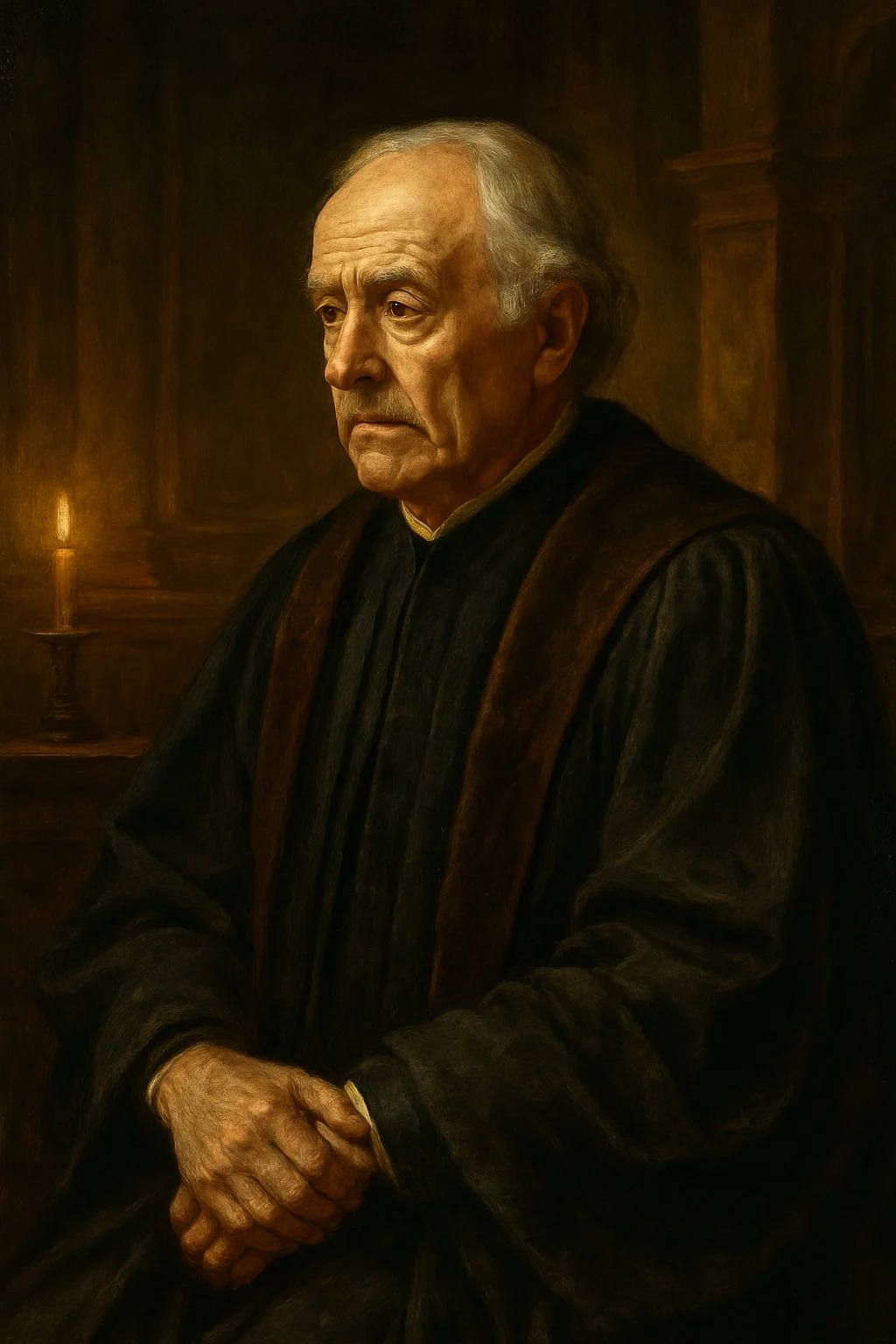 Escalus An elderly, moderate lord who counsels leniency where Angelo insists on severity.