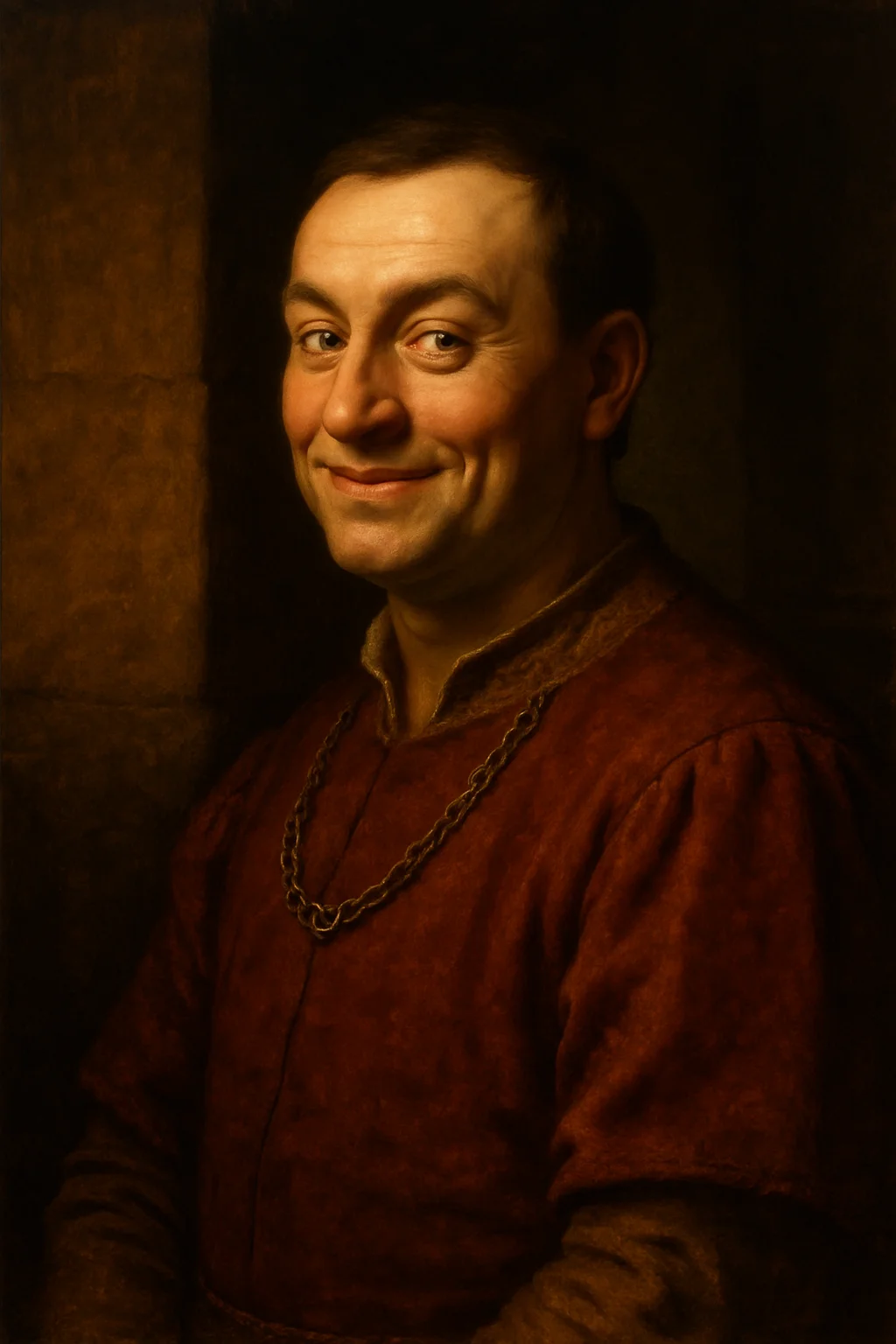
Oswald
Oswald is the play's study in servile ambition without conscience - a steward whose diligent execution of Goneril's cruelties, and whose willingness to murder a helpless blind man for reward, makes him the smallest and most contemptible face of the play's larger corruptions.
Appears In
Who is Oswald?
Oswald is Goneril's steward, and his entire character is legible in the contempt Kent shows him at their first meeting: 'a knave, a rascal... a whoreson glass-gazing superserviceable finical rogue.' He is the perfect instrument of a mistress like Goneril, carrying out her petty cruelties toward Lear's retinue with an officious, self-satisfied correctness that never once considers whether the orders he executes are honourable, only whether executing them well will please the woman who gives them.
His loyalty, such as it is, is entirely to Goneril's ambition rather than to any principle - he carries her letters to Edmund, reports on Regan's movements, and angles for advancement with the same unreflective diligence he brings to insulting an old king's dignity. When Regan, competing with her sister for Edmund's favour, tries to intercept Goneril's letter through him, Oswald's calculating refusal shows a man perfectly willing to play both sisters if it serves his own position.
His end comes on the road to Dover, where he encounters the blind Gloucester and, recognising an opportunity for reward, draws his sword to kill him. Edgar, guiding his father in disguise, kills Oswald in the ensuing fight - a brief, almost incidental death for a man who has spent the whole play serving other people's cruelty, undone at last by a chance meeting rather than any grand reckoning. The letter found on his body, exposing Goneril's plot against Albany's life, becomes the instrument of her own final undoing.
Motivation
Oswald is motivated entirely by advancement within Goneril's favour, a loyalty that is really just self-interest wearing the costume of service - he will insult a king, betray a rival mistress, or kill a blind old man, whichever best serves his own position at the moment.
Personality
Oswald's defining quality is a total absence of any principle beyond his own advancement - he executes Goneril's orders with a precise, self-important correctness that Kent finds more contemptible than open villainy, because Oswald never once appears to consider whether what he is doing is right. His willingness to kill the blind, helpless Gloucester for reward is the logical endpoint of a character built entirely around serving whoever currently holds power over him.