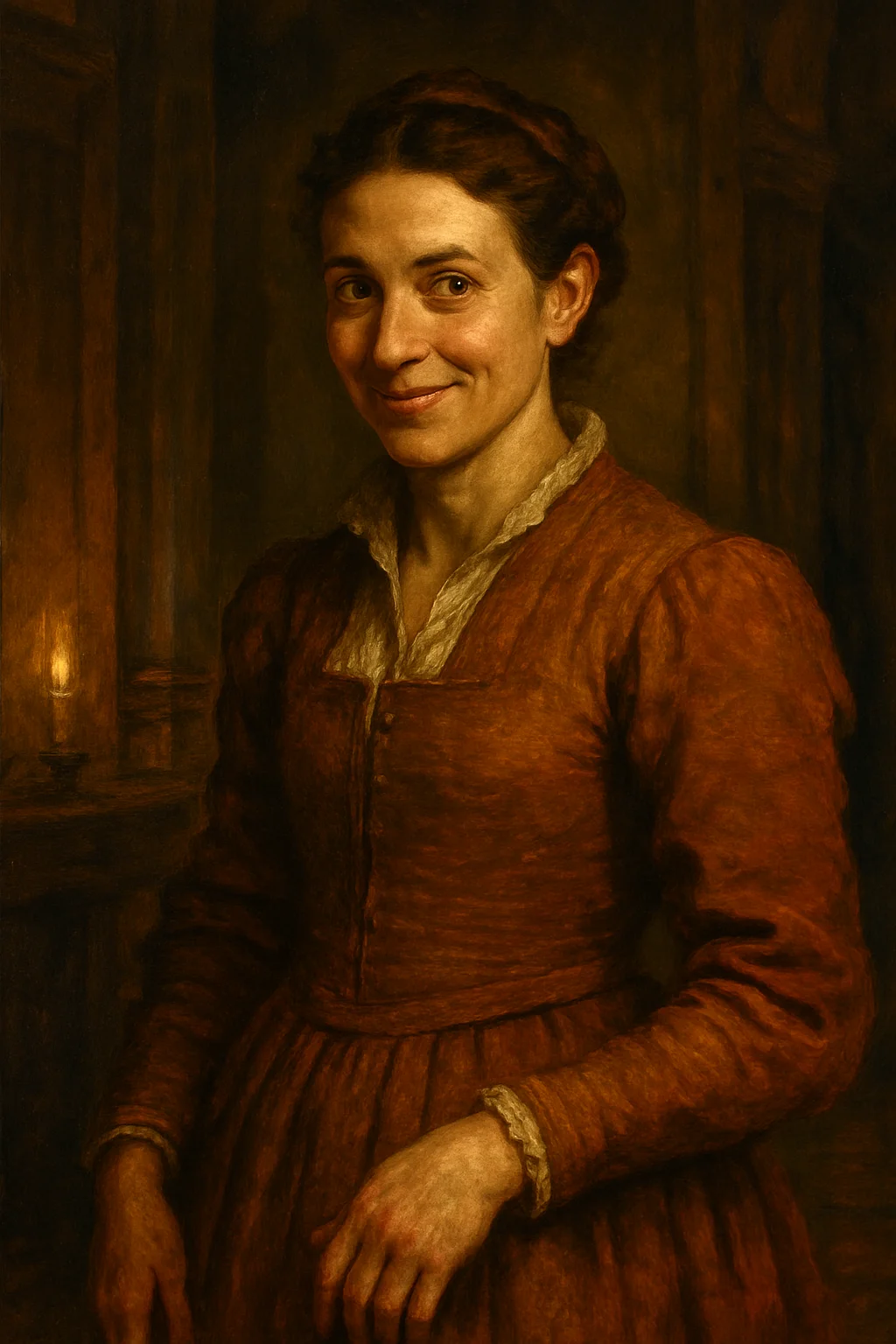
Maria
Maria is the play's true wit behind the Malvolio plot — the character who turns Sir Toby's vague malice into a precision instrument — and her efficiency and intelligence give the festive subplot its shape and its momentum.
Appears In
Biography
Maria is Olivia's waiting-gentlewoman and the most practically intelligent character in the play. She appears first managing the chaos of Sir Toby's late arrival and Sir Andrew's inadequacies with brisk efficiency, and when Malvolio crosses her — or, more precisely, when she sees in Malvolio's pomposity exactly the kind of material a good plot needs — she devises the forged letter scheme herself, without waiting to be asked, and executes it with precision.
The letter is Maria's masterpiece. She writes it in Olivia's hand, tailors it exactly to Malvolio's known vanities and secret ambitions, and leaves it where he will find it alone. Her management of the watching party — hiding Sir Toby, Sir Andrew, and Fabian behind the box hedge and keeping them from breaking cover — requires genuine comic timing, and her brief appearances during the scene are models of deadpan control. The whole plot is hers, and she gives it to Sir Toby as a gift.
The play rewards her accordingly: Sir Toby, in apparently genuine admiration of her wit and nerve, marries her. This is reported rather than shown — Fabian mentions it in passing in Act V — which is characteristic of how the play treats Maria: she does the work, creates the situation, and then steps slightly out of frame when the resolutions are being distributed. She is the sharpest mind in the household, and the play knows it, even if it does not always foreground it.
Motivation
Maria is motivated partly by the affront of Malvolio's superior manner and partly by a genuine pleasure in the exercise of her own considerable gifts for deception and timing — the plot is as much a demonstration of what she can do as it is revenge.
Personality
Maria is the character in Twelfth Night most comfortable with the gap between appearance and reality — she lives in it professionally, managing the household's social surface while observing its actual dynamics with clear eyes. Her wit is practical rather than lyrical, expressed in plans rather than speeches, which is why she tends to be underestimated in discussions of the play's clever characters.