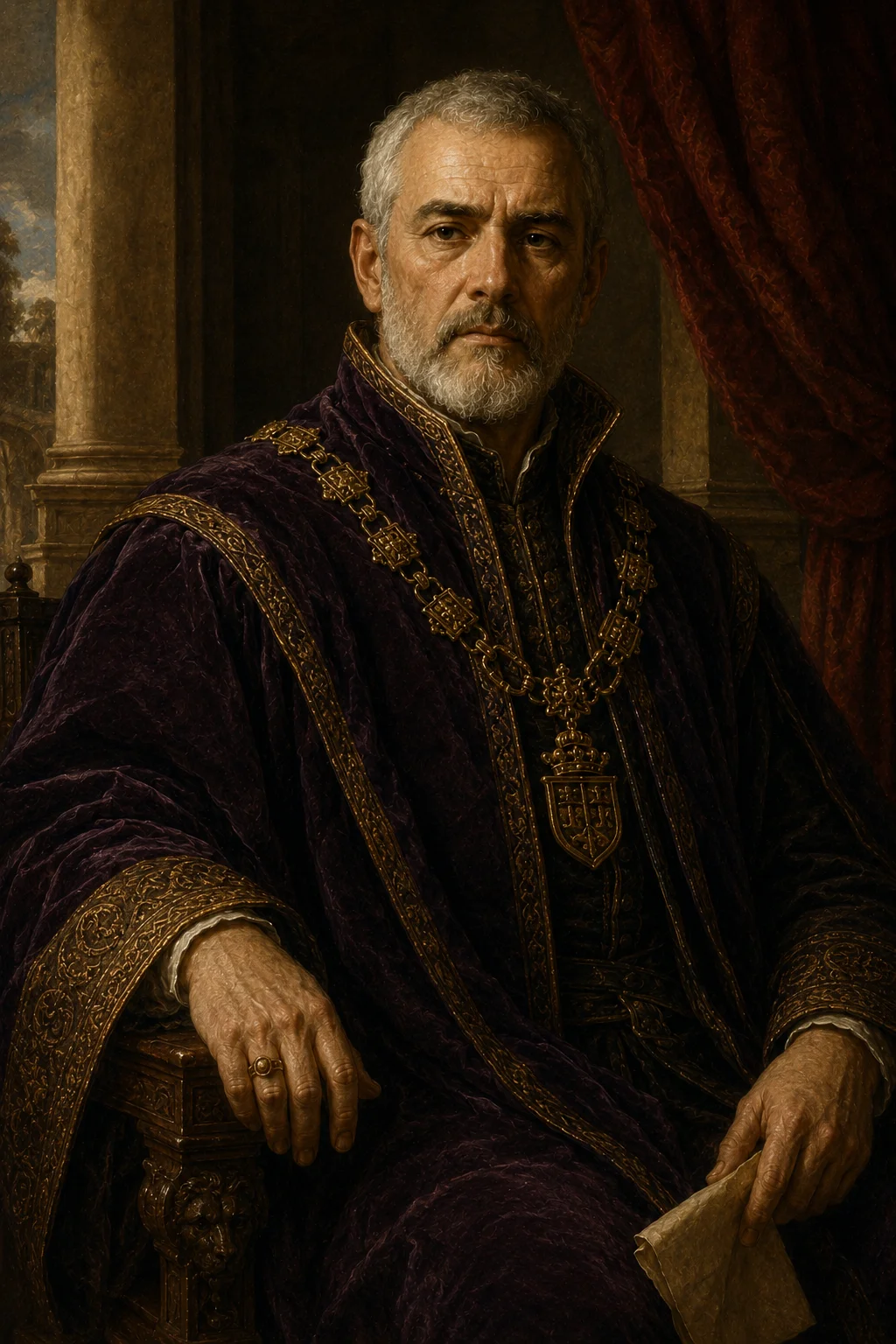
Prince Escalus
Prince Escalus represents the civic order that the Montague-Capulet feud repeatedly violates and that proves powerless to prevent the tragedy despite every attempt at intervention. His final speech delivers the play's explicit moral reckoning, naming the feud itself as the true cause of the deaths.
Appears In
Who is Prince Escalus?
Prince Escalus is the ruling Prince of Verona, a figure of civic authority who appears only three times in the play - always in the aftermath of violence between the Montagues and Capulets. His first appearance, breaking up the opening street brawl, establishes both his exasperation with the feud and the severity of his response: he decrees that any further public violence between the two houses will be punished by death.
That decree is tested in Act III, when Mercutio and Tybalt are killed in quick succession. The Prince, weighing the law against the circumstances - Tybalt killed Mercutio, and Romeo killed Tybalt in direct retaliation - hands down banishment rather than execution, a judgment that spares Romeo's life while still setting in motion the separation from Juliet that dooms them both.
He appears a final time at the Capulet tomb, presiding over the discovery of Romeo, Juliet, and Paris all dead, and delivers the play's closing judgment on the feud itself: that the households' hatred has been punished by the loss of their children, and that 'all are punished.' His authority, repeatedly asserted and repeatedly too late, frames the play's tragedy as a civic as well as a personal failure.
Motivation
Prince Escalus is motivated by a desire to maintain civic peace in Verona and to see the ancient feud between the two houses finally ended, whether through the threat of legal punishment or, failing that, through the grim lesson of what the feud ultimately costs.
Personality
Prince Escalus embodies exhausted civic authority - a ruler who has clearly dealt with this feud's violence before and is done tolerating it, yet whose decrees, however firm, cannot outpace the private passions driving the play's tragedy. His judgment to banish rather than execute Romeo shows a capacity for proportion and mercy that the feuding families themselves conspicuously lack.