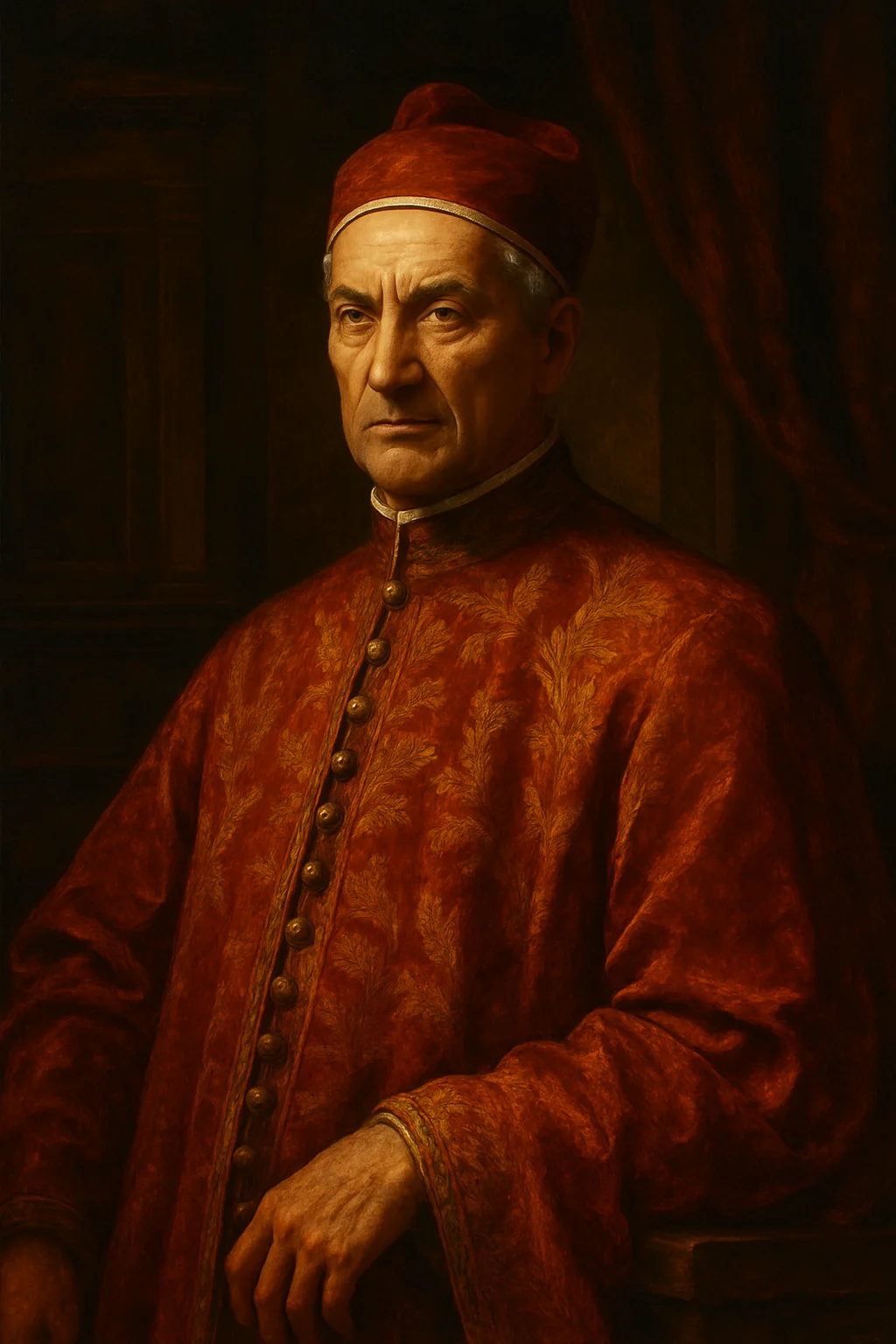
Duke Of Venice
The Duke of Venice functions as the figure of state authority whose ruling legitimises Othello and Desdemona's marriage and sends the newlyweds to Cyprus, establishing both the geographic and emotional stage on which the rest of the tragedy will play out.
Appears In
Biography
The Duke of Venice presides over the council chamber in Act I, where he must weigh urgent news of a Turkish fleet advancing on Cyprus alongside Brabantio's furious accusation that Othello has stolen his daughter through witchcraft. His handling of both crises in a single scene reveals a ruler of considerable pragmatism: he needs Othello's generalship far too badly to indulge Brabantio's outrage once Othello and Desdemona both testify that their marriage was freely chosen.
His ruling — that Othello's account 'takes away' the charge of witchcraft, and that Desdemona shall accompany her husband to Cyprus at her own request — settles the play's opening conflict decisively and sends its central characters toward the island where the tragedy proper will unfold. His parting words to Brabantio, that Othello is 'far more fair than black,' are offered as comfort but carry the same racial framework that shapes so much of the play's language about its protagonist.
The Duke does not appear again after Act I; his function is entirely confined to authorising the marriage and the mission that together set the plot in motion, after which the play's focus shifts entirely from Venetian civic order to the more intimate and lethal politics of Cyprus.
Motivation
The Duke is motivated by the practical demands of the Venetian state — chiefly the need for Othello's military leadership against the Turkish threat to Cyprus — which leads him to resolve Brabantio's personal grievance quickly in favour of the marriage.
Personality
The Duke handles a chamber full of competing urgencies — war and a senator's fury — with brisk, practical fairness, giving Othello and Desdemona a full hearing rather than simply deferring to Brabantio's rank. His diplomatic handling of the marriage dispute, offering Brabantio consolation without overturning the ruling, shows a ruler skilled at managing competing interests without letting either destabilise the state's more pressing military needs.