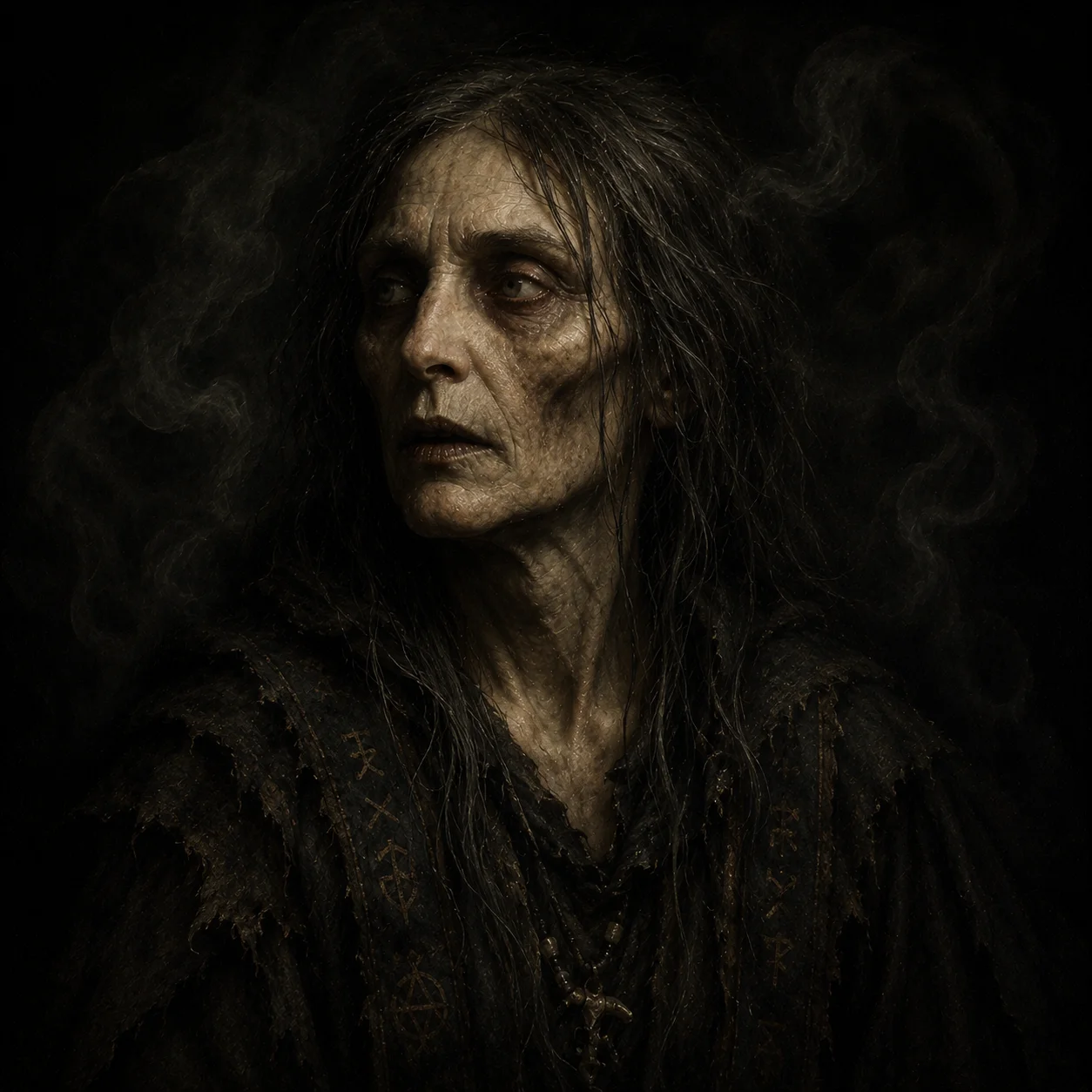
Second Witch
The Second Witch's role is collective rather than individual - she is part of the prophetic engine that drives the play's action. Separately she is marginal; as part of the trio she is essential.
Appears In
Who is Second Witch?
The Second Witch is one of the three Weird Sisters whose prophecies set the play's tragedy in motion. Like her companions, she exists in a liminal space - neither fully human nor fully supernatural, present at crossroads and in storms, speaking in verse that sounds like both riddle and revelation.
Her individual voice is nearly indistinguishable from those of the First and Third Witch. This indistinguishability is deliberate: the three function as one prophetic entity, a single force of disorder with three mouths.
Her lines in the cauldron scene of Act IV contribute to the creation of the apparitions that offer Macbeth false comfort - armed heads, bloody children, crowned kings - each image a half-truth shaped to deceive.
Motivation
Like her sisters, the Second Witch's motivation remains enigmatic. She is an agent of the play's supernatural dimension, a voice in the chorus of fate that Macbeth misreads as instruction.
Personality
The Second Witch speaks as part of a trio whose unified voice is the instrument of the play's supernatural dimension. Her power lies in the collective, not the individual.