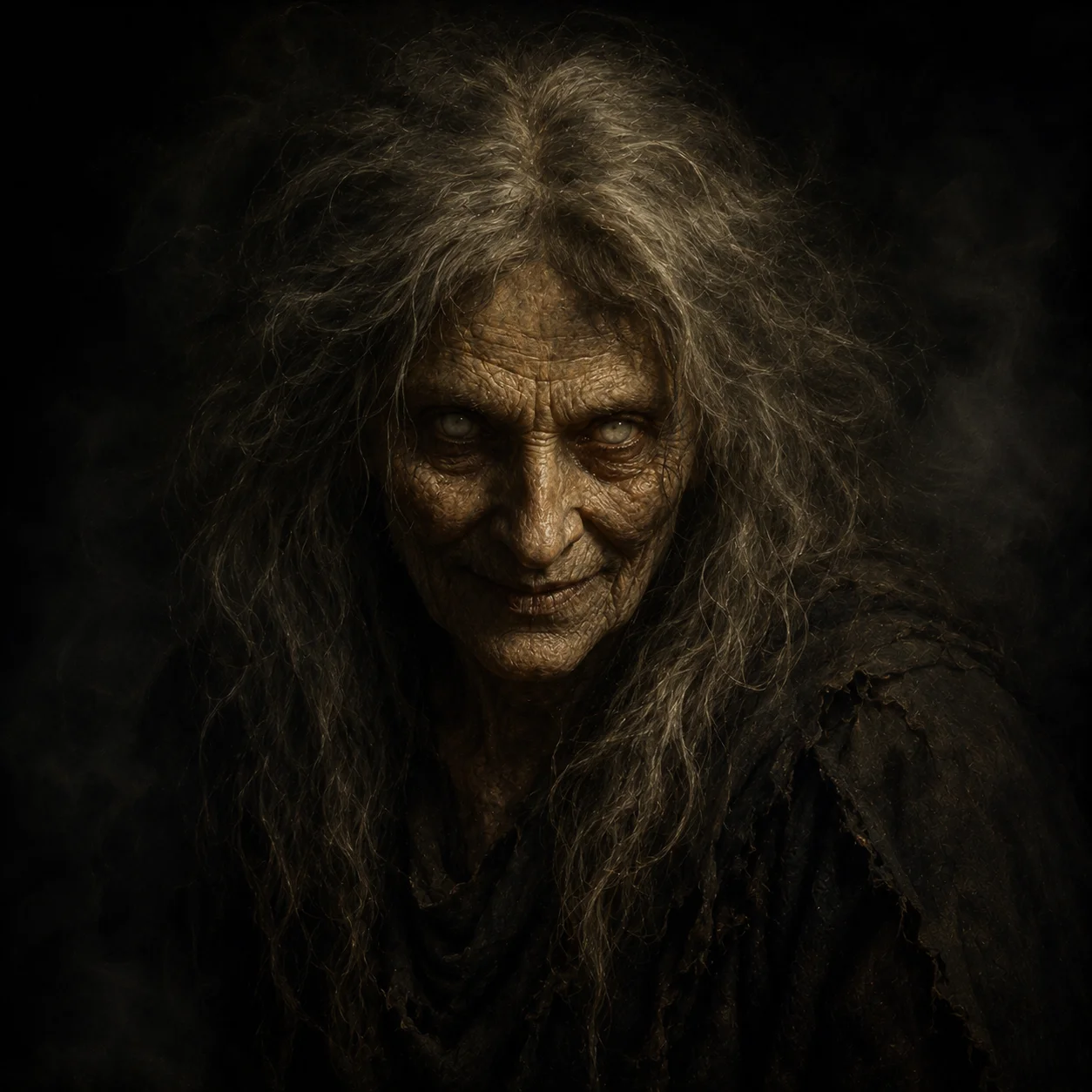
First Witch
The First Witch, with her sisters, initiates the action of the play. Their prophecy is not a command but an invitation - one that Macbeth chooses to accept and Lady Macbeth helps him act on.
Appears In
Who is First Witch?
The First Witch is one of the three Weird Sisters - prophetic figures who exist at the boundary between the natural and supernatural in Macbeth's Scotland. She and her companions do not create Macbeth's fate but reveal the shape of a future that could be read by those willing to listen.
The Weird Sisters are rooted in both Holinshed's Chronicles (Shakespeare's source) and in the popular Jacobean fascination with witchcraft - King James I, on whose patronage Shakespeare's company depended, had written a treatise on demonology. Their power in the play is carefully calibrated: they speak truth, but they shape it in ways that mislead.
Whether they are supernatural beings or projections of Macbeth's own unconscious desire is a question the play holds open. Banquo sees them too, which complicates the reading - they are external enough to be perceived by others.
Motivation
The witches' motivation is one of the play's genuine mysteries. They are agents of disorder, but whether they serve a larger design or delight in disruption for its own sake is not specified.
Personality
The First Witch speaks with the cadences of prophecy - rhythmic, riddling, and designed to be heard as promises when they are in fact traps. Her voice is part of a collective instrument, but the collective is one with genuine dramatic menace.