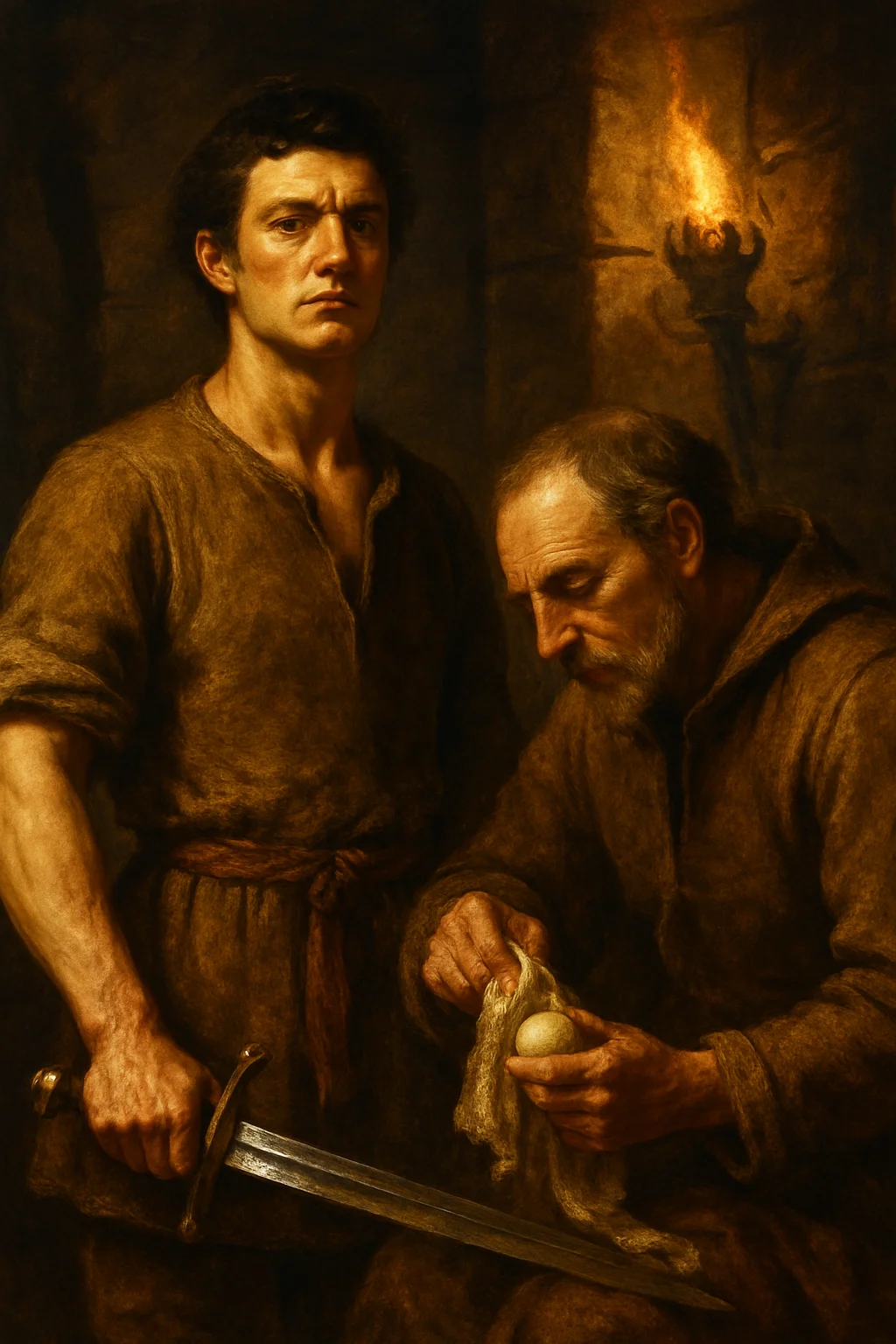
Servants
The Servants represent the moral bedrock of the play in its darkest scene. Their intervention - especially the First Servant's - is Shakespeare's insistence that ordinary decency exists even at the bottom of the social hierarchy, even in the service of a tyrant, even when it costs a man his life. Their namelessness makes the point: virtue here is not aristocratic.
Appears In
Who are Servants?
The Servants are Cornwall's men who witness the blinding of Gloucester in Act III Scene 7 - one of the most savage acts in all of Shakespeare. The First Servant is the one who breaks rank. When Cornwall puts out Gloucester's first eye and moves to put out the second, this servant - a man of no name and no standing - draws his sword and interposes himself between his master and his master's victim.
He wounds Cornwall mortally before being killed by Regan. The Second Servant, after Regan and Cornwall leave, tends to Gloucester's wounds with flax and egg-whites, and proposes fetching the madman Poor Tom to lead him. These are the play's most unexpected heroes - men without names who do the right thing at the cost of everything.
Motivation
The First Servant is motivated by a simple inability to watch something monstrous happen without acting. The Second Servant by the same instinct, expressed in a quieter register - tending to a wounded man after the danger has passed.
Personality
The Servants are not complex characters - they are moral emblems. The First Servant's intervention is the play's most startling act of conscience precisely because it comes from the lowest-ranking person in the room. Their brief presence is one of King Lear's most important statements about where goodness actually lives.