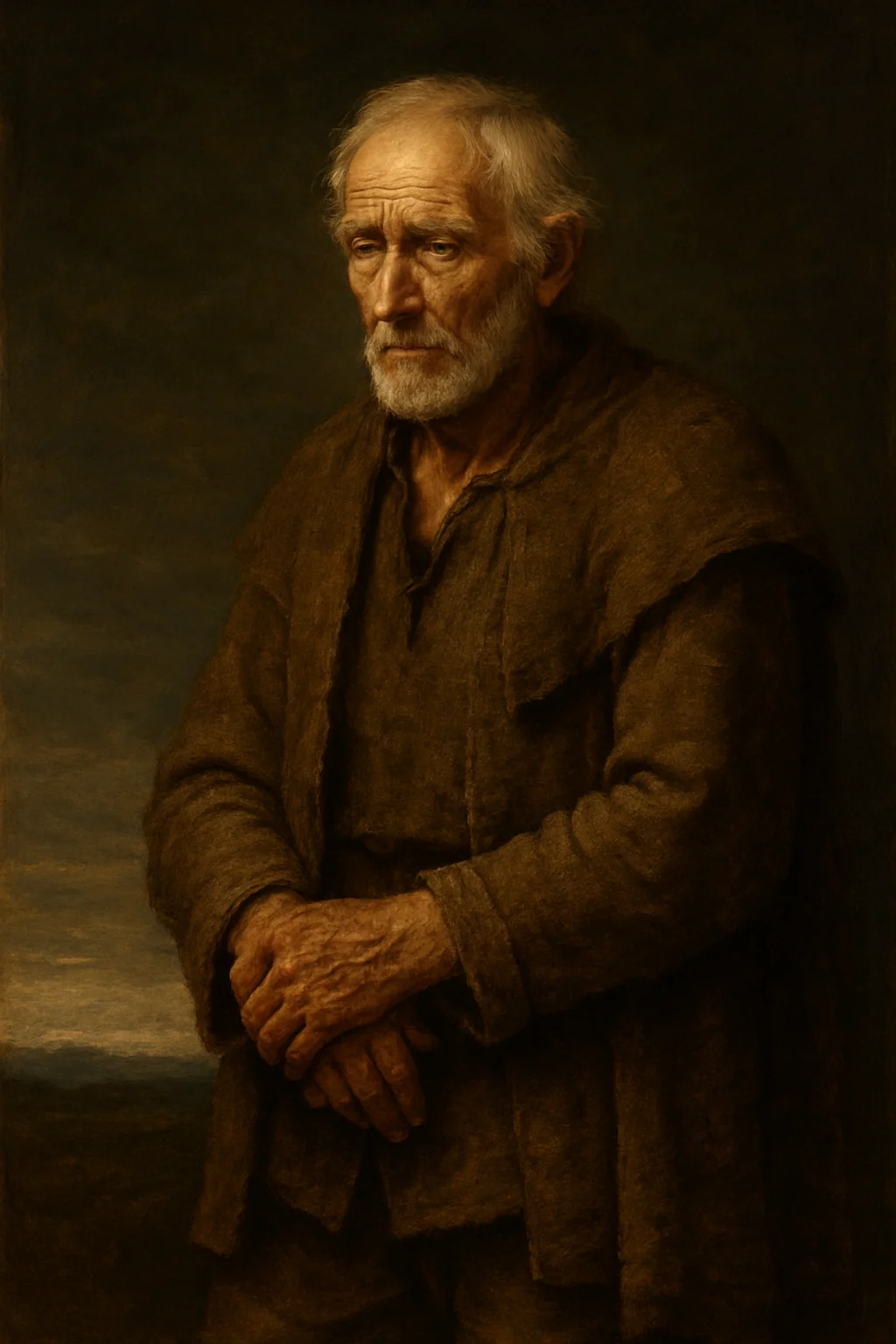
Old Man
The Old Man is the play's most direct emblem of unglamorous, unconditional loyalty. He has no power, no position, nothing to gain - and he comes anyway. His appearance immediately after the horror of the blinding scene is the play's first gesture of human decency in the aftermath of an act of pure cruelty.
Appears In
Who is Old Man?
The Old Man is a tenant of Gloucester's who has known his lord for eighty years. He appears in Act IV immediately after the blinding - leading Gloucester, now eyeless and cast out of his own castle, through the open country. His loyalty is entirely without calculation: he has served this family his whole life and will not abandon it now, at the moment of its most complete humiliation.
His scene is brief and achingly simple. He knows he is putting himself at risk by helping Gloucester; he helps anyway. When Edgar - still disguised as Poor Tom - appears, the Old Man entrusts Gloucester to his care and withdraws. He has done what he came to do.
Motivation
The Old Man is motivated by eighty years of loyal service and a basic human refusal to leave a helpless man alone on a road. He does not weigh the cost.
Personality
The Old Man has no complexity - and that is precisely the point. In a play full of people who calculate, scheme, and betray, he simply does the decent thing without commentary. His very ordinariness is a form of moral clarity.