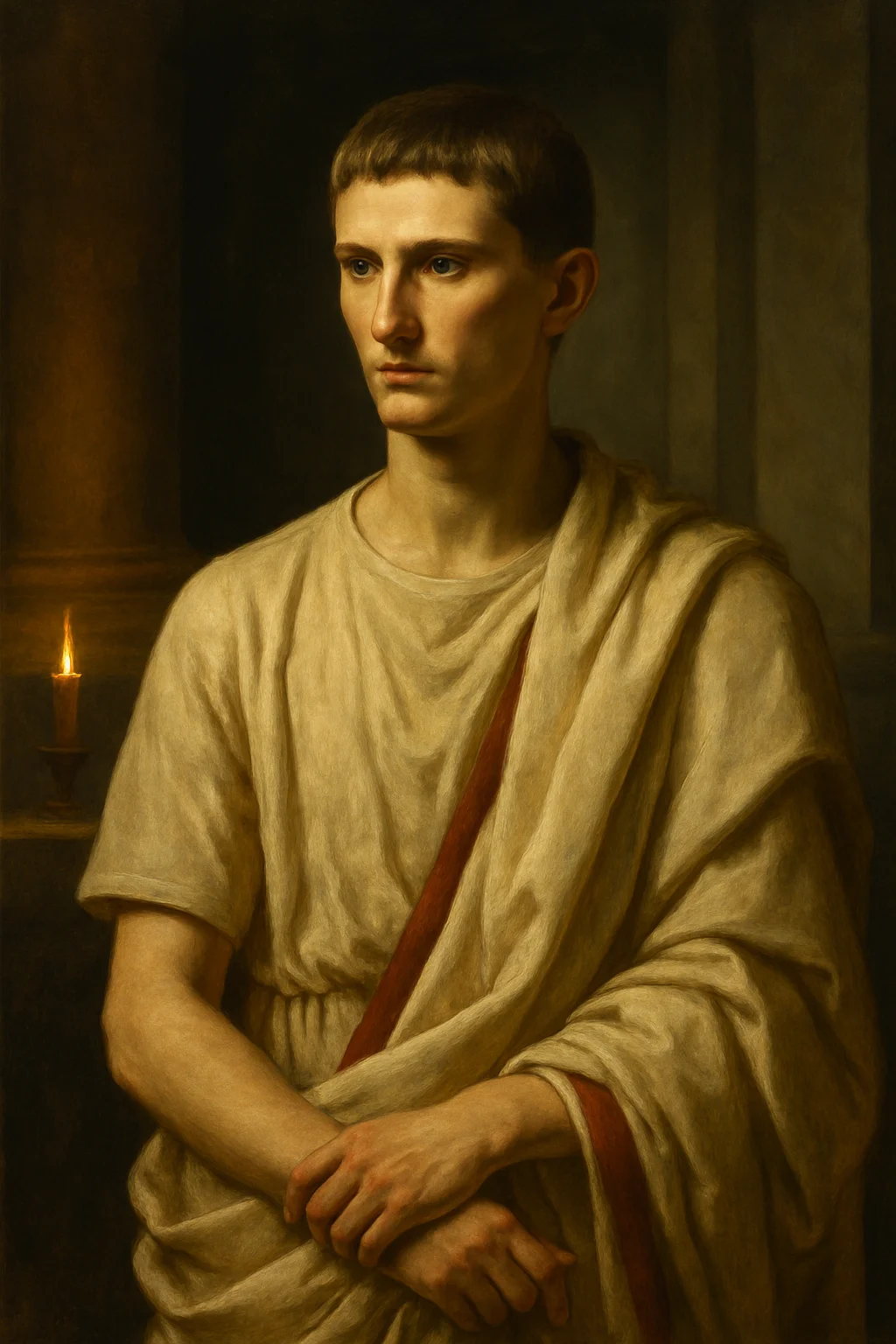
Octavius
Octavius represents the future arriving - the cold, pragmatic inheritance that both Caesar's friends and Caesar's enemies have cleared the ground for. His few scenes establish him as already more controlled and less emotionally readable than anyone else on stage, the shape of the world the play ends by setting in motion.
Appears In
Who is Octavius?
Octavius Caesar arrives late in the play, summoned to Rome by Caesar's death and his own inheritance of everything the assassination was meant to prevent. He is Caesar's great-nephew and named heir, and his arrival complicates the political landscape immediately: he outranks Antony by blood even if not yet by experience or political cunning, and both of them know it.
In the brief scenes where we see the triumvirs together, Octavius already exhibits a quiet, absolute willingness to exercise power on his own terms. He accepts Antony's tactical arrangements for the battle at Philippi and then, in a pointed moment, does exactly the opposite: Antony says he will take the right side of the field, Octavius says he will take the right himself. The dispute is minor in immediate military terms but significant as a signal - this is a man who will not be managed, not even by Antony.
He ends the play as the formal voice of Roman authority, accepting the surrender of the surviving conspirators and delivering the closing lines with the easy composure of someone who regards the world as already, in some important sense, his. The man who will become Augustus is visible here in embryo - not yet fully formed, but recognisable.
Motivation
Octavius is motivated by the orderly assumption of what he regards as his rightful inheritance - Caesar's legacy, Caesar's authority, and through them, Rome itself.
Personality
Octavius says little and concedes nothing. Where Antony is voluble, emotional, rhetorically brilliant, Octavius is economical - every word chosen, every gesture measured, the natural bearing of someone who has decided that the outcome is already his and is simply waiting for the details to resolve themselves. His quiet insistence on the right side of the battlefield at Philippi is the clearest glimpse of the political will that will eventually transform Rome.