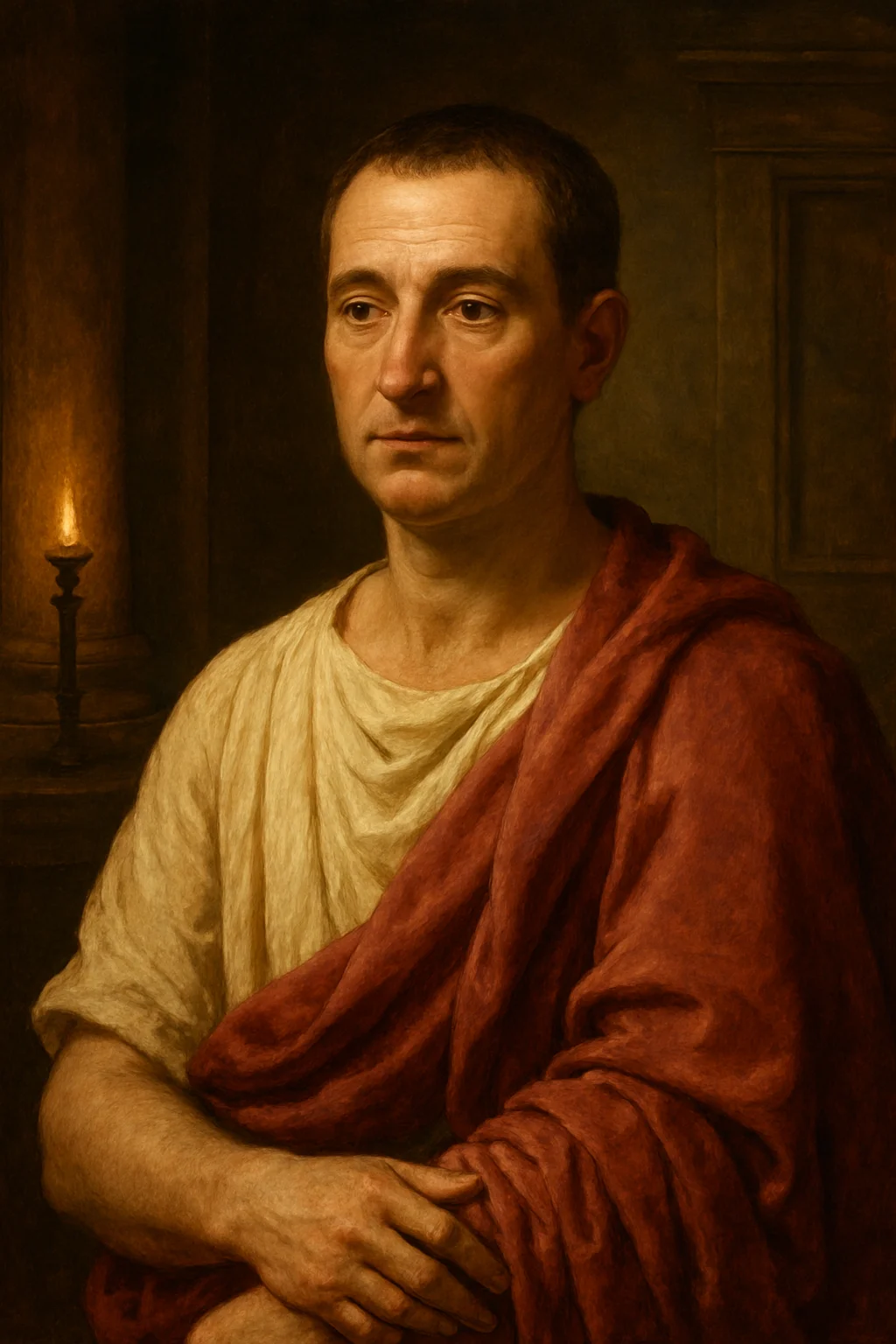
Lepidus
Lepidus functions as a measure of how power operates in the world the assassination has created - through calculation rather than principle, with allies who are really instruments, in a political order where the third person in the room is already being discussed as expendable.
Appears In
Who is Lepidus?
Lepidus is the third member of the Second Triumvirate, and his introduction in Act IV is essentially a study in how Antony regards him: as 'a slight, unmeritable man, / Meet to be sent on errands.' Even as Lepidus sits in the same room agreeing to the proscription lists - they are calmly trading the lives of their relatives and enemies with the pragmatism of men dividing a bill - Antony is already explaining to Octavius that Lepidus is being used rather than consulted, and will be set aside when his usefulness ends.
He is sent from the room on an errand - to fetch Caesar's will so the triumvirs can assess the legacies - while his two partners discuss his obsolescence. It is a quietly sinister comedy: the third ruler of Rome excused like a page while the other two plan his disposal. He leaves and does not return to the scene.
Lepidus appears at Philippi in a background capacity and then disappears from the play. Shakespeare gives him nothing further to do or say because there is nothing further to give him - he is a man defined entirely by his position in others' calculations, which is precisely what makes him the play's final emblem of how the new Rome works.
Motivation
Lepidus appears to be motivated by genuine participation in the triumvirate; whether he understands or accepts his own marginality is left unclear.
Personality
Lepidus's character, such as it is, consists almost entirely of what others say about him in his absence or his presence. He agrees to the proscription lists without visible hesitation, follows instructions, and leaves the room when sent. Whether his compliance is wisdom, weakness, or simply the natural comportment of a man who has never needed to assert himself is a question the play declines to answer.