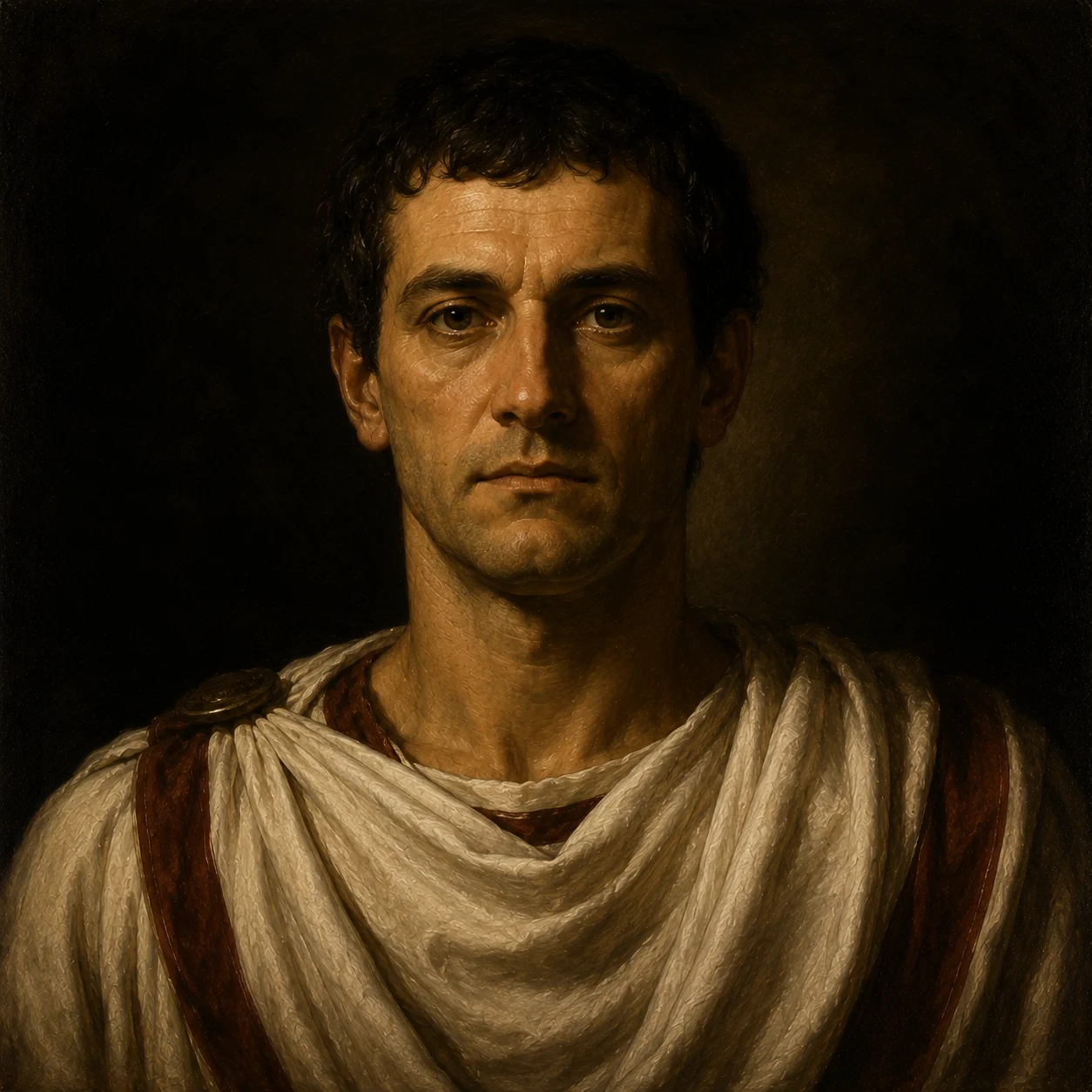
Cinna
Cinna serves as the conspiracy's operational instrument for one of its most crucial preliminary steps - the forged letters that bring Brutus fully into the plot. His presence in the assassination scene closes the circle of what he set in motion, and his name's accidental legacy in Act III Scene 3 is the play's darkest irony.
Appears In
Who is Cinna?
Cinna is one of the inner circle of conspirators, though not among the play's most prominent. His specific assignment within the plot is operational: Cassius sends him to place forged letters - written to look like they come from different concerned Roman citizens - in locations where Brutus will find them. The letters are part of Cassius's campaign to convince Brutus that the whole of Rome wants him to act against Caesar. Cinna executes the task without commentary.
In the stormy night of Act I Scene 3, Cinna meets Cassius and Casca in the street and is given his instructions. He accepts them readily and sets off, leaving Cassius to continue recruiting Casca. In Act II Scene 1 he is among the conspirators who gather at Brutus's house in the dark, and in Act III Scene 1 he is present at the Capitol for the assassination itself.
His name creates a shadow that falls on a different Cinna entirely - Cinna the Poet, who in Act III Scene 3 is torn apart by a mob who confuse the two. The conspirator Cinna is never held accountable in the way his innocent namesake is; the poet dies for the conspirator's name, which is as bleak an irony as the play produces.
Motivation
Cinna is motivated by commitment to the conspiracy - he is Cassius's man, executing Cassius's instructions without the moral complexity that characterises Brutus's participation.
Personality
Cinna is defined by his function within the conspiracy rather than any individual quality - he does what he is asked, moves through the scenes without drawing attention to himself, and is gone before the consequences of what he helped set in motion arrive. His inadvertent shadow over Cinna the Poet's fate is the one element of his presence that outlasts his participation.