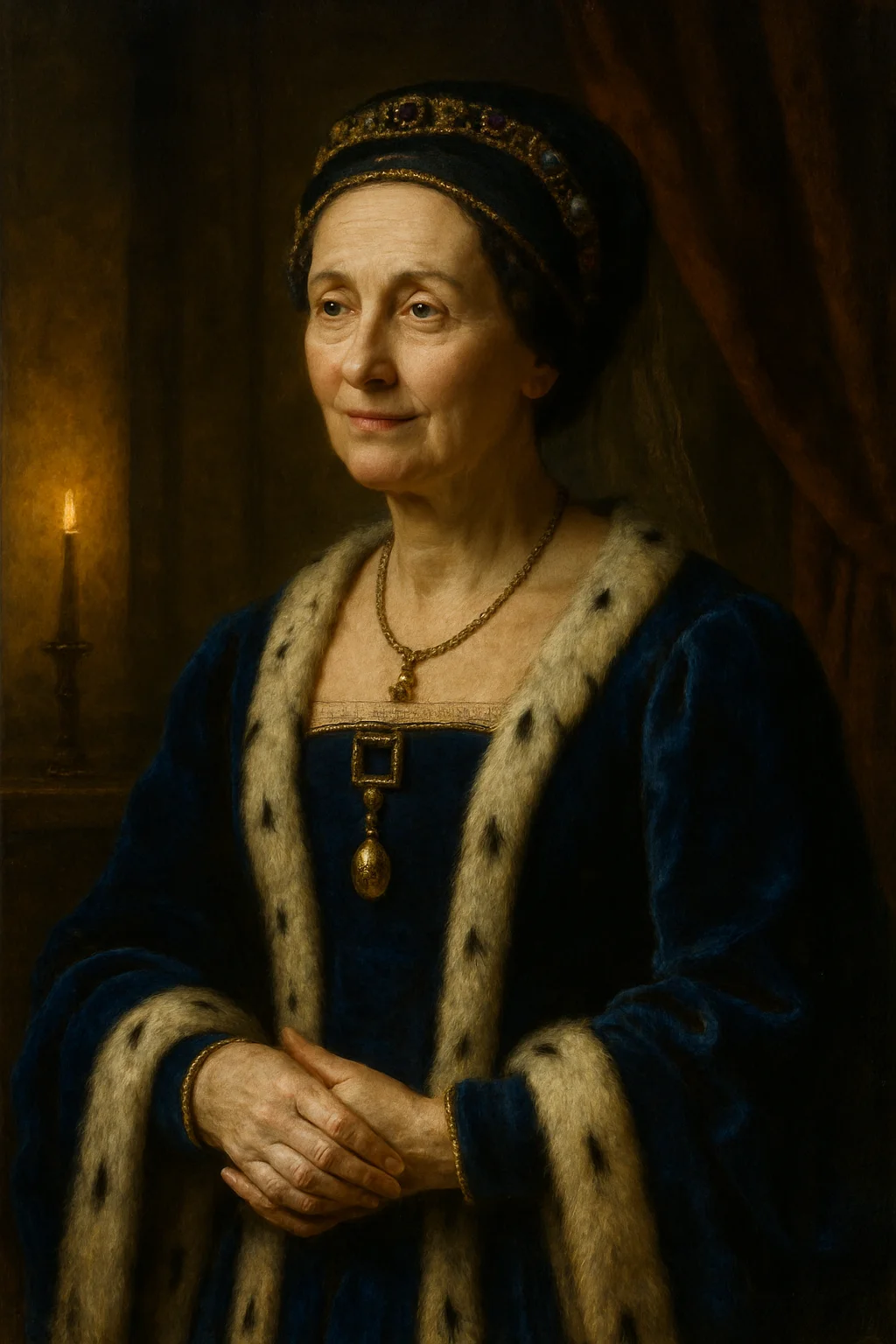
Queen Isabel
Queen Isabel provides the peace negotiations with their one voice of genuine hope for lasting unity - her wish that the marriage might permanently bind England and France together gives the treaty's political terms a brief, sincere emotional register.
Appears In
Who is Queen Isabel?
Queen Isabel of France appears only in the play's final scene, presiding alongside her husband over the peace negotiations that will end the war and betroth her daughter Katharine to the English king who has just defeated France's armies. Her presence lends the treaty a maternal and domestic register the surrounding diplomacy might otherwise lack entirely, a queen watching her daughter's marriage be arranged as a term of a settlement she had no part in fighting.
Her single notable speech expresses a hope that transcends the transactional terms of the treaty itself: that the marriage of Henry and Katharine might 'knit' the two crowns and the two peoples together in genuine unity, so that the 'contagious' hostility between England and France might never again find occasion to sunder what this union joins. It is one of the few moments in the play's final scene where the language of peace sounds like something more than diplomatic formula.
Isabel does not appear again once this hope is voiced, her single scene sufficient to give the treaty's transactional terms a brief, genuine note of maternal aspiration for a peace that will, as the Chorus's epilogue soon reminds the audience, not ultimately hold.
Motivation
Isabel is motivated by a mother's hope that her daughter's marriage might accomplish something larger than a mere transfer of territory - a genuine and lasting peace between two exhausted nations.
Personality
Isabel's brief appearance is marked by a dignity that absorbs the reality of her country's defeat without visible bitterness, converting the moment into an expression of hope for her daughter's future and her two nations' shared one.