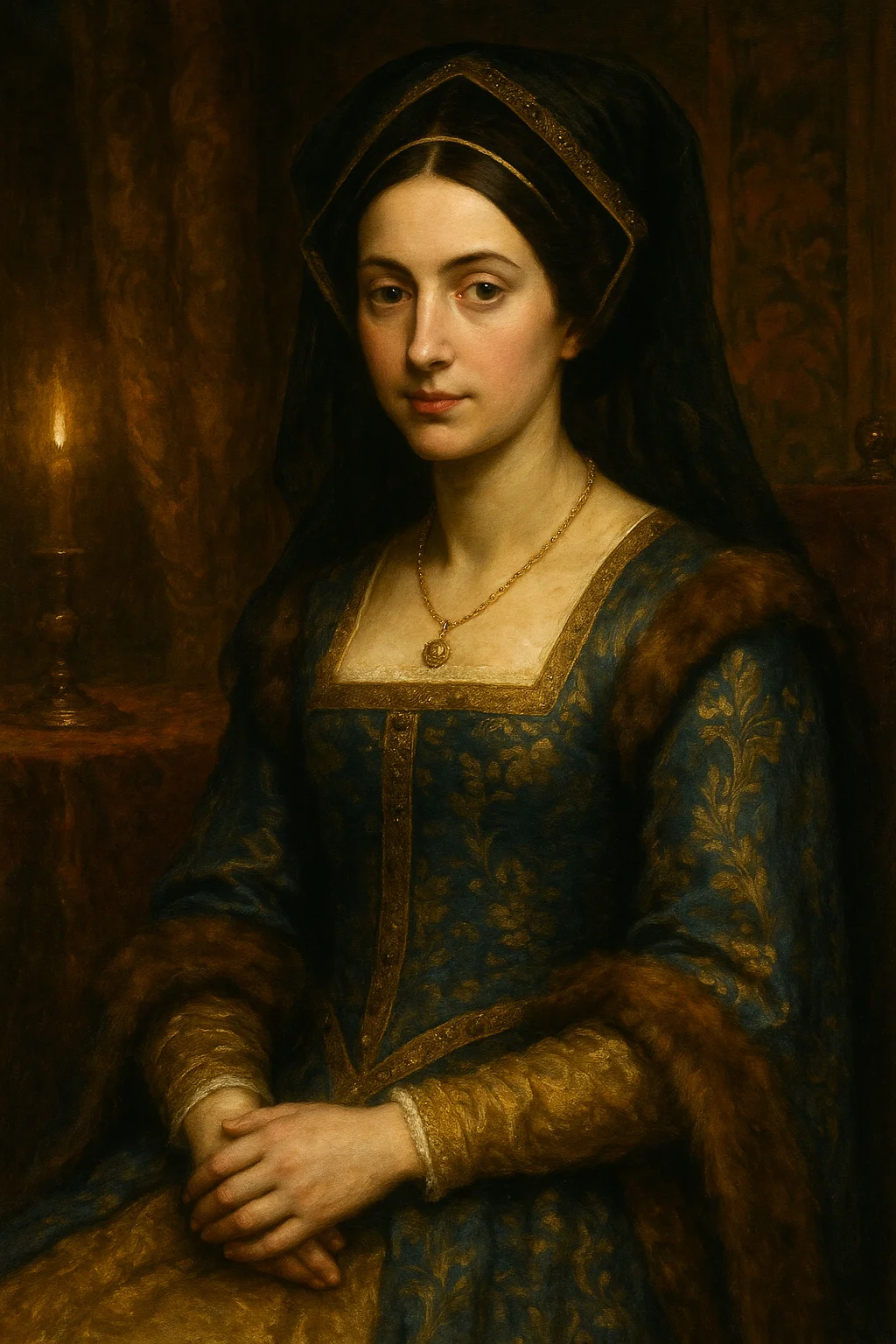
Katharine
Katharine is the human face of the treaty that ends the war - a French princess whose English lesson in Act III and courtship in Act V bracket the military action, reminding the audience throughout that the peace being fought toward has her marriage, and her consent or resignation to it, built into its very terms.
Appears In
Who is Katharine?
Katharine, princess of France, appears first in a scene played almost entirely for comedy and almost entirely in French, taking a lesson in English body-parts vocabulary from her gentlewoman Alice - an innocuous exercise that becomes a running joke when several of the English words sound, to French ears, indecent. Beneath the wordplay, the scene quietly establishes what everyone in the play already assumes: that Katharine's hand in marriage is the coin in which this war will eventually be settled, and that she is, at this point, simply preparing herself for a fate she has had no part in choosing.
She does not appear again until the peace negotiations of the final act, by which point Henry has won his war and comes to claim, among the other terms of the treaty, her hand. Their courtship scene is unusual in the play for its tenderness - Henry, stripped of his rhetorical armour, courts her in plain, halting English he insists is more honest than the practiced compliments of French courtiers, while Katharine, working through a language she has only just begun to learn, holds her own with wit and a certain wary self-possession, never entirely surrendering her judgment even as she yields to the inevitable.
Katharine's consent, when it finally comes, is framed as deference to her father's will rather than an independent romantic choice - 'dat is as it shall please de roi mon père' - a reminder that whatever warmth passes between her and Henry in that scene, her marriage remains fundamentally a term of the Treaty of Troyes, sealing an English claim to the French throne rather than a love story freely entered into. Shakespeare gives her enough wit and personality in her few scenes that the political transaction never entirely swallows the person undergoing it.
Motivation
Katharine is motivated by a clear-eyed awareness of what is expected of her as a princess whose marriage will settle a war - she prepares for an English match with practical diligence rather than romantic anticipation, and meets Henry's courtship with wit rather than either resistance or eager submission.
Personality
Katharine's brief scenes reveal a young woman who is neither a passive prize nor a rebellious one - she approaches her English lessons and her eventual courtship with the same practical composure, holding her own in banter with Henry even while working in a language not her own, and deferring, in the end, to her father's political judgment rather than pretending the marriage is anything other than what it plainly is.