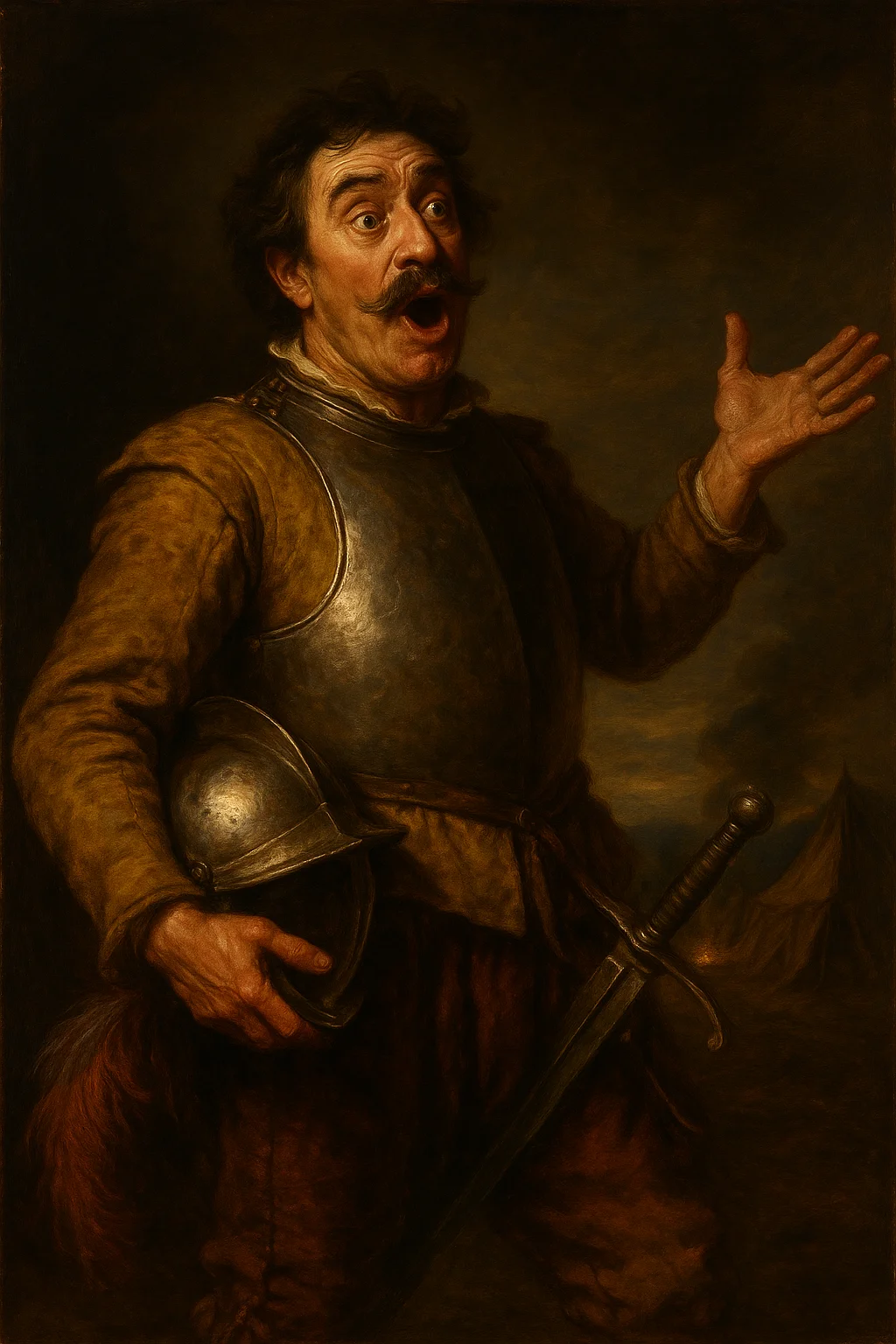
Pistol
Pistol is the play's clearest surviving link to the tavern world of Henry's youth - a braggart soldier whose grandiose, borrowed rhetoric and cowardly opportunism provide a running comic counterpoint to the martial glory the Chorus insists the audience should be feeling.
Appears In
Who is Pistol?
Pistol arrives in France as a leftover from a play the audience already half-remembers - a swaggering Eastcheap braggart, husband to Nell Quickly, given to a booming, borrowed rhetoric lifted wholesale from the bombastic tragedies of an earlier theatrical fashion. His speech is a patchwork of half-remembered stage grandiloquence, delivered with total conviction to men who have long since stopped believing a word of it, and his introduction into the French campaign - following the same king he once drank with in disguise - is as much comic counterweight to Henry's own transformation as anything else.
His war is fought almost entirely off the actual battlefield: his one substantial action at Agincourt is capturing a terrified French soldier and threatening him into promising a ransom, a scene played largely for laughs at Pistol's linguistic incompetence and the soldier's genuine terror, with the Boy required to translate what neither man can say to the other. It is the clearest possible parody of chivalric ransom-taking, performed by a man who has done none of the fighting the ransom is meant to reward.
His fall from swagger to ruin arrives all at once at the play's end: his old comrades Bardolph and Nym are hanged for looting, Fluellen forces him to eat a raw leek in humiliating revenge for mocking Welsh custom, and news reaches him that his wife Nell has died. Battered, disgraced, and now entirely alone, Pistol resolves to return to England not as a soldier but as a bawd and cutpurse, wearing his scars as if they were honestly won - a final, deflating joke at the expense of every heroic pretension the character has spent the play performing.
Motivation
Pistol is motivated by profit and self-preservation dressed up as valor - every action he takes in France, from ransoming a terrified prisoner to boasting of battles he barely fought, serves his own advancement rather than any loyalty to crown or cause.
Personality
Pistol's defining quality is a total commitment to a performance of valor that never survives contact with real danger - his speech is inflated, quotation-laden, and utterly unconvincing to everyone around him, which is precisely the joke. His resilience is almost admirable in its shamelessness: stripped of friends, wife, and dignity by the play's end, he simply decides to become a thief instead, entirely undeterred by his own humiliation.