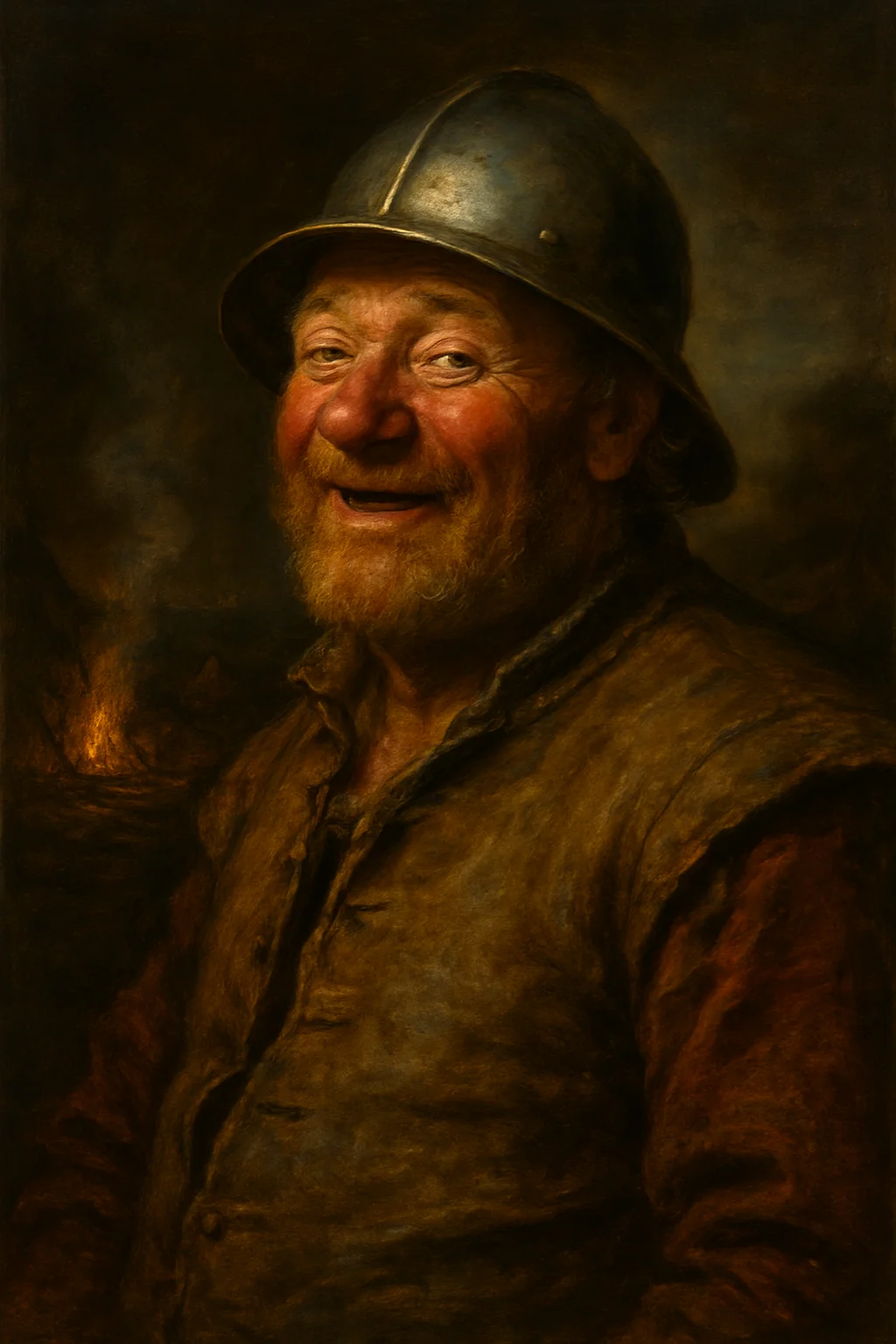
Bardolph
Bardolph's execution for looting a French church is the play's clearest demonstration of Henry's transformed, unsentimental discipline - an old tavern companion sacrificed to prove that the new king's justice applies even to men he once called friends.
Appears In
Who is Bardolph?
Bardolph carries into France the same comic identity he had in the earlier Henry plays - a soldier best known for a nose famously reddened by drink, a running joke the company makes at his expense with an affection that survives even as the war around them turns serious. He arrives with Pistol and Nym as part of the same Eastcheap company that once drank with Prince Hal, now conscripted into a campaign none of them show much appetite for beyond whatever profit it might yield.
His war ends before it properly begins: caught looting a pax, or sacred vessel, from a French church, Bardolph is condemned to hang under Henry's new, uncompromising discipline - a sentence the king upholds without visible hesitation despite once having known Bardolph as a companion of his own wilder years. Fluellen reports the execution with genuine personal regret, noting that Bardolph's face, at least, 'is all bubukles and whelks and knobs and flames o' fire' one final time before the sentence is carried out.
Pistol's grief-tinged, ineffective pleading on Bardolph's behalf is the closest the play comes to mourning him properly, and his death functions less as a tragedy in its own right than as a demonstration piece - Henry converting an old drinking companion into an example of the new discipline his army will require, proof that the crown has changed the man wearing it more completely than anyone from the tavern days expected.
Motivation
Bardolph is motivated by simple opportunism and the habits of a lifetime spent drinking and thieving in equal measure - the war is, to him, mostly another opportunity for profit, one that costs him his life when he misjudges how far the new king's tolerance extends.
Personality
Bardolph carries his comic reputation - the famously fiery nose, the running jokes at his expense - into a war he treats with the same opportunistic carelessness he brought to Eastcheap tavern life, apparently never considering that the king he once drank with now enforces a discipline that will not spare him.