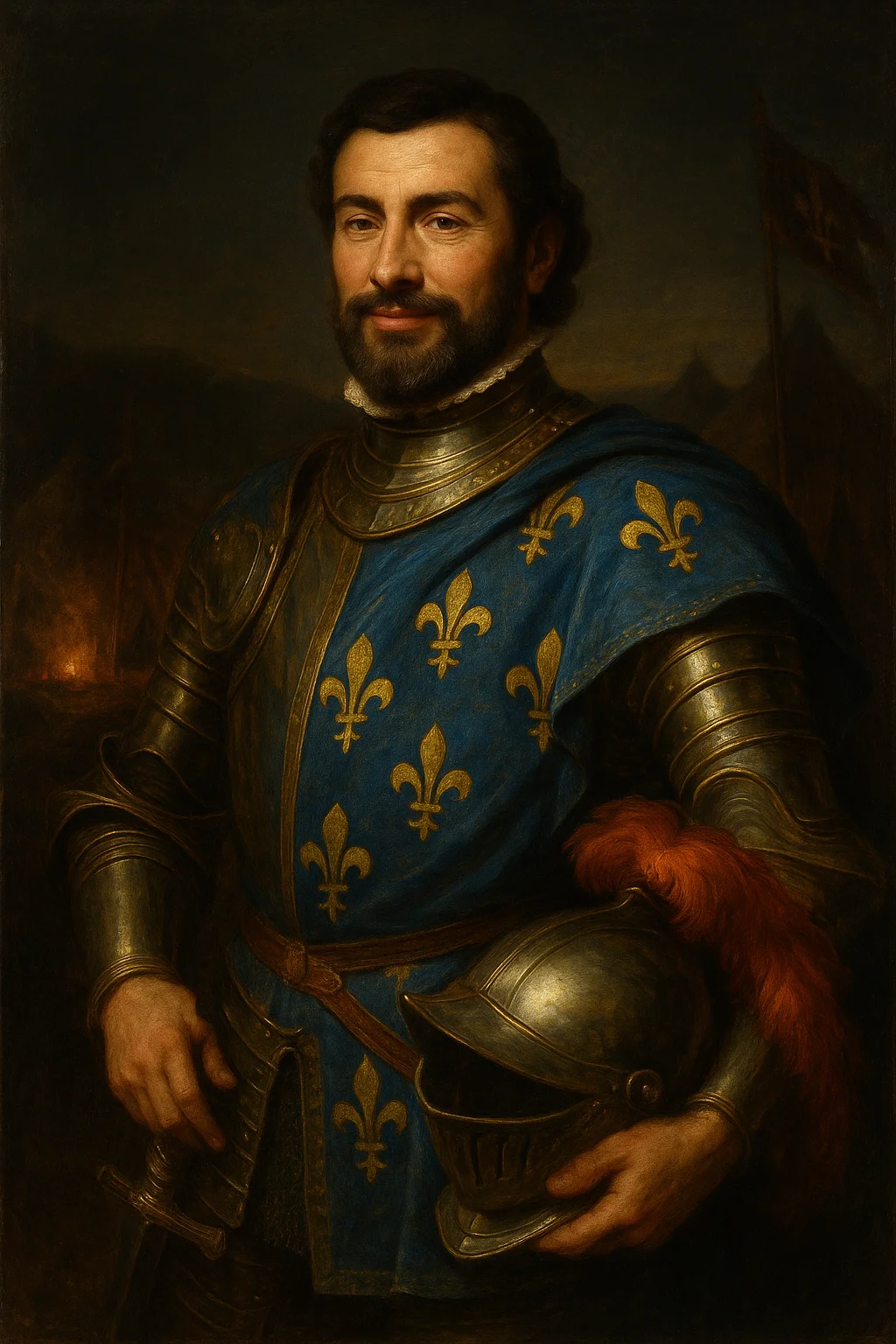
Constable of France
The Constable functions as the play's clearest embodiment of French military competence undone by overconfidence - his casual pre-battle boasting with the Dauphin sets up Agincourt's catastrophic reversal with the maximum possible irony.
Appears In
Who is Constable of France?
The Constable of France is the most capable and clear-eyed of the French commanders, and it is precisely his competence that makes his overconfidence before Agincourt so pointed a piece of dramatic irony. He shares in the general French contempt for Henry as a callow, tennis-ball-mocked upstart, trading boasts with the Dauphin and other nobles about the superiority of French horses and French valor on the eve of a battle he expects to be a formality rather than a contest.
His exchanges with the Dauphin in the French camp - competitive, faintly absurd banter about whose horse is finer, delivered hours before men will die by the thousand - capture the play's critique of chivalric bravado at its sharpest: real martial competence dressed in a self-regard that has stopped taking the actual enemy seriously. The Constable is not a fool, which is what makes the coming defeat land as tragedy rather than mere comeuppance; he simply cannot imagine that Henry's exhausted, outnumbered army poses a genuine threat.
The battle proves him wrong in the most total way the play allows: the French nobility, the Constable presumably among them, are annihilated at Agincourt while English losses are reported as almost impossibly light. Shakespeare does not give the Constable a death scene, only the silence of his absence from the play's final act - the most professionally serious voice in the French camp, undone along with the confidence he embodied.
Motivation
The Constable is motivated by professional pride in French military superiority and a genuine, if ultimately catastrophic, underestimation of Henry's army - he wants the coming battle to confirm what he already believes about the relative worth of the two sides.
Personality
The Constable's competence is real - he is the most professionally serious voice among the French nobility - which makes his dismissiveness toward Henry's exhausted army all the more damning in hindsight. His banter with the Dauphin about horses and honour on the eve of battle reveals a man for whom the coming fight is still, on some level, a matter of aristocratic sport rather than existential danger.