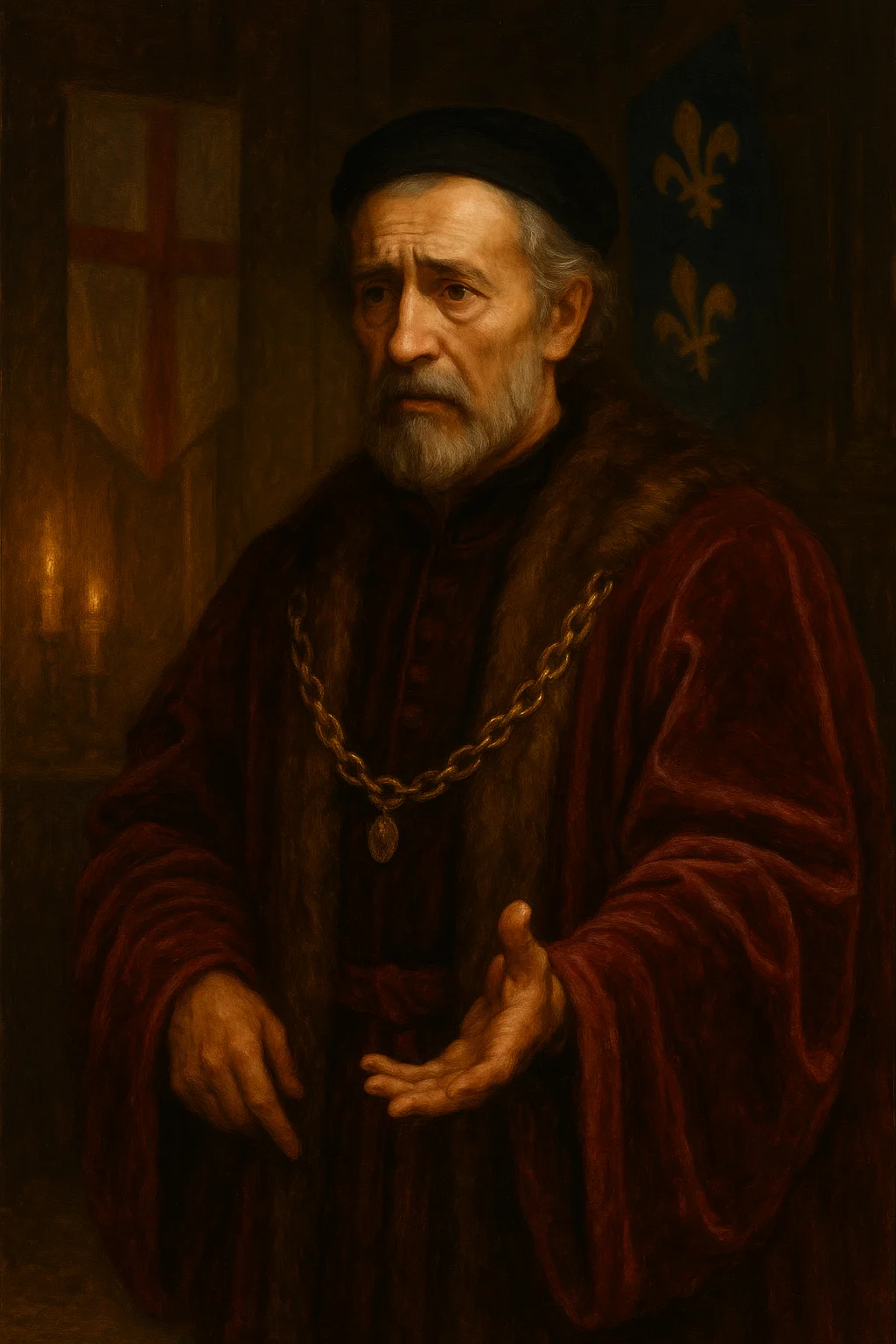
Burgundy
Burgundy's speech on France's ravaged countryside is one of the play's most celebrated passages - a plea for peace grounded not in national pride but in the plain, devastating cost of war, delivered by a French noble at the very moment his country's defeat is being formalized.
Appears In
Who is Burgundy?
Burgundy appears at the play's very end, presiding alongside the French and English courts over the peace negotiations at Troyes, and his opening speech in that scene is among the most admired passages Shakespeare gives to any minor figure in the canon. Addressing both kings, he describes in devastating, image-rich detail exactly what years of war have done to France itself - the untended vineyards, the fields gone to weeds and thistles, the hedges grown wild, the very people reduced to a savagery that peace alone can undo.
The speech functions as more than eloquent scene-setting: it is Burgundy's argument for why the treaty must succeed, a vision of a land so thoroughly ruined by the conflict both kings have waged that continued hostility becomes unthinkable on purely practical as well as humane grounds. His plea is addressed to both sides equally, a rare moment in the play where a French voice speaks not from the wounded pride of defeat but from a shared concern for what war has cost everyone involved.
Once the negotiations proceed to their specific terms - the marriage of Henry and Katharine chief among them - Burgundy steps back into a supporting role, his opening speech having done the essential work of framing the peace not as humiliation but as necessary restoration.
Motivation
Burgundy is motivated by a clear-eyed grief at what the war has done to French soil and French society, and a genuine desire to see the peace succeed regardless of which side's pride it costs more.
Personality
Burgundy's eloquence in describing the war's devastation is not rhetorical performance in the manner of Pistol's borrowed grandiosity, but something closer to plain, devastated witness - a nobleman who has watched his country ruined and wants, more than victory or vindication, simply for the ruin to stop.