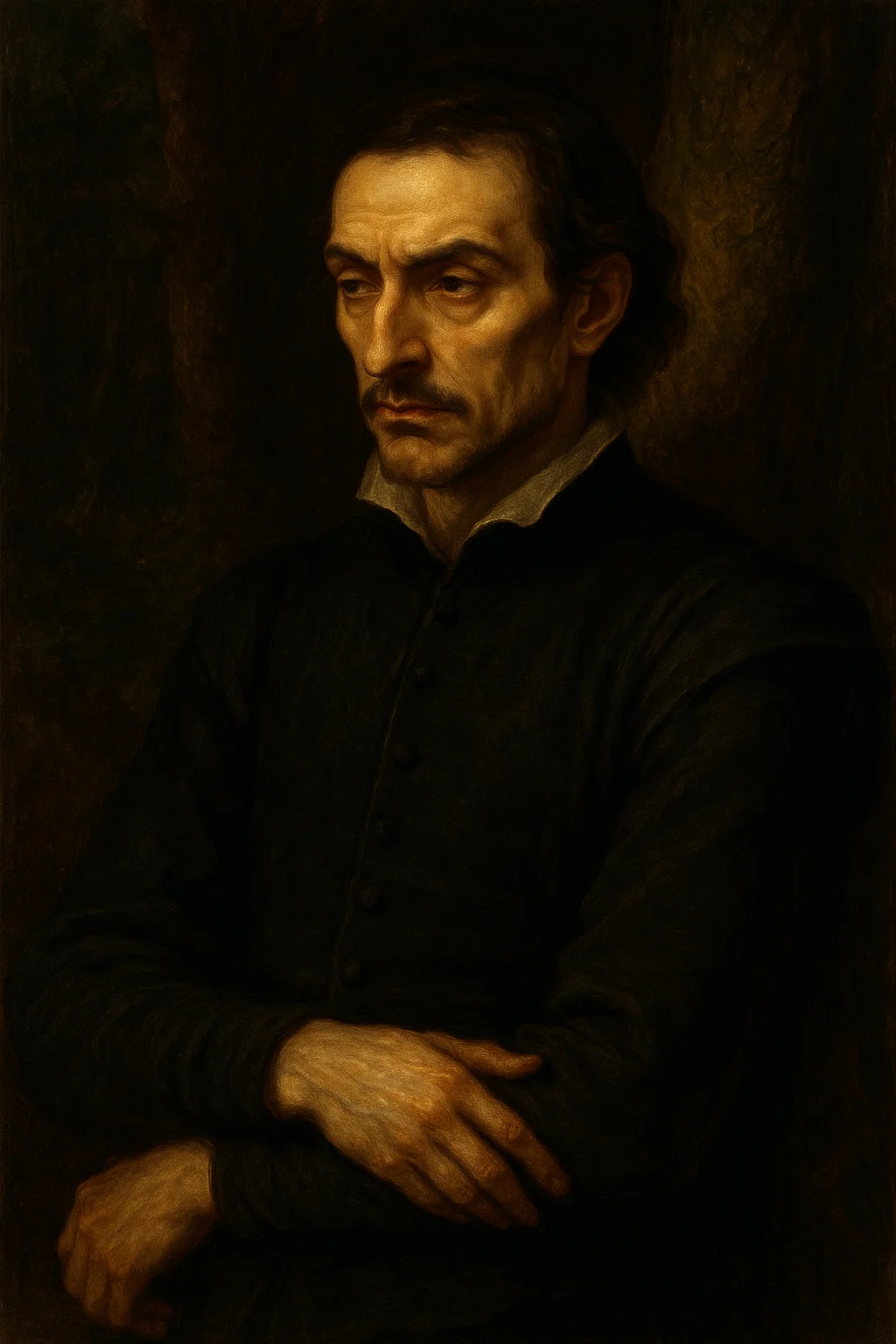
Jaques
Jaques is the play's professional melancholic and social commentator - his set-piece speeches, especially on the ages of man, provide the philosophical counterweight to the forest's romantic comedy, and his refusal to join the final marriages underlines that not every temperament resolves into the play's general happiness.
Appears In
Who is Jaques?
Jaques is a lord attending Duke Senior in exile, and the play introduces him almost entirely through report before he speaks a word himself - a lord describes him weeping over a wounded deer, moralising on the injustice of the exiles' own presence in the forest as usurpers of the beasts' native home. It is a fitting introduction: Jaques's defining quality is a compulsive habit of drawing melancholy general lessons from whatever happens to be in front of him.
His most famous contribution, the 'seven ages of man' speech in Act II, Scene 7, reduces the whole of human life to a sequence of roles played on a stage - infant, schoolboy, lover, soldier, justice, declining fool, second childhood - delivered with an eloquence the play clearly admires even as it surrounds the speech with a stage full of characters actively disproving its bleakness through love, loyalty, and reconciliation. Jaques is right about the theatre metaphor and, the play suggests, incomplete about everything else.
He is drawn to Touchstone as a kind of professional peer - 'a fool, a fool! I met a fool i' th' forest' - recognising in the clown's licensed wit something like his own permitted freedom to say uncomfortable things. At the play's close, alone among the company, Jaques declines to join the marriages and the return to court, choosing instead to follow the newly converted Duke Frederick into religious retirement, preferring, as ever, to observe from just outside the celebration rather than inside it.
Motivation
Jaques is motivated by a temperamental pull toward melancholy reflection and a genuine pleasure in the exercise of it - he collects material for gloomy generalisation the way other characters collect love poems, and seems happiest when given fresh occasion to moralise.
Personality
Jaques cultivates his melancholy almost as a performance, and the play is knowing about this even as it gives him its most quotable lines - he is genuinely intelligent and genuinely a little tiresome about it, drawn to whatever confirms his existing view of the world's folly. His refusal to join the ending is consistent with everything that precedes it: he was never going to be persuaded by a happy resolution.