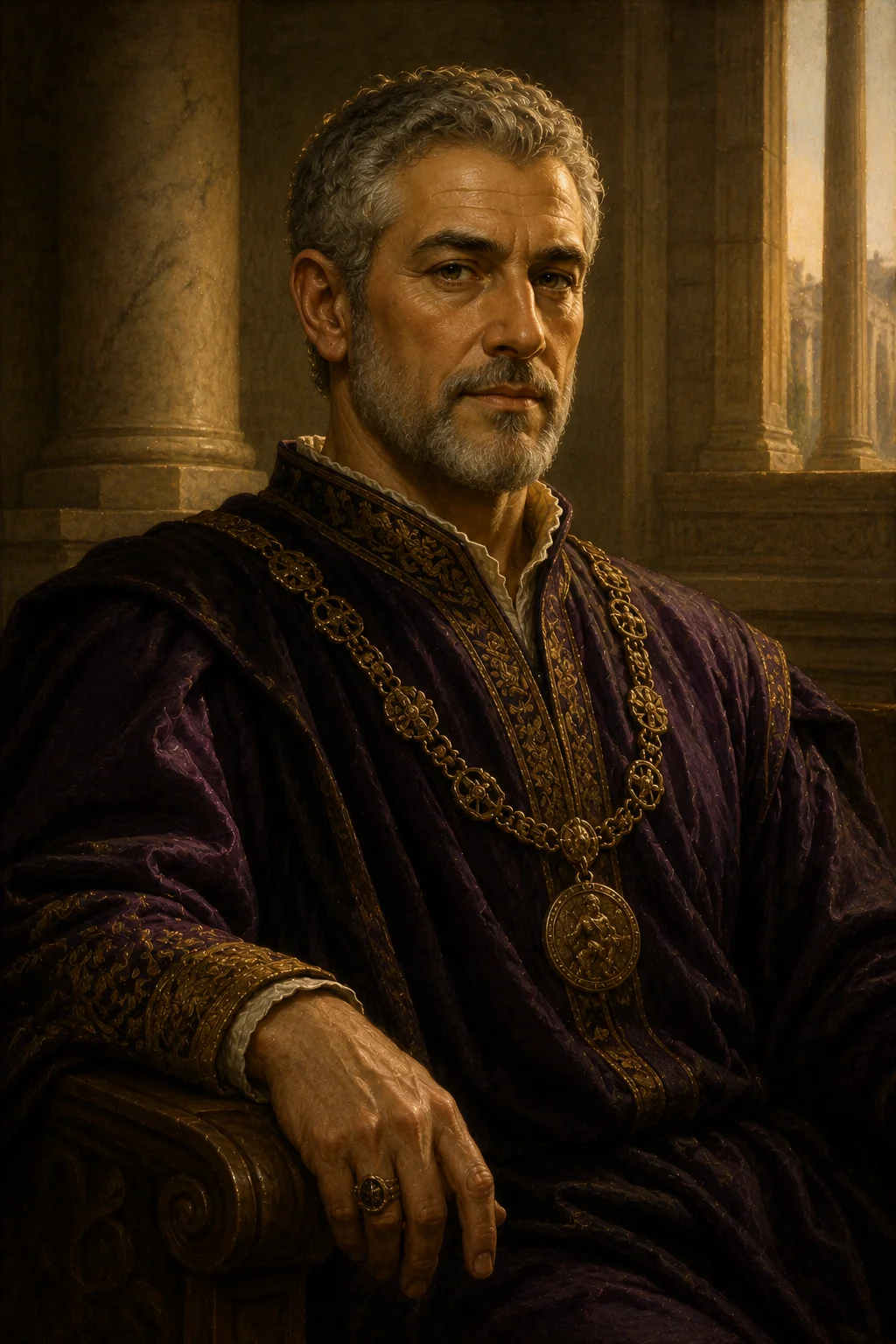
Theseus
Theseus represents Athens's rational, civic order - the world of law, authority, and daylight from which the lovers flee and to which they return. His scepticism about the forest's events frames the play's final movement and is the position the play most consistently, and most affectionately, argues against.
Appears In
Who is Theseus?
Theseus is the Duke of Athens, the play's supreme civil authority, on the eve of his marriage to Hippolyta when the action begins. He is a figure of rationalist pragmatism - cheerful, decisive, and fundamentally sceptical of anything that falls outside the categories his worldview accommodates. He hears Egeus's complaint about Hermia with the speed of a man accustomed to giving orders, and upholds the Athenian law against her without visible discomfort, only softening slightly to allow her a month before the decree must be enforced.
He is absent from the forest entirely - the world of magic has no purchase on him - and returns in Act IV to find the four lovers asleep on the ground and to override Egeus's remaining objections to the Hermia-Lysander match with characteristic ease. His authority is sufficient to dissolve the law he invoked three acts earlier without any sense that this requires explanation.
His Act V speech on the nature of imagination - 'The lunatic, the lover, and the poet / Are of imagination all compact' - is the play's most explicit engagement with its own themes, and is immediately, gently contradicted by Hippolyta, who points out that the lovers' story has a consistency that mere lunacy would not produce. Theseus's scepticism is not the play's final word.
Motivation
Theseus is motivated by the practical maintenance of order and the pleasant anticipation of his wedding. He is not unkind - he softens the law's terms when he can - but he is constitutionally incapable of taking seriously anything that cannot be confirmed by daylight reason.
Personality
Theseus is the play's most comfortably self-assured figure, a man who has never been required to doubt the adequacy of his own worldview. His confidence in reason and order is not presented as villainous - he is generous within it - but the play consistently arranges for the most interesting things to happen outside its jurisdiction, in the forest where his authority does not reach.