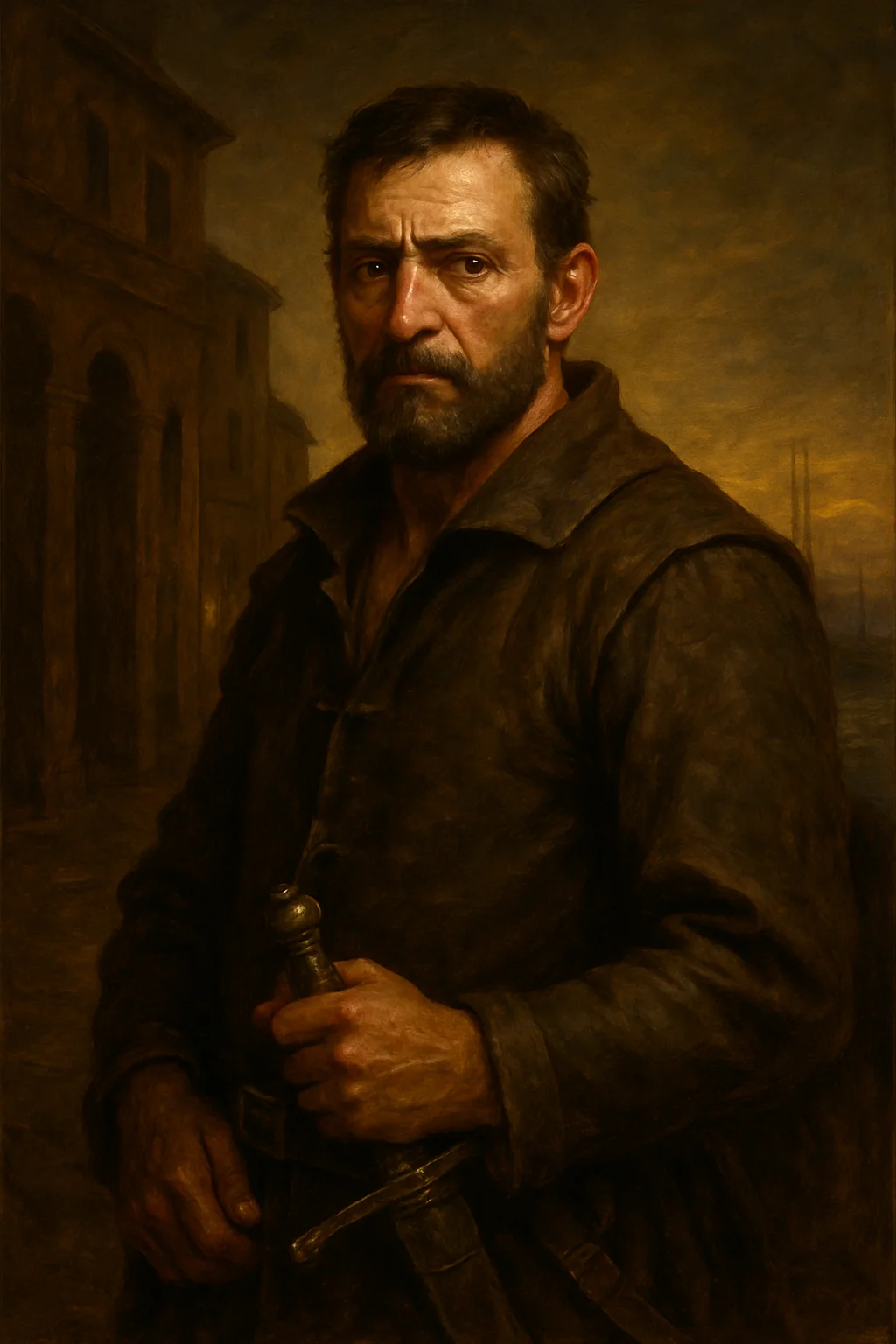
Antonio
Antonio is the play's most genuinely devoted figure — he follows Sebastian to Illyria at personal risk, and his confusion and public humiliation when Viola denies knowing him is the episode that most clearly shows the human cost of the play's comic machinery.
Appears In
Biography
Antonio is a sea captain who has, by his own account, fought against Orsino's fleet in the past — an enemy of the Duke's in a previous life, now risking arrest by following Sebastian to Illyria out of simple devotion. He is the play's one figure of unambiguous, uncomplicated love, which makes the trick the plot plays on him — being asked for his purse by Viola, who is not Sebastian — more genuinely painful than most of the comedy's confusions.
His arrest in Act III, Scene 4, when he comes to Sebastian's aid in the duel and is seized by Orsino's officers, is the scene where the mistaken-identity plot inflicts its most real damage. He hands his purse to Viola believing she is Sebastian and then calls for it back in front of the officers; she denies knowing him; and his public accusation of her ingratitude — 'thou hast put me in thine heart' — is made in complete sincerity and received as madness. It is the closest the play comes to genuine pain rather than comic inconvenience.
Antonio's resolution in Act V — Sebastian is produced, the confusion is explained, the arrest presumably ends — is handled quickly and without ceremony. He is not given a final speech or a pairing; the play's happy endings do not quite include him. He is present, cleared, and then simply part of the assembled company whose individual fates the epilogue does not detail. His function in the plot is to make Sebastian's arrival in Illyria possible and to demonstrate what it costs to love someone completely in a world of disguises.
Motivation
Antonio is motivated entirely by his devotion to Sebastian — a love that is protective, selfless, and entirely unrewarded by the plot's resolution — making him the character whose feeling is most straightforwardly real and least accommodated by the comedy's happy ending.
Personality
Antonio's simplicity is his defining quality — he loves Sebastian without complexity or calculation, follows him without conditions, and is hurt by apparent betrayal with an openness that the play's more defended characters do not permit themselves. In a play full of disguise and self-performance, his straightforwardness stands out, and suffers for it.