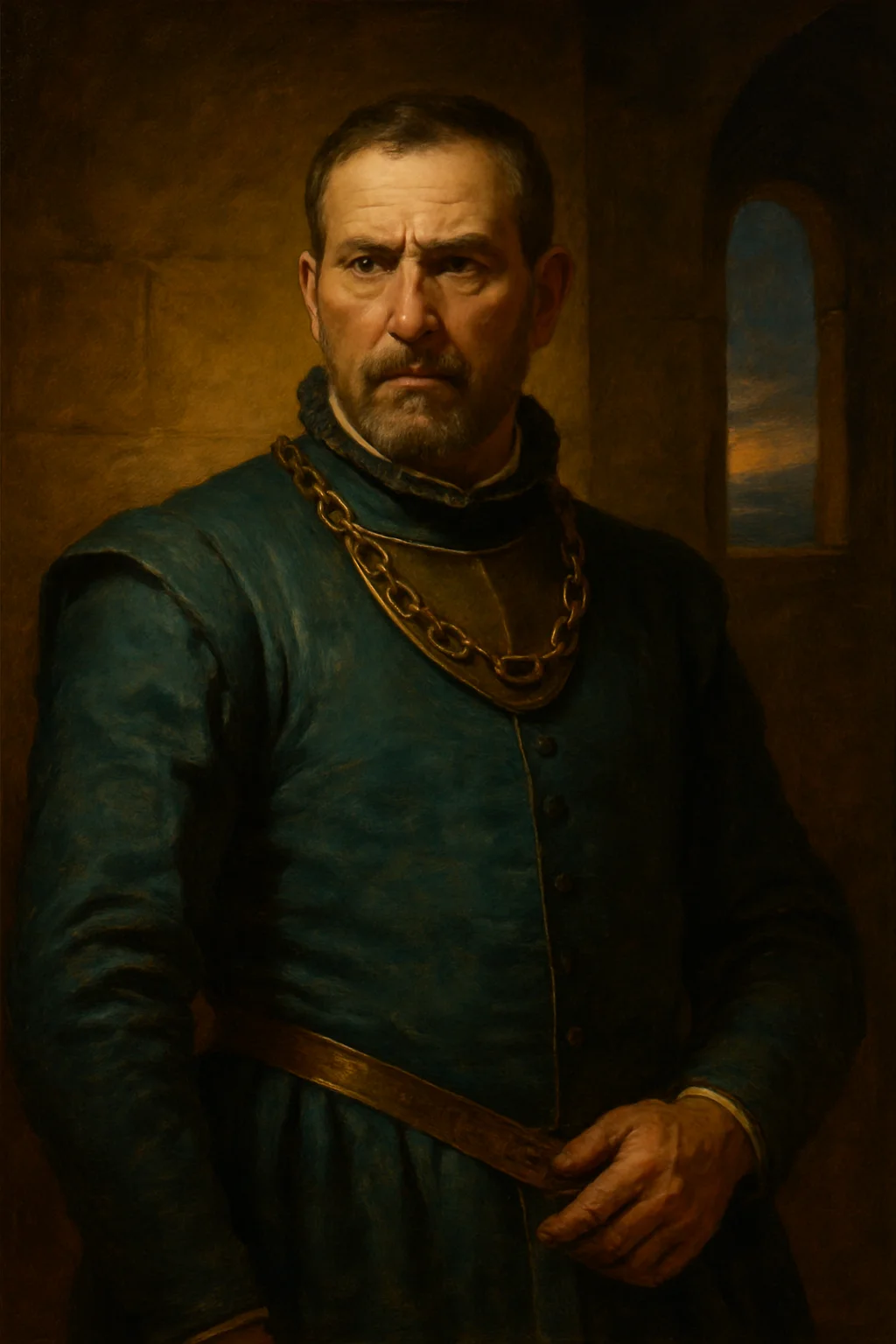
Montano
Montano is Cyprus's official representative of Venetian order — present at both the breakdown of military discipline in Act II and the final unravelling of Act V. His function is to embody the civic world that Iago's machinations disrupt, and his wounding in Act II is the concrete evidence used to destroy Cassio.
Appears In
Biography
Montano is the outgoing governor of Cyprus, present on the island when Othello's fleet arrives to take over the command. He is a figure of established Venetian authority — respected, competent, and entirely unprepared for what the night after Othello's arrival will bring. His first scenes establish him as a solid military administrator, watching the storm with professional anxiety and receiving news of the Turkish fleet's destruction with evident relief.
His central dramatic moment comes in Act II when Iago, exploiting the celebratory drinking after the storm, engineers a brawl between Cassio and Roderigo that draws Montano in when he attempts to intervene. Cassio, drunk and provoked, wounds him — a wounding that Iago has arranged precisely so that Montano's injury will serve as evidence against Cassio and justify Othello's cashiering of his lieutenant. Montano is the unwitting instrument of Cassio's downfall, injured while trying to do the right thing.
He reappears in the play's final scene, arriving with Lodovico and Gratiano as the catastrophe reaches its conclusion, and it is he who disarms Othello when Othello attempts to kill Iago. His role throughout is that of a decent, reliable official — a figure of order who is present at the play's two great moments of disorder and is powerless, at the critical instant, to prevent either.
Motivation
Montano is motivated throughout by professional duty and a genuine instinct toward order — he intervenes in the brawl to stop it, and appears in Act V to witness and formally conclude what has gone wrong. He has no personal stake in the play's central drama beyond his role as Cyprus's responsible authority.
Personality
Montano is the play's representative of straightforward military competence and civic responsibility — a man who does his job and expects others to do theirs. His injury in Act II is the play's clearest demonstration of how Iago's schemes harm the innocent and the dutiful along with the guilty.