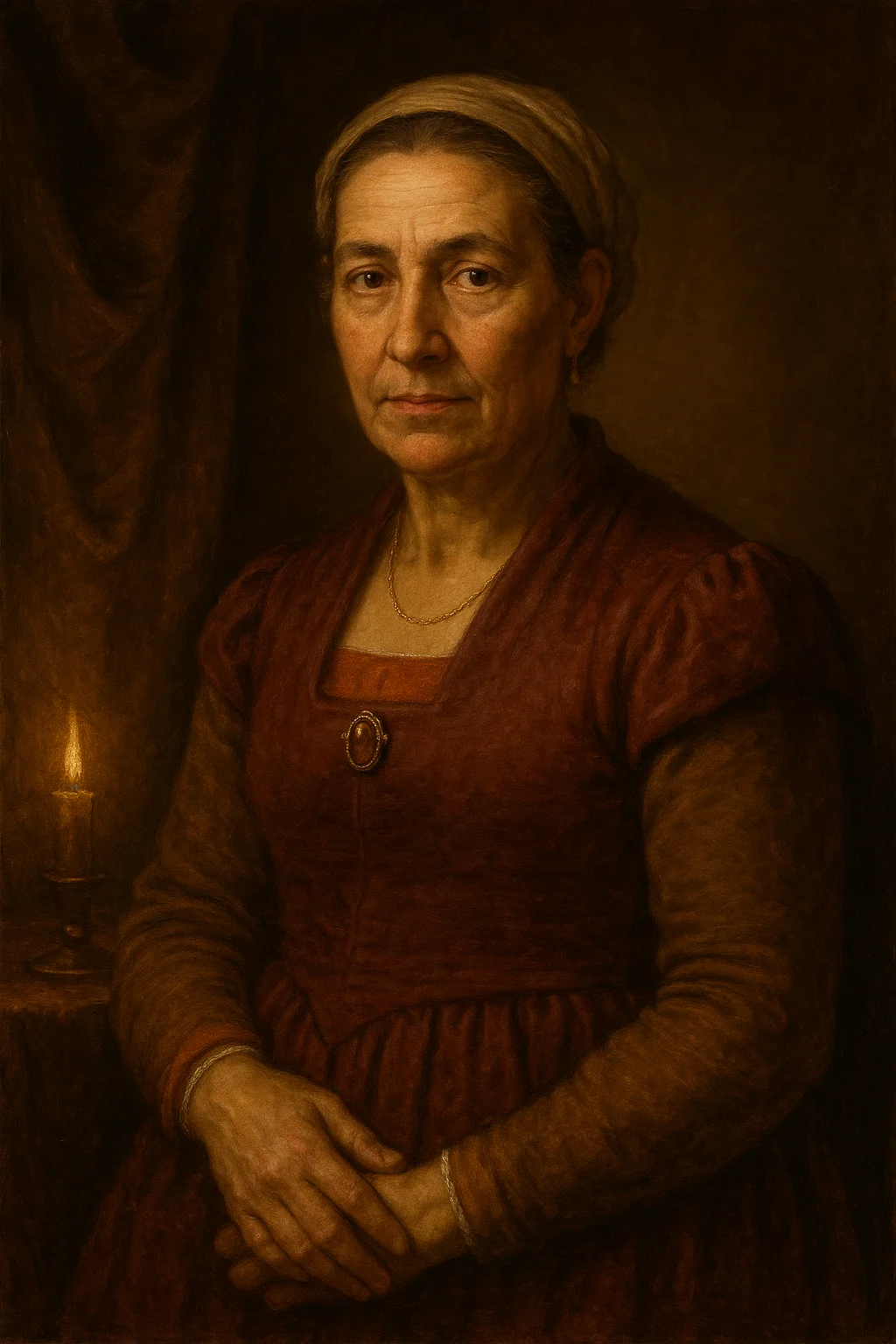
Emilia
Emilia provides the play's most clear-eyed commentary on marriage, gender, and double standards, and her final refusal to keep Iago's secret is the mechanism by which his entire scheme is exposed. Her death at her own husband's hand is the last casualty of his plot and the price of the play's only fully honest act.
Appears In
Biography
Emilia is Iago's wife and attendant to Desdemona, a woman whose worldly, unsentimental view of marriage and men stands in sharp contrast to her mistress's idealism. She serves two households at once — dutiful, if not always warm, toward Iago, and genuinely devoted to Desdemona — and for most of the play she does not understand that these two loyalties are on a collision course.
Her unwitting complicity is the plot's cruelest irony: she picks up Desdemona's dropped handkerchief and gives it to Iago simply to please a husband who has asked for it a hundred times, never suspecting what he intends to do with it. Even as Othello's jealous rage escalates around her, she defends Desdemona's honour forcefully without recognising her own husband as its author, at one point telling Othello outright that some 'eternal villain' has poisoned his mind — unknowingly naming the man she shares a bed with.
The truth arrives for her only after Desdemona is already dead, when Othello's own account of the handkerchief makes Iago's guilt suddenly, sickeningly clear. Emilia's refusal to stay silent then, in direct defiance of her husband's commands and at the cost of her own life, is the play's decisive act of honesty — the one voice that dismantles Iago's plot after every other character has been deceived by it.
Motivation
Emilia is motivated by practical loyalty rather than romantic ideals for most of the play — she wants to please Iago and serve Desdemona faithfully — but once she understands the consequences of the handkerchief she stole, she is driven by an overriding need to tell the truth regardless of the cost to herself.
Personality
Emilia's cynicism about men and marriage, delivered most fully in her Act IV conversation with Desdemona about wives' equal capacity for infidelity and grievance, marks her as one of the play's few characters willing to speak plainly about the double standards governing the women around her. That same plainness becomes true courage in the final scene, when she defies Iago's direct order to be silent and names his guilt aloud, knowing exactly what it will cost her.