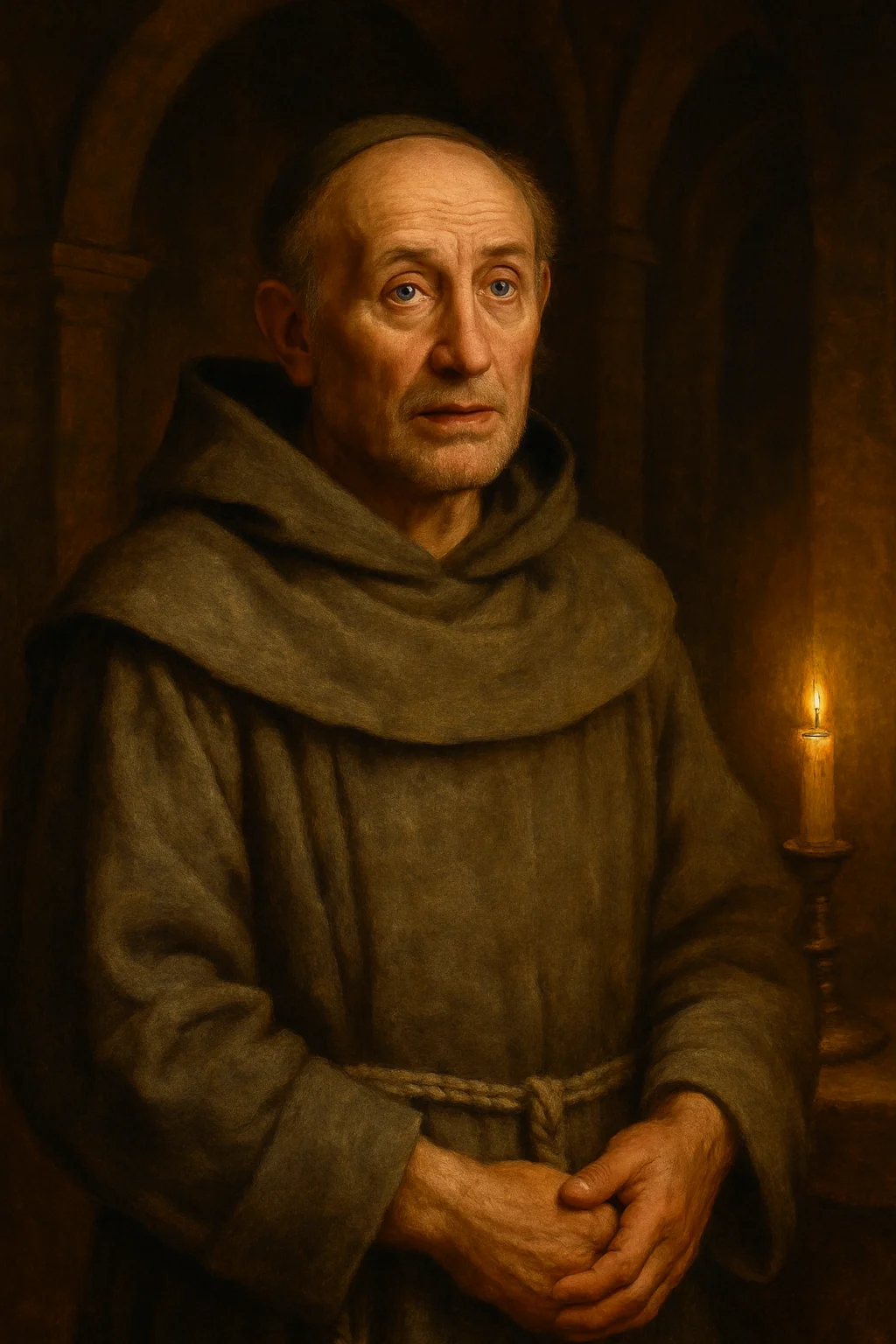
Friar Thomas
Who is Friar Thomas?
Friar Thomas appears in a single scene at the play's outset, receiving the Duke into his monastery and hearing his request for a friar's habit and instruction in how a member of the order properly conducts himself. His mild skepticism about the Duke's stated reasons for the disguise - pressing him gently on whether affection for a particular woman might be the real cause - draws from the Duke a fuller, if still partial, explanation of his plan to test Angelo's rule from within Vienna's streets.
A friar at the monastery where the Duke takes his disguise, whose questions draw out the Duke's explanation for his scheme before the play's central action begins.
Appears In
Biography
Once the Duke's disguise is established, Friar Thomas does not appear again; his function is entirely expository, providing the audience its clearest account of the Duke's reasoning before the play moves into its central plot.
Motivation
Friar Thomas is motivated by a proper concern for the order's discipline and reputation, questioning the Duke's request carefully before agreeing to help him assume the disguise.
Personality
Friar Thomas exists mainly to draw the Duke's reasoning into the open for the audience's benefit, questioning his motives with just enough skepticism to make the Duke's justification feel earned rather than simply asserted.