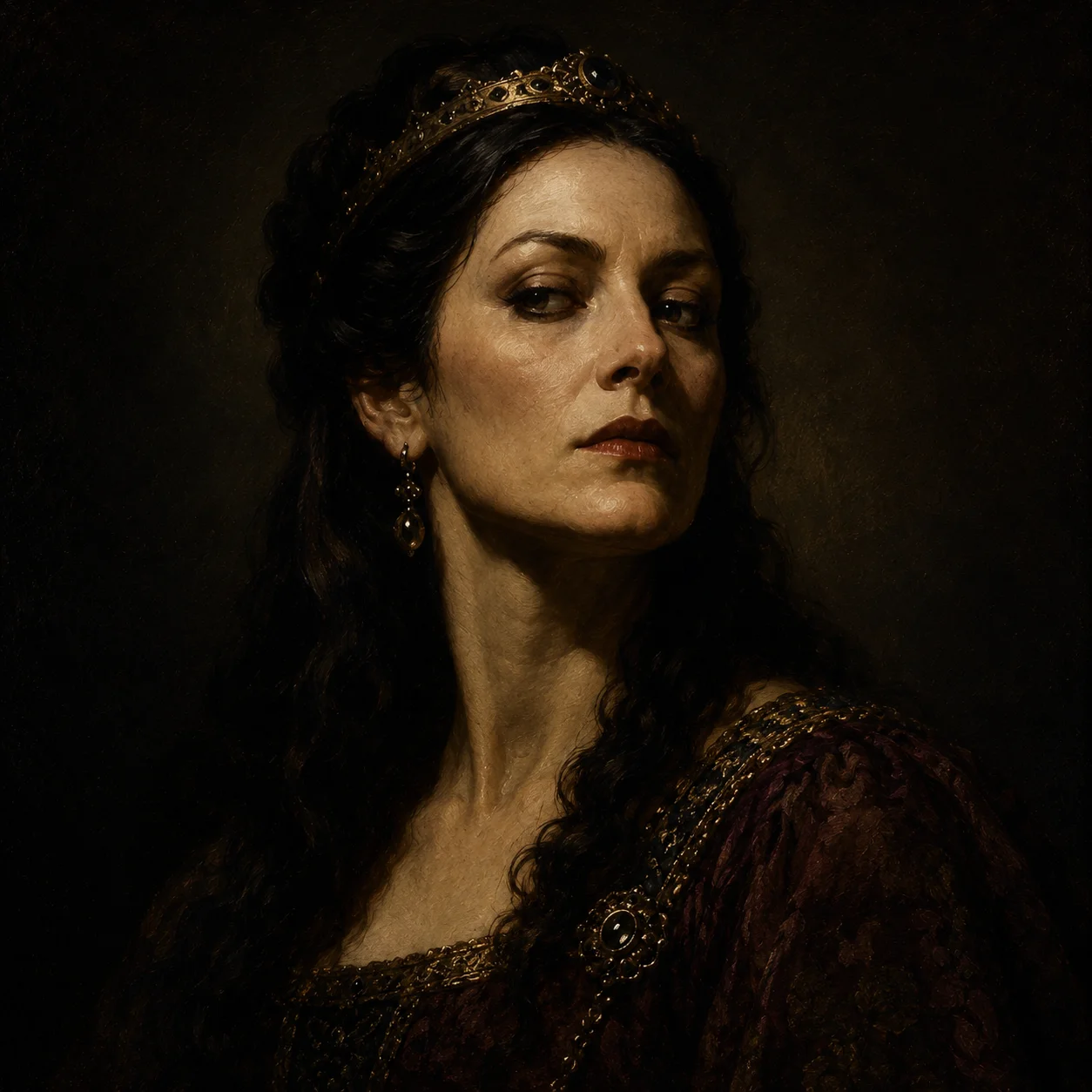
Lady Macbeth
Co-architect of the murder plot and primary instigator of Macbeth's action in Act I. As the play develops, she becomes the inverse image of her husband - gaining inner destruction as he gains outer power - until her collapse completes the tragedy.
Appears In
Who is Lady Macbeth?
Lady Macbeth is Macbeth's wife and the more immediately ruthless of the two in the opening movement of the play. Where Macbeth hesitates, she acts; where he imagines consequences, she suppresses them. Her famous invocation - 'unsex me here' - is a plea to be stripped of the human feeling that would prevent her from doing what must be done.
The irony is that the feeling she calls away from herself does not leave. As Macbeth grows colder and more capable of violence, Lady Macbeth crumbles. Her sleepwalking scene reveals a mind consumed by the guilt she could not consciously acknowledge - the spot of blood that will not out, the smell of guilt on her hands.
Her suicide, reported offstage, closes the gap between what she willed herself to be and what she actually was - a woman whose will turned against herself when there was nothing left to drive it outward.
Motivation
Lady Macbeth is motivated by love for her husband and a desire to see him achieve the greatness she believes he deserves but lacks the hardness to seize. Her ambition is vicarious before it becomes self-destructive.
Personality
Lady Macbeth's apparent iron control in the early acts makes her dissolution in Act V all the more devastating. She is not a monster - she is a person who asked too much of herself, and whose psyche exacted the full price. Her language is some of the most concentrated and electrifying in the play.