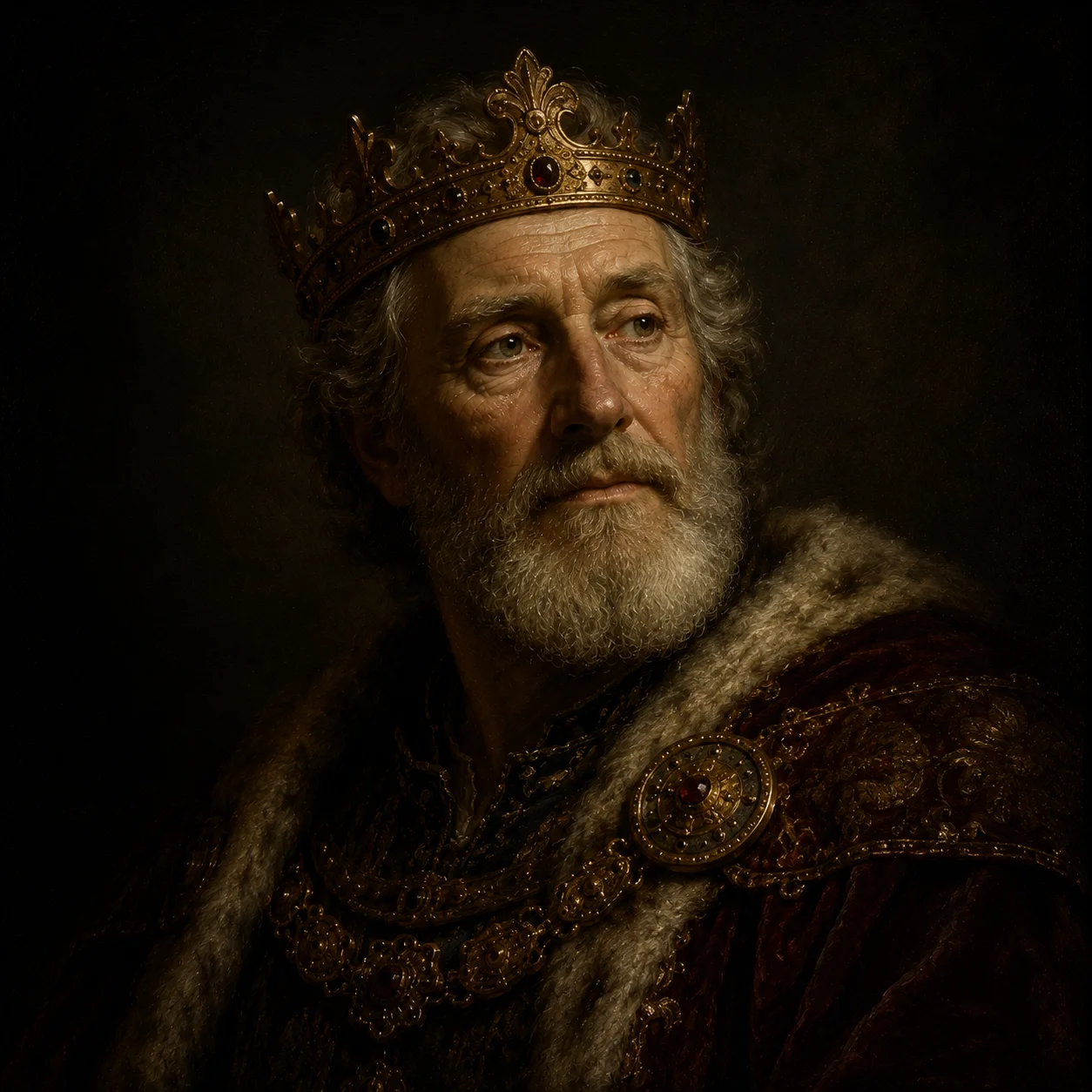
Duncan
Duncan is the moral baseline from which everything else in the play deviates. His goodness is not examined in depth but established firmly enough that its destruction carries full tragic weight.
Appears In
Who is Duncan?
Duncan is the elderly and deeply admired King of Scotland, whose trust in Macbeth makes his murder the more appalling. He is generous with praise, liberal with honours, and wholly unable to detect treachery behind the faces that wear loyalty.
His famous line - 'there's no art to find the mind's construction in the face' - is spoken of the treacherous Cawdor immediately before he bestows complete trust on Macbeth. The dramatic irony is crushing.
Duncan's character is deliberately idealised: he is the legitimate, gracious sovereign whose death represents not merely a murder but a cosmic offence against natural and political order.
Motivation
Duncan is moved by gratitude, loyalty, and genuine affection for his subjects. He rewards generously and trusts completely - qualities that become fatal vulnerabilities in the world Macbeth makes.
Personality
Duncan represents the ideal of legitimate kingship - wise, beloved, and just. His inability to see treachery is not stupidity but an assumption that the world matches his own goodness. It is the most dangerous assumption a king can make.