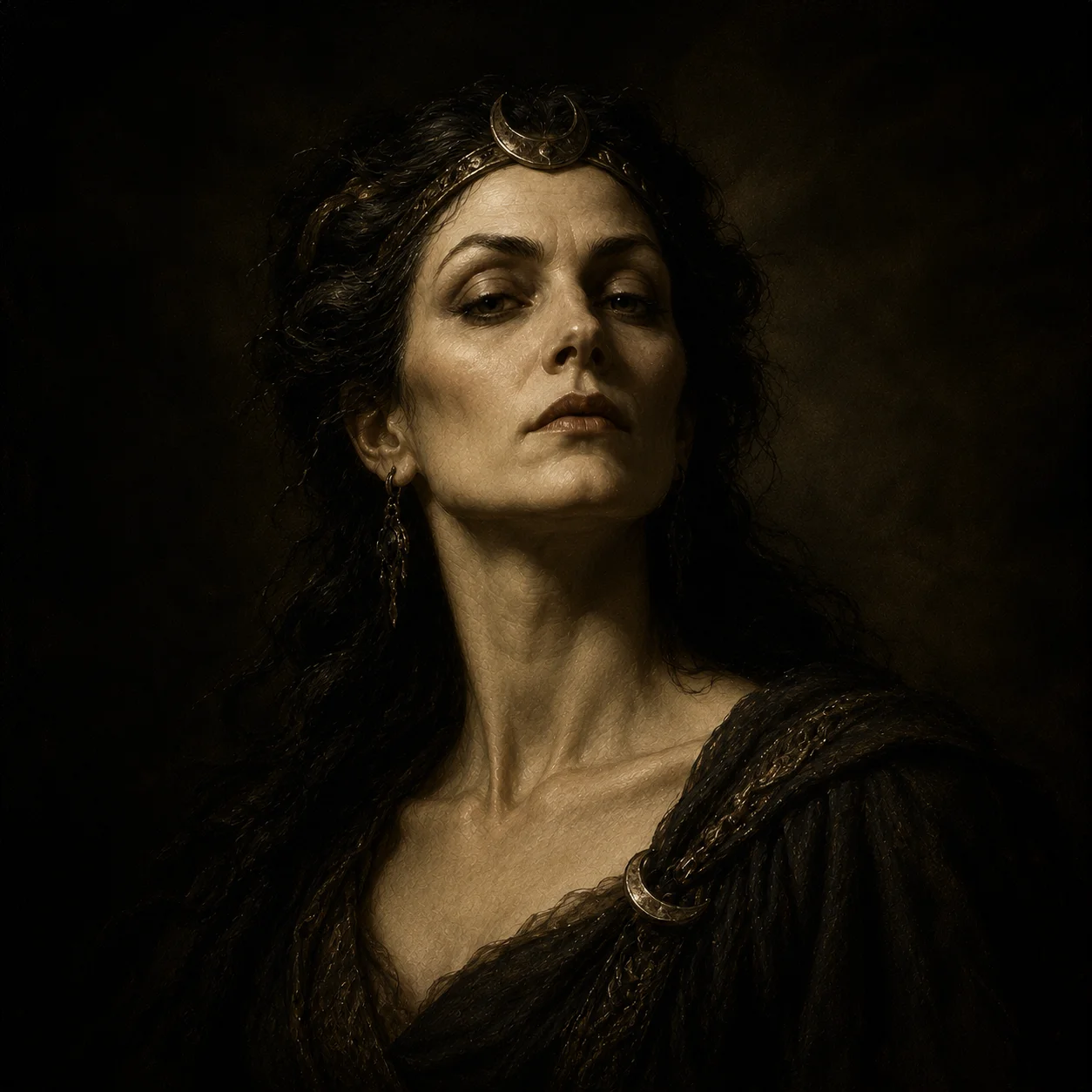
Hecate
Hecate is the presiding authority over the witches and the architect of the plan to destroy Macbeth through misleading prophecy. Her scene establishes that what follows in Act IV is not improvised malice but deliberate, structured deception.
Appears In
Who is Hecate?
Hecate is the goddess of witchcraft and the self-proclaimed mistress of the three Weird Sisters. She appears in Act III to rebuke the witches for dealing with Macbeth without her knowledge, and again briefly in Act IV at the cauldron scene.
Her scene is one of the most contested in Macbeth scholarship - most editors believe it was not written by Shakespeare but added later, probably by Thomas Middleton. Her verse has a different quality to the rest of the play: smoother, more overtly theatrical, less unsettling.
Whatever her authorship, within the world of the play she establishes a hierarchy of supernatural power - the witches answer to her - and her plan to lead Macbeth to his ruin through false confidence is the mechanism that drives Act IV.
Motivation
Hecate is motivated by pride - she was excluded from the witches' dealings with Macbeth and intends to reassert her authority by taking personal control of his destruction.
Personality
Hecate speaks with the authority of a superior dressing down subordinates. Her anger is controlled and her plan precise. She is the most articulate of the supernatural figures - which may be why many scholars suspect a different hand.