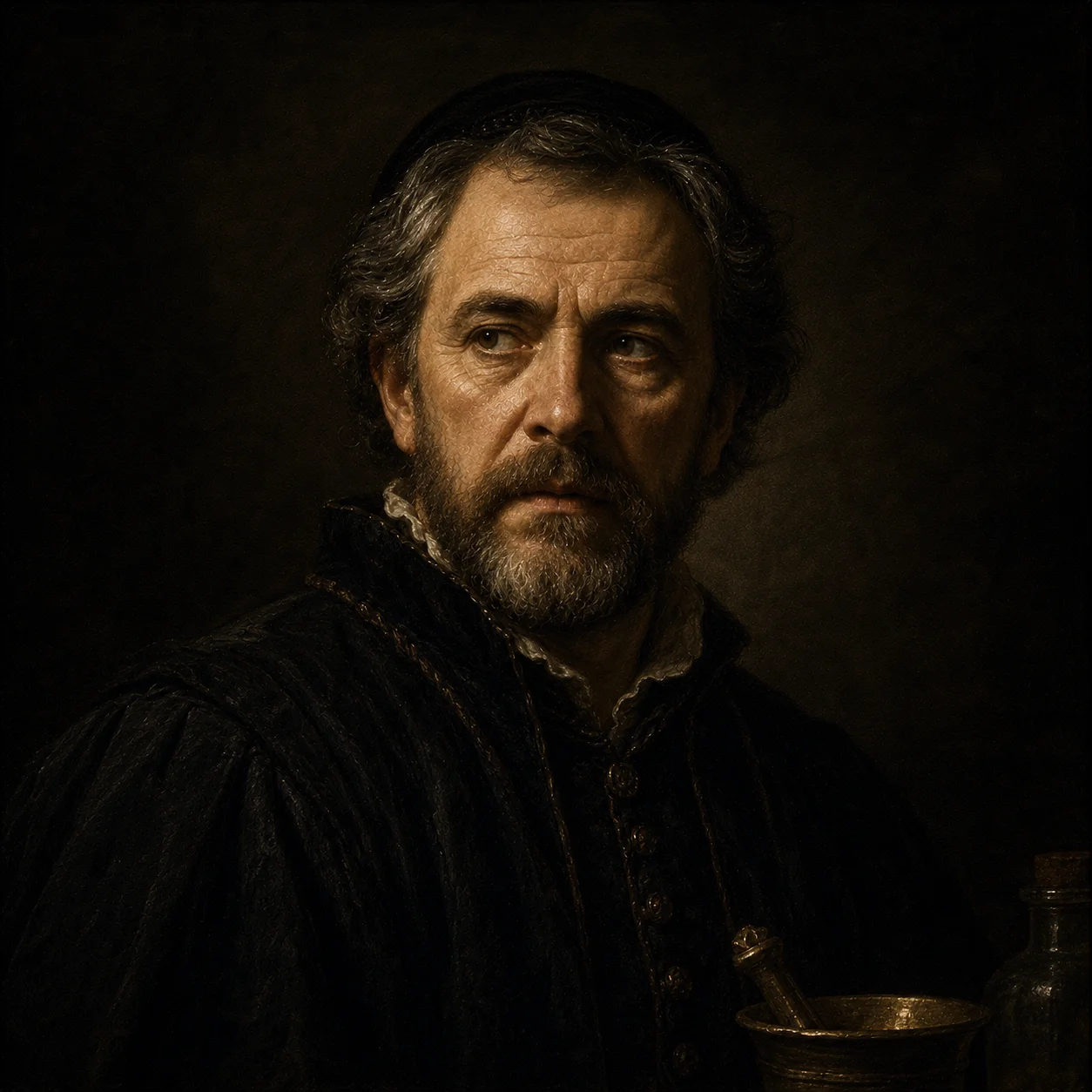
Doctor
The Doctor is the play's medical witness - a man of rational training placed in the presence of something his training cannot account for. His scenes with Lady Macbeth and Macbeth give the play's final movement two of its most precisely observed moments of moral diagnosis delivered through the language of professional inadequacy.
Appears In
Who is Doctor?
The Doctor is a Scottish physician summoned to attend Lady Macbeth at Dunsinane. He appears in Act V Scene 1 alongside the Gentlewoman, watching in silence as Lady Macbeth sleepwalks - washing invisible blood from her hands, murmuring fragments of the night Duncan was killed. He is a witness to something he cannot treat and does not entirely understand.
His exchange with the Gentlewoman before Lady Macbeth enters establishes him as a careful, precise professional: he asks for corroborating testimony before he will record what he has been told, and when he sees the sleepwalking for himself, his clinical vocabulary gives way to something closer to awe. 'Unnatural deeds do breed unnatural troubles,' he observes - a diagnosis that has nothing to do with medicine.
In Act V Scene 3, Macbeth demands that he cure Lady Macbeth of whatever afflicts her. The Doctor's reply - 'Therein the patient must minister to himself' - is one of the play's most compressed statements of its central argument: that the consequences of guilt cannot be treated, only endured. He tells Macbeth, quietly but clearly, that medicine has no remedy for what he is describing. He exits at the first opportunity, having seen enough of Dunsinane to know he does not wish to stay.
Motivation
The Doctor is motivated by professional duty and, increasingly, by a desire to be somewhere else. He has come to treat a patient and found instead a confession. His instinct, by the end of Act V Scene 3, is survival: he knows what he has heard and seen, and he intends to leave.
Personality
The Doctor is a small figure given large things to witness. His professional caution - refusing to write down what he hasn't seen himself, measuring his words carefully - is exactly the quality that makes his eventual candour ('This disease is beyond my practice') so striking. He is not a moral commentator so much as a man whose professional detachment is slowly eroded by what he sees.