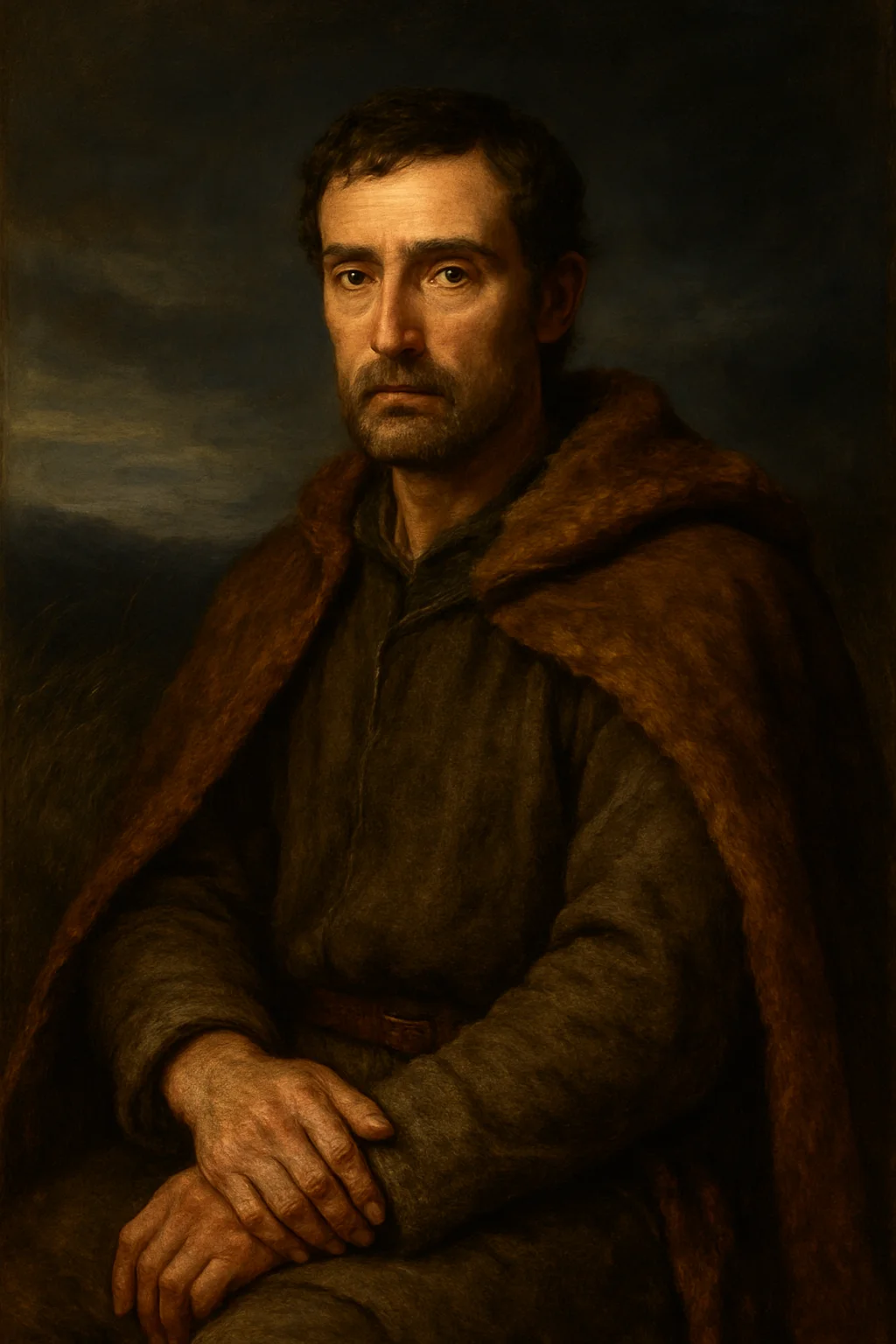
Gentleman
The Gentleman functions as the play's humane witness - a figure of moderate rank whose emotional intelligence makes him the right person to observe and report the extremities happening around him. He carries information between the separated parties and gives the audience its most vivid picture of suffering it cannot directly see.
Appears In
Who is Gentleman?
The Gentleman is a loyal attendant who moves between Lear's party and Cordelia's camp, serving as the human connective tissue of the play's later acts. He witnesses Lear on the heath in the full fury of the storm, and it is to him that Kent speaks to understand the extent of what has befallen the king. His reports are precise and full of feeling - a man who sees clearly and is genuinely distressed by what he sees.
In Act IV he is dispatched to find Lear, now wandering in a crown of weeds, and his description of Cordelia's grief - 'patience and sorrow strove who should express her goodliest' - is one of the play's most beautiful passages of plain prose. He is everywhere the storm is, and nowhere it is not.
Motivation
The Gentleman is motivated by loyalty and genuine human feeling. He serves where he is needed and reports what he sees with honesty and care.
Personality
The Gentleman is defined by the quality of his attention - he notices things, feels them, and describes them well. In a play full of people who either cause suffering or are consumed by it, he is one of the few figures who simply witnesses it with open eyes and an open heart.