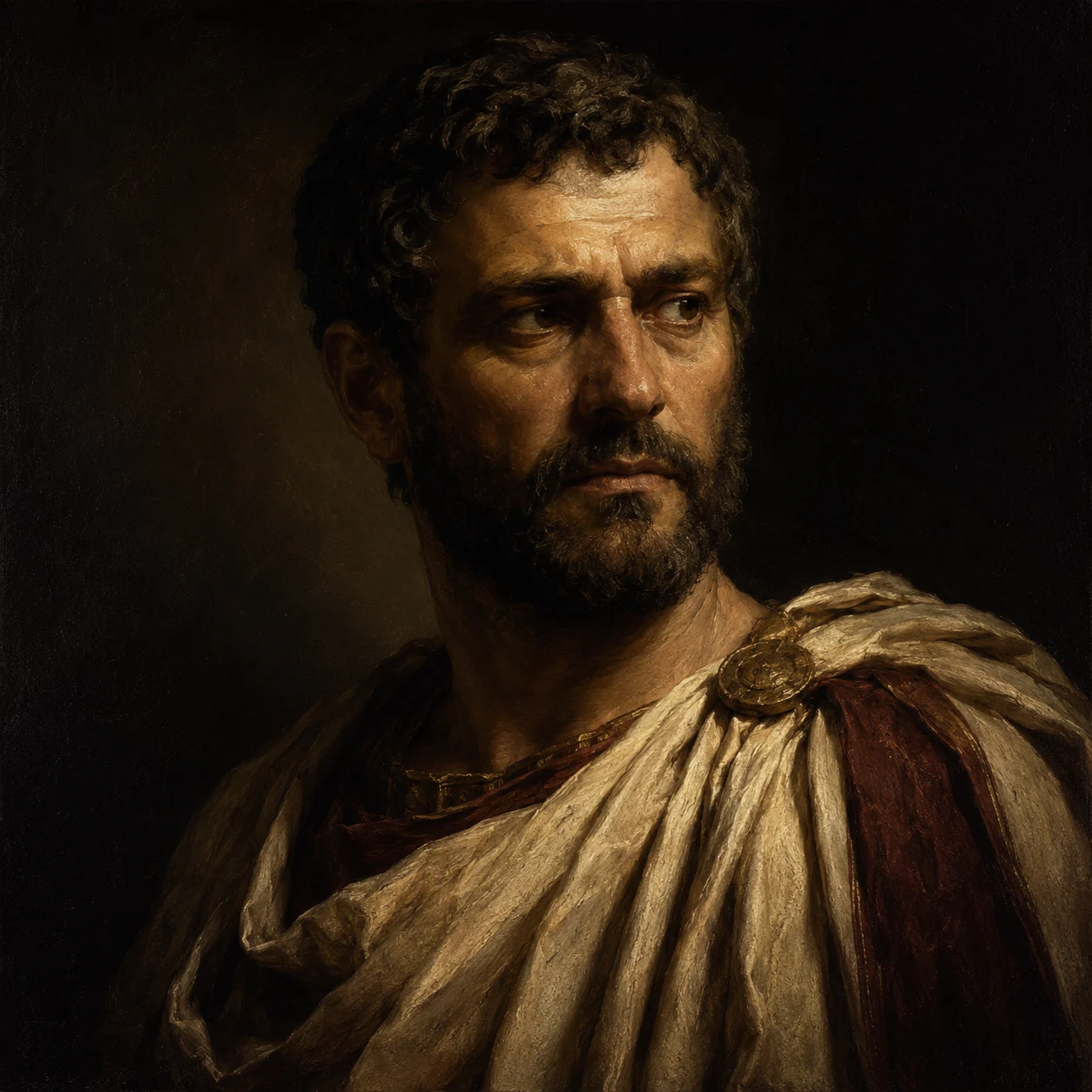
Metellus Cimber
Metellus Cimber is the conspiracy's trigger mechanism - the man whose petition to Caesar sets the assassination in motion. His personal grievance provides a plausible pretext that allows the conspirators to surround Caesar without appearing to do so, and Caesar's refusal of the petition precipitates the attack.
Appears In
Who is Metellus Cimber?
Metellus Cimber is one of the conspirators, and his role in the plot is precisely defined: he will kneel before Caesar in the Senate and petition for the return of his banished brother, Publius Cimber. This petition is the prearranged signal - the moment at which the other conspirators will close around Caesar and the assassination will begin. His personal grievance is real, but it has been recruited into service as a mechanism.
In the assassination scene itself, Metellus kneels and presents his case. Caesar refuses with the speech that has become his most celebrated and most damning moment: 'I am as constant as the northern star.' He will not be swayed by petition, he says - he is Caesar, unmovable, metaphysically fixed. It is exactly the wrong speech to give at exactly the wrong moment; within lines, the conspirators have gathered and the stabbing begins.
Metellus Cimber is present at Brutus's house in Act II Scene 1 and at the Capitol in Act III Scene 1. He says little beyond what his function requires. His brother's banishment is never explained or resolved; it exists in the play purely as the mechanism that gives him his role, which is to kneel at the right moment in front of the right man.
Motivation
Metellus is motivated by a combination of genuine political grievance over his brother's banishment and commitment to the conspiracy's goals. The play does not separate these; his personal cause and his political assignment are the same act.
Personality
Metellus Cimber says almost nothing beyond what his role demands, which is the appropriate characterisation for a man whose function is to be in the right place at the right moment. His kneeling before Caesar is a performance - of supplication, of personal grievance - that the conspirators have staged with the precision of people who understand that theatrical gesture, correctly deployed, can be more effective than force alone.