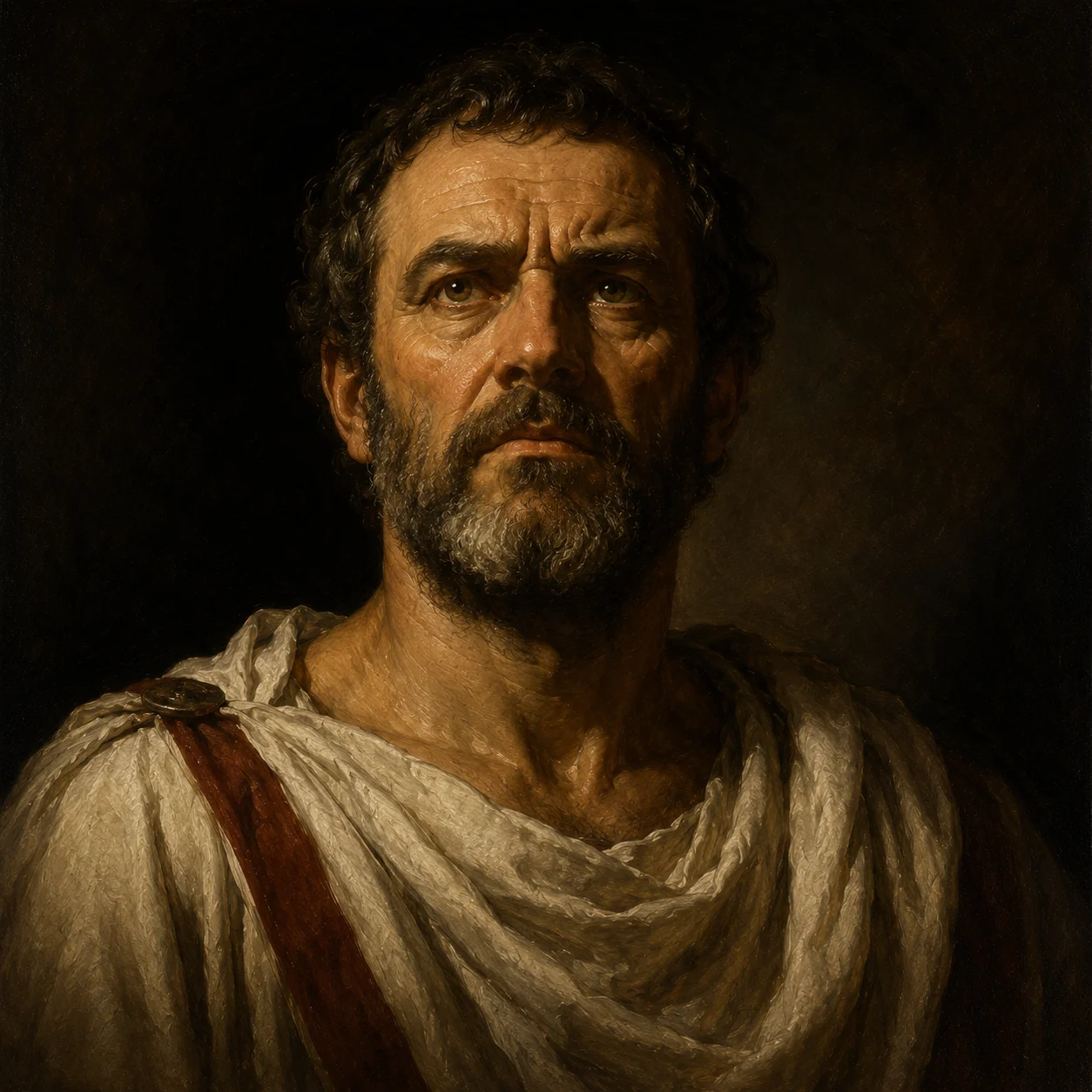
Marullus
Marullus delivers the play's first major speech, establishing the emotional and political stakes of Caesar's ascent before any of the main characters appear. His passionate defence of Pompey's memory and his punishment at Caesar's hands are the play's opening argument: that the republic is already eroding before the conspiracy is even conceived.
Appears In
Who is Marullus?
Marullus's opening speech is one of Shakespeare's most effective uses of a minor character: a passionate, extended rebuke of the Roman crowd for abandoning their loyalty to Pompey. He reminds them in precise detail how they once lined the streets for Pompey - climbing walls and towers, holding their infants up, cheering so loudly that the Tiber trembled. Now they wear their best clothes and scatter flowers for the man who has defeated Pompey's sons. The crowd's silence is his answer, and it is enough.
Where Flavius is brisk and practical, Marullus is moved - his speech has the quality of genuine grief beneath the political anger. He is not merely defending a constitutional principle; he is mourning a specific Roman who inspired a specific devotion, and he finds the transfer of that devotion to Caesar almost personally insulting. It is a note of feeling that the play's major characters, consumed by larger political calculations, rarely achieve.
Like Flavius, he is reported later to have been silenced for removing Caesar's decorations - the play's first intimation that public opposition to Caesar, however modest, is met with swift punishment. The tribunes who open the play defending the people's right to choose their loyalties are disposed of before the first act is complete.
Motivation
Marullus is motivated by genuine loyalty to Pompey's memory and genuine outrage at what he reads as the crowd's inconstancy. His opposition to Caesar is not strategic - he acts from feeling as much as principle, which is perhaps why his speech is so effective and his fate so quickly sealed.
Personality
Marullus is the play's most emotionally direct political voice - a man who argues through remembered feeling rather than constitutional theory. His ability to shame the crowd into silence through a vivid account of what they once felt for Pompey is a small masterpiece of rhetorical precision, and it is all the more striking for appearing in a character who will not speak again.