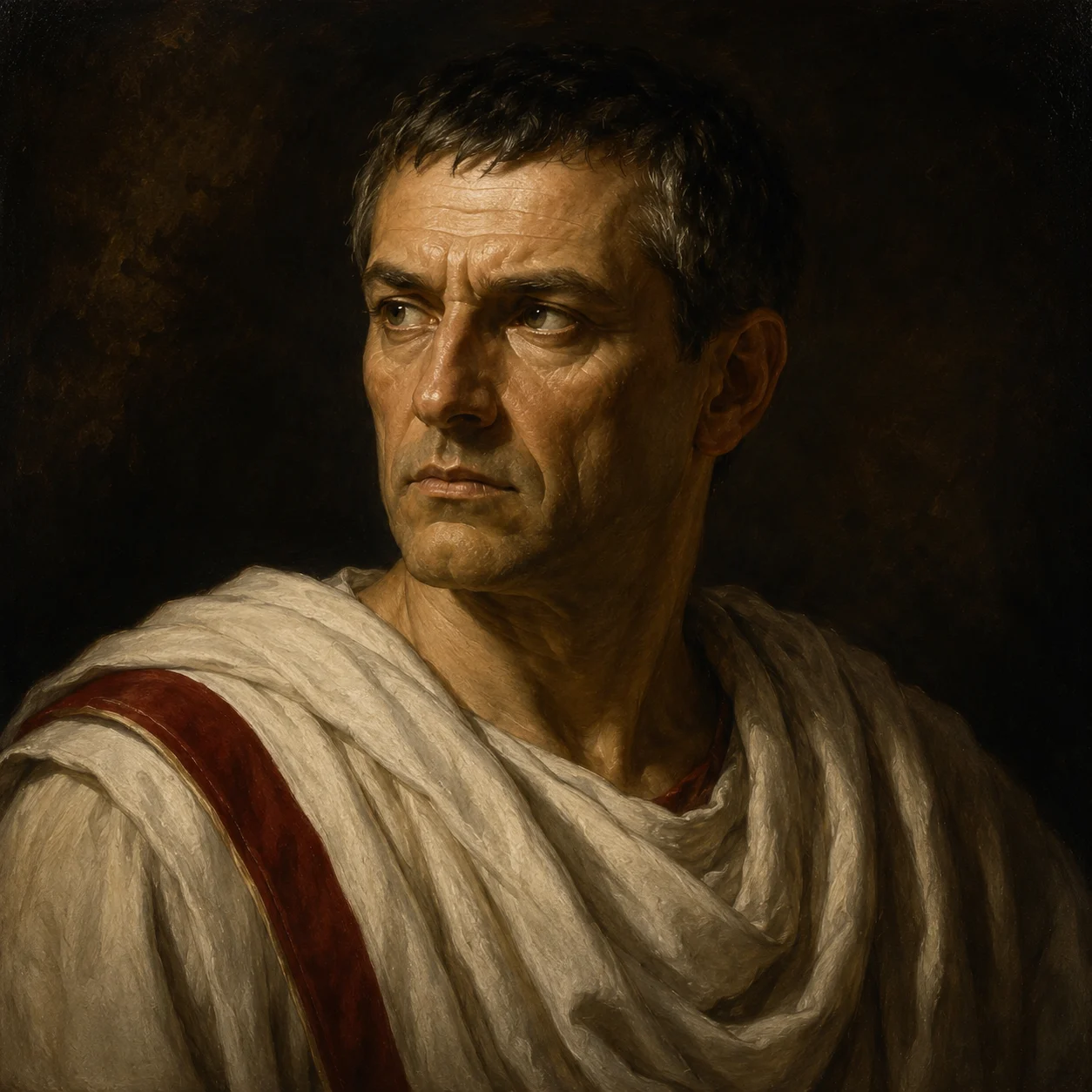
Flavius
Flavius is one of two tribunes who open the play by challenging the public celebration of Caesar's triumph. His function is structural: he establishes the political temperature of Rome before any of the play's main characters speak, and his eventual silence at Caesar's hands is the first sign of how power in Rome actually works.
Appears In
Who is Flavius?
Flavius opens the play alongside Marullus, confronting the Roman working people who have taken a holiday to celebrate Caesar's return from war. His tone is brisk and dismissive - 'Hence! home, you idle creatures get you home' - but his real target is not the crowd so much as what their celebration represents: a city that has already started to forget Pompey and transfer its loyalty to a man Flavius regards as a tyrant in the making.
After Marullus's longer, more passionate speech shames the crowd into silence, Flavius takes the practical decision: they will go through the city pulling down the decorations placed in Caesar's honour. 'Let no images be hung with Caesar's trophies,' he instructs, articulating the political logic of the play's opening - that Caesar's symbolic authority is being constructed in public space, and that opposing it means dismantling that space piece by piece.
Flavius and Marullus are reported later in the play to have been 'put to silence' - the phrase implies punishment, possibly death - for pulling down Caesar's decorations. They are the play's first political victims, disposed of offstage before the conspiracy has even properly formed.
Motivation
Flavius is motivated by republican principle and loyalty to Rome's older political order - the same values the conspirators will later invoke at much greater personal cost. He acts before the conspiracy exists, which makes his punishment both ironic and clarifying.
Personality
Flavius is less rhetorically elaborate than Marullus but no less committed - he is the practical partner in their brief collaboration, the one who turns outrage into action. His instruction to go pull down Caesar's trophies is the play's first act of political resistance, modest in scale and ultimately fatal.