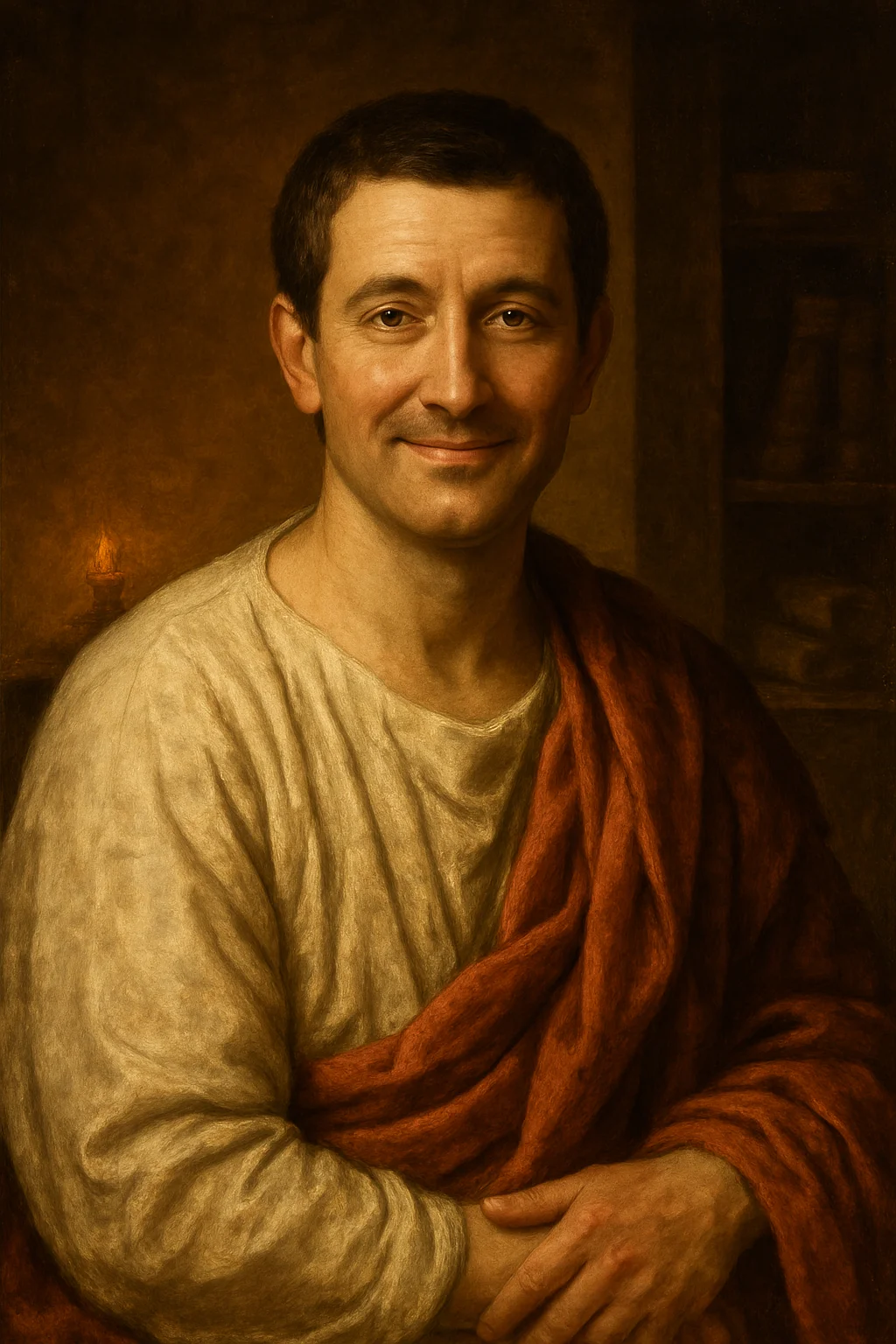
Decius
Decius functions as the conspiracy's most precisely targeted instrument on the morning of the assassination - the man who identifies and exploits the single psychological lever that can bring Caesar to his death after every other warning has been given.
Appears In
Who is Decius?
Decius Brutus is one of the inner circle of conspirators, assigned a specific and critical task: to ensure Caesar actually arrives at the Capitol on the morning of the assassination. When Caesar, persuaded by Calpurnia's fears and the previous night's omens, has already decided to stay home, Decius's job is to undo this in the fifteen minutes before the conspirators' arrival becomes suspicious.
His reinterpretation of Calpurnia's dream is a masterpiece of targeted flattery. The dream of Caesar's statue spouting blood, which Calpurnia reads as an omen of his death, Decius reframes as Rome drawing sustenance from Caesar - 'a vision fair and fortunate.' Then he applies the decisive lever: he mentions that the Senate plans to offer Caesar a crown today, and that if Caesar stays home, they may reconsider. Caesar, who had been speaking of yielding to Calpurnia's fears, immediately reverses himself. Decius has understood his target precisely - a man who can resist almost anything except the suggestion that he might appear afraid.
Decius is present in the Capitol for the assassination itself, one of the conspirators who has helped manoeuvre Caesar into the right position. He disappears from the play thereafter, his function complete. He is not given an inner life beyond his assignment, which may be the play's way of distinguishing him from Brutus and Cassius - a conspirator defined entirely by what he is willing to do rather than why.
Motivation
Decius is motivated by his commitment to the conspiracy's success; unlike Brutus or Cassius, he is not given an elaborated motivation, only an assignment executed with cold effectiveness.
Personality
Decius's genius is entirely in his reading of Caesar - he knows before he enters the room exactly which argument will work, delivers it without visible effort, and watches Caesar change his mind as if the previous hour's conversation with Calpurnia had not happened. He performs warmth and admiration with the practised ease of someone who regards flattery as a technical instrument rather than a moral failing.