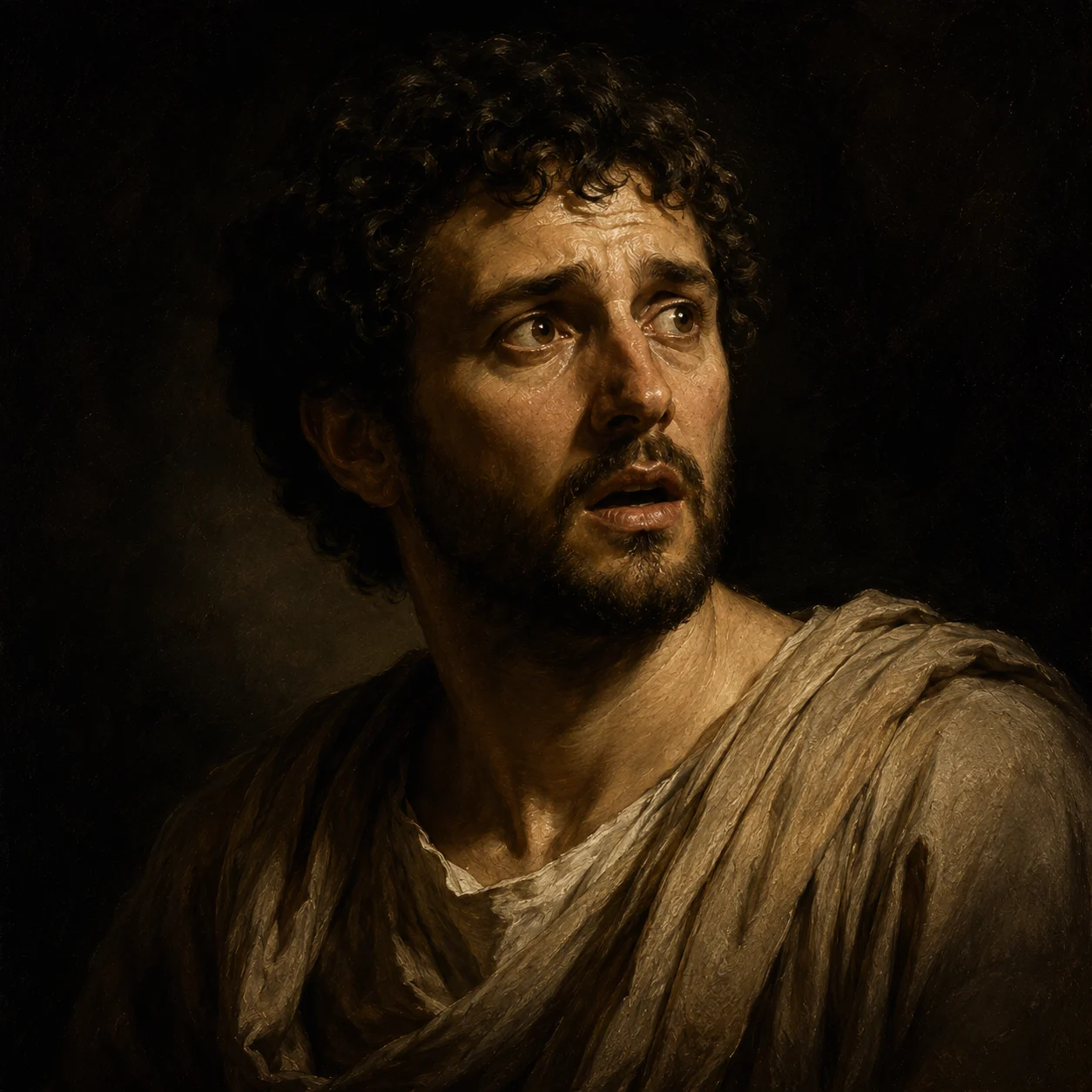
Cinna the Poet
Cinna the Poet is the play's emblem of innocent casualties - the man caught in the wrong place with the wrong name at the wrong moment. His brief scene is the direct consequence of Antony's funeral oration: the passion Antony has released finds its first victim not among the conspirators but among the unlucky.
Appears In
Who is Cinna the Poet?
Cinna the Poet has his own scene - Act III Scene 3 - which is one of the shortest and most unsettling in Shakespeare. He is walking to Caesar's funeral when a mob of citizens stops him. They demand his name, where he is going, where he lives, whether he is married or single. He answers each question; he even tells them, correctly, that he is Cinna the Poet, not Cinna the conspirator. It does not help.
'Tear him for his bad verses! Tear him for his bad verses!' someone shouts, and the scene ends. The mob knows he is not the right Cinna - the text makes clear they understand this - and they kill him anyway, or kill his bad verses, which amounts to the same thing in the moment's violence. He is collateral damage to an anger that has found a name it recognises and will not give it up.
The scene is deliberately placed immediately after Antony's funeral oration, which has just redirected the crowd's emotion with such precise calculation. What happens to Cinna the Poet is what happens when that emotion finds a target in the open street: indiscriminate, unstoppable, and entirely indifferent to the distinction between the guilty and the innocent. He is the play's clearest emblem of what civil disorder actually costs.
Motivation
Cinna the Poet has no political motivation - he was simply going to Caesar's funeral, as a citizen and perhaps as a poet drawn to significant events. His presence in the scene is accidental; his death is a product of circumstances entirely beyond his control or comprehension.
Personality
Cinna the Poet is defined by his innocence and his bewilderment - he answers the mob's questions truthfully and completely, and it saves him nothing. His complaint about his bad dreams before encountering the mob is the play's one small moment of literary self-deprecation, the detail that makes him briefly human before the scene destroys him.